
Reading paths · Five steps
Thinking about thinking
Your own judgement is the instrument you can least easily calibrate. This is the order that makes that useful rather than merely alarming.
-
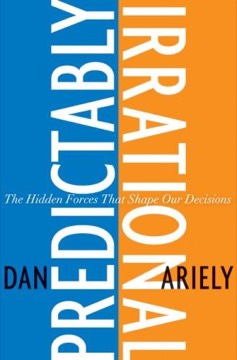
Predictably Irrational
Dan Ariely
Start with the failures one at a time, each tied to an experiment you can picture. It is concrete before it is systematic.
-
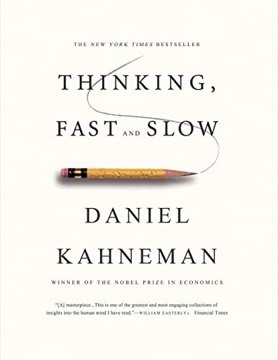
Thinking, Fast and Slow
Daniel Kahneman
Now the account underneath them. It is long and it assumes you already believe the effects are real — which, after the first book, you do.
-
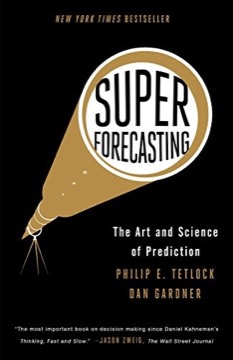
Superforecasting
Philip E. Tetlock
The turn from diagnosis to practice: what the people who are measurably less wrong actually do differently.
-
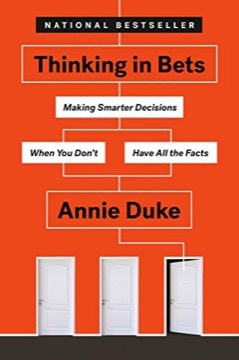
Thinking in Bets
Annie Duke
How to act on all this when you cannot wait for certainty, which is the situation you are usually in.
-
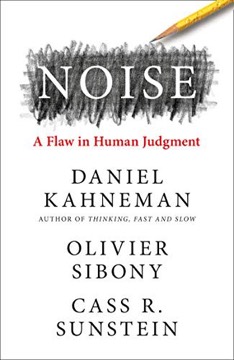
Noise
Daniel Kahneman
Last, because it is the error the first four do not cover: not bias in one direction, but scatter. Hardest to see, easiest to ignore.
A path is an order, not a syllabus. Every step says why it sits where it does, so you can disagree with the sequence on the evidence rather than on faith.