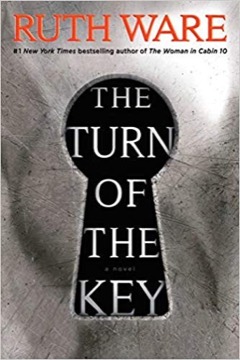
The Turn of the Key
Ruth Ware's 2019 novel, told as a letter from prison by a nanny convicted of killing a child in a Scottish smart-home.
- First published
- 2019
- Publisher
- Simon & Schuster
- Pages
- 352
- Shelf
- Thriller
- Level
- Entry
- ISBN-13
- 9781501188770
Record checked against
Catalogue note
- Reads as
- ReflectiveChanges how you see rather than what you do.
- Level
- Accessible / FoundationalNo prior reading assumed.
- Approach
- Theoretical
- Written for
- Readers who mean to stop at one more chapter, Newcomers to the subject
- Ideas
Saved in this browser only — no account, nothing sent anywhere. My library
Read this if
- You want to be kept up late, and made uneasy about who to believe.
- You want a book that changes how you see things rather than what you do tomorrow.
- You are starting from scratch here and want a way in that assumes no prior reading.
The premise
Rowan Caine takes a live-in nanny position at Heatherbrae House in the Highlands: an extravagant salary, four children, and a Victorian house retrofitted with a comprehensive automation system.
The novel is her letter to a solicitor from remand, written after a child has died and she has been charged with murder.
She is writing from prison, and she admits almost everything except the one thing she is charged with.
Devmark’s reading — not a quotation from the book
The confession frame
Rowan narrates in a letter seeking representation, which means she is selecting, justifying and omitting throughout for a specific reader.
The device is well used: she concedes a great deal in order to be believed about the one thing she denies, which is exactly how such a document would actually be written.
The house
The automation system controls lighting, heating, locks, music and cameras, and it behaves erratically from the first night.
The technology is the novel's best element: a house that can be operated remotely by anyone with access converts a Victorian ghost story into something contemporary without abandoning the form.
James and the ghost tradition
The title and the situation invoke The Turn of the Screw directly: a young woman alone with children in an isolated house, uncertain whether the disturbances are supernatural.
Ware is explicit about the reference and uses the ambiguity the same way, with a technological explanation always available and never entirely sufficient.
The children
Four girls of different ages, one of whom is actively hostile, and the novel is good on the specific difficulty of being responsible for children who do not want you.
The eldest's behaviour is the most effective source of unease in the first half. The youngest in particular is used sparingly and to real effect, and the novel avoids the common error of making every child uncanny.
Surveillance
Cameras throughout the house record constantly, and Rowan is watched by employers who are absent.
The material is genuinely uncomfortable and is the element that has aged into something entirely ordinary, which makes it more rather than less effective. Rowan's awareness of the cameras also shapes her behaviour throughout, which means the reader is watching a performance even in the private sections.
Rowan
She has lied on her application in ways the reader learns gradually, and her reason for taking the post is concealed until late.
Her unreliability is disclosed rather than sprung, and the eventual explanation is genuinely sympathetic without excusing the deception. Ware also lets her be genuinely unpleasant in several scenes, which is necessary given that the letter is an attempt to secure sympathy.
Pace
The first half accumulates slowly through small malfunctions and social awkwardness, and the final third accelerates into conventional jeopardy.
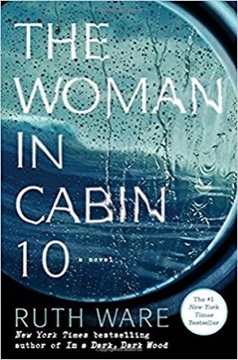
The pattern is consistent across Ware's books and is handled better here than in The Woman in Cabin 10. The malfunctions in particular escalate gradually enough that the reader, like Rowan, keeps finding ordinary explanations for slightly longer than is comfortable.
The ending
The final pages deliver two disclosures in quick succession, the second of which is very short and arrives after the letter has apparently concluded.
It is effective and abrupt, and readers divide on whether the last revelation is necessary. The penultimate disclosure is well prepared and the final one is not, which is roughly the reverse of how most novels in the category distribute them.
Prose
Fluent and atmospheric, with the Highland setting and the house's architecture rendered with genuine care.
Ware writes interiors well, and the contrast between the Victorian fabric and the modern installation is used throughout. The Scottish setting in particular is used practically — the distance to anywhere, the weather, the single road — rather than as scenery.
The poison garden
The property includes an enclosed garden of toxic plants, which is established early and is used with restraint.
It is a good example of the novel's method: a Gothic element introduced plainly, then left alone until it matters. Ware also resists explaining its history at length, which leaves it as an established fact about the property rather than as a piece of signposting.
Who it is for
Readers who want a Gothic house story updated with technology, and who enjoy an unreliable narrator addressing a specific reader.
It is Ware's most inventive book and the one that best justifies its influences. Readers who found her earlier novels too conventional should try this one.
What to take away
- 01Conceding much to be believed about one thingThe letter admits a great deal in order to establish credibility on the single charge, which is how such a document would really work.
- 02A Victorian house with remote accessAutomation converts the haunted-house form into something contemporary without abandoning any of its structure.
- 03Two explanations always availableTechnological malfunction and something else are both live throughout, which is precisely the Turn of the Screw method.
- 04Surveillance that became ordinaryBeing watched constantly by absent employers has aged into the everyday, which makes it more effective rather than less.
- 05Unreliability disclosed, not sprungRowan's lies emerge gradually and her reason is sympathetic without the novel excusing the deception.
- 06A Gothic element left aloneThe poison garden is introduced plainly early and then ignored until it is needed, which is the book's method throughout.