In a Dark, Dark Wood
Ruth Ware's 2015 debut, in which a writer is invited to the weekend party of a friend she has not spoken to in ten years, at a glass house in the Northumberland woods.
- First published
- 2015
- Publisher
- RBA
- Pages
- 352
- Shelf
- Thriller
- Level
- Entry
- ISBN-13
- 9781501112331
Record checked against
Catalogue note
- Reads as
- ReflectiveChanges how you see rather than what you do.
- Level
- Accessible / FoundationalNo prior reading assumed.
- Approach
- Theoretical
- Written for
- Readers who mean to stop at one more chapter, Newcomers to the subject
Saved in this browser only — no account, nothing sent anywhere. My library
Read this if
- You want to be kept up late, and made uneasy about who to believe.
- You read for the writing as much as for the argument.
- You want a book that changes how you see things rather than what you do tomorrow.
- You are starting from scratch here and want a way in that assumes no prior reading.
The premise
Leonora receives an invitation to a hen weekend for Clare, a schoolfriend she has not seen since she was sixteen and whose wedding she has not been invited to.
She goes, against her judgement, to a glass house in an isolated wood with no mobile signal and five other guests. The novel opens with her in hospital afterwards, unable to remember what happened.
A glass house in a wood, six people, and a friendship that ended ten years ago without explanation.
Devmark’s reading — not a quotation from the book
The setting
The house is all windows, isolated, surrounded by trees, and visible from every direction — a building designed to remove privacy.
It is a good choice and Ware uses it consistently: the inability to be unobserved, and the inability to see out at night, are both exploited.
Structure
The novel alternates between the weekend and Leonora's disoriented recovery, with her memory returning gradually.
The device supplies a conventional mystery shape and also removes any possibility that the weekend passed without incident, which does the book's suspense work early. The hospital chapters are also short and disoriented, which contrasts effectively with the long social sequences and signals that something has gone badly wrong.
Group dynamics
The six guests are a deliberately mismatched set with historical grievances, and the social discomfort of an ill-conceived gathering is observed precisely.
The first half is essentially a comedy of awkwardness, and it is the book's most enjoyable material. Ware is particularly good on the specific discomfort of a group assembled from different parts of someone's life who have nothing else in common.
Flo
The organiser is intense, controlling, and invested in the weekend going correctly to a degree nobody else shares.
She is the novel's best creation, and the specific horror of someone whose hospitality cannot be refused is well handled. She is also entirely sincere, which is what makes her difficult: nothing she does is malicious, and every imposition is presented as generosity.
Golden Age inheritance
The construction is deliberately traditional: an isolated house, a closed circle of suspects, a snowfall, a severed telephone line.
Ware is explicit about working in this tradition, and the book functions as a modern country-house mystery with the psychology updated. The debt to Christie in particular is acknowledged, and Ware has spoken about writing deliberately within a tradition rather than attempting to escape it.
Leonora
She is reclusive, socially avoidant and carrying something from the period when the friendship ended, which the novel discloses slowly.
Her reluctance to attend is thoroughly established, which is important — the book would not work if her presence were unmotivated. Ware also establishes her isolation domestically — the flat, the routine, the absence of anyone who would notice her gone — which matters later.
The reveal
The explanation for the ten-year estrangement and for the weekend's events is delivered together, and is reasonably prepared.
It is not especially surprising and does not need to be; the book's pleasures are atmospheric rather than deductive. The estrangement's cause is also more ordinary than the build-up suggests, which some readers find deflating and others find appropriately realistic.
Pace
The first half is slow and social; the second half accelerates sharply into conventional jeopardy.
The transition is abrupt, and readers who preferred the comedy of manners sometimes find the thriller ending a lesser thing. Ware's later books manage this transition more smoothly, and the abruptness here is the clearest sign that it is a first novel.
Prose
Clean, readable and fond of weather and landscape, with more descriptive writing than most of this group.
Ware is a better prose stylist than the category average and the Northumberland setting is genuinely well rendered. The descriptions of the wood in particular — the light, the sound, the absence of any other building — establish the isolation more effectively than any plot device.
Ware's other books
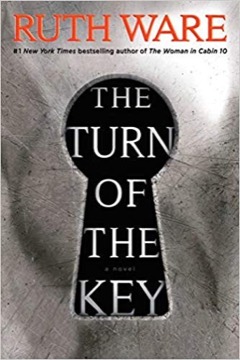
The Woman in Cabin 10 and The Turn of the Key followed, each applying a similar approach to a different enclosed setting.
She is consistent, and readers who like one generally like the others; this debut is the least ambitious and the most purely enjoyable.
Who it is for
Readers who want an updated country-house mystery with good atmosphere and uncomfortable social observation.
It is not surprising and is very readable. Readers who value the setup over the solution will find this among the better books in the category. It is also short and can be finished in an evening, which suits a book whose pleasures are atmospheric and do not benefit from being spread out.
What to take away
- 01A house that removes privacyGlass walls in an isolated wood mean nobody can be unobserved and nobody can see out after dark.
- 02Suspense established before the weekend beginsOpening in the hospital removes any possibility that nothing happened, which front-loads the tension.
- 03Hospitality that cannot be refusedFlo's investment in the weekend going correctly is the book's best-observed and most uncomfortable dynamic.
- 04A country-house mystery updatedIsolation, a closed circle and a cut phone line are used deliberately, with contemporary psychology substituted.
- 05Comedy of manners firstThe strongest material is the social awkwardness of an ill-conceived gathering, before the thriller machinery starts.
- 06Atmosphere over deductionThe solution is unsurprising and does not need to be otherwise, since the book's pleasures are entirely in mood.