The Secret Place
Tana French's 2014 novel, the fifth in the Dublin Murder Squad series, in which a card appears on a boarding school's noticeboard claiming to know who killed a boy a year earlier.
- First published
- 2014
- Publisher
- Points
- Pages
- 518
- Shelf
- Thriller
- Level
- Core
- ISBN-13
- 9782757857052
Record checked against
Two sources agreed on 2014; a third reported differently (openlibrary 2016, wikidata 2014, wikipedia 2014).
Catalogue note
- Reads as
- ReflectiveChanges how you see rather than what you do.
- Level
- Core / BuildingAssumes general familiarity with the subject.
- Approach
- Theoretical
- Written for
- Readers who mean to stop at one more chapter, Readers with some grounding
Saved in this browser only — no account, nothing sent anywhere. My library
Read this if
- You want to be kept up late, and made uneasy about who to believe.
- You read for the writing as much as for the argument.
- You want a book that changes how you see things rather than what you do tomorrow.
- You know roughly how the subject works and want the fuller account.
The premise
A boy from a neighbouring school was found dead on the grounds of St Kilda's, a girls' boarding school in Dublin, and the case went cold.
A year later a pupil brings Detective Stephen Moran a card from the school's anonymous noticeboard, carrying a photograph of the boy and the words that someone knows who killed him.
An anonymous card on a school noticeboard, a year after the case went cold.
Devmark’s reading — not a quotation from the book
A single day
The present-day investigation takes place across one day at the school, with Moran and Antoinette Conway interviewing eight girls in rotation.
The compression is the novel's structural achievement. Almost everything that happens in the present is conversation in rooms, and the pressure is generated entirely by what the detectives learn between interviews.
The parallel timeline
Alternating chapters follow the girls over the preceding year, told in close third person and building to the death.
The two threads converge precisely, and the reader understands the social situation considerably before the detectives extract it. French also writes the girls' sections in a register noticeably closer to their own speech, which distinguishes the two threads without requiring any signposting.
Adolescent friendship
The four girls at the novel's centre have a relationship of deliberate intensity — a pact, a set of rituals, a rejection of the surrounding social economy — that French takes entirely seriously.
The refusal to condescend is the book's most distinctive quality, and the friendship is written as something genuinely powerful rather than as a phase.
The rival group
A second group of four girls occupies the opposing position, and the antagonism between them is social rather than physical for most of the book.
French is exact about the mechanics of adolescent cruelty: the withheld invitation, the photograph circulated, the rumour that cannot be answered.
The supernatural question
Several sequences suggest that the girls' pact has produced something genuinely uncanny, and the novel neither confirms nor dismisses it.
It is the most divisive element. Readers who want a procedural find it indulgent; readers who accept it find it the truest thing in the book about what that age feels like.
Moran
The detective is ambitious, from a working-class background, and acutely aware that the case is his opportunity to leave cold cases behind.
His willingness to use a teenage girl's trust for career advancement is examined rather than excused, and French is unsentimental about it. French also lets him be genuinely good at the interviews, so his ambition and his competence are inseparable rather than in tension.
Conway
His partner is abrasive, isolated within the squad and openly hostile to being managed, and the developing working relationship between them is the series thread this book advances.
She becomes the narrator of the following novel, and her characterisation here is the setup for it.
Class
The boarding school's wealth is constantly present and the detectives' positions relative to it are specified precisely.
French is among the best contemporary crime writers on class, and the novel's interviews are shaped throughout by who is accustomed to being believed. The boarders' assumption that they will be treated carefully, and the detectives' awareness of it, shapes nearly every exchange in the book.
Prose
Dense, long-sentenced and heavily interior, with the girls' sections written in a register close to their own.
It is the most literary writing in this section and is also the slowest, and readers who want velocity will find it a considerable adjustment. French also writes at length, and the novel runs well over five hundred pages of what is essentially a single day plus one year of background.
The series
Each Dublin Murder Squad novel takes a minor character from the previous book as its narrator, which lets French change register completely each time.
The books stand alone and the sequence rewards being read in order for the accumulating institutional portrait. The Likeness and Broken Harbour are generally considered the strongest, and readers who want the series' best work should begin with one of those.
Who it is for
Readers who want crime fiction that is genuinely about something other than the crime, and who value psychological depth over pace.
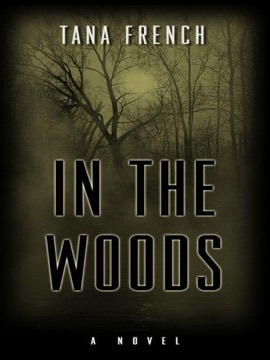
It is the most divisive book in the series and, for readers who respond to it, among the best. Anyone unsure should start with In the Woods or The Likeness instead.
What to take away
- 01One day of interviewsThe present-day investigation is almost entirely conversation in rooms across a single day, and the pressure is what accumulates between them.
- 02Adolescent friendship taken seriouslyThe girls' pact is written as genuinely powerful rather than as a phase, and the refusal to condescend is the book's distinguishing quality.
- 03Cruelty described mechanicallyThe withheld invitation and the circulated photograph are specified exactly, which is rarer than general accounts of bullying.
- 04An uncanny element left openThe novel neither confirms nor dismisses the suggestion that the pact produced something real, which divides readers sharply.
- 05Ambition examined, not excusedMoran's use of a teenager's trust for career advancement is looked at directly and not defended.
- 06Who is accustomed to being believedThe interviews are shaped throughout by class, and French is precise about the detectives' position relative to the school's wealth.