The Riddle of the Sands
Erskine Childers's 1903 novel in which two Englishmen sailing the Frisian coast uncover preparations for an invasion. Generally credited as the first modern spy novel.
- First published
- 1903
- Publisher
- Dodd, Mead & co.
- Pages
- 299
- Shelf
- Thriller
- Level
- Core
- ISBN-13
- 9798529945643
Record checked against
Catalogue note
- Reads as
- ReflectiveChanges how you see rather than what you do.
- Level
- Core / BuildingAssumes general familiarity with the subject.
- Approach
- Theoretical
- Written for
- Readers who mean to stop at one more chapter, Readers with some grounding
- Ideas
Saved in this browser only — no account, nothing sent anywhere. My library
Read this if
- You want to be kept up late, and made uneasy about who to believe.
- You want a book that changes how you see things rather than what you do tomorrow.
- You know roughly how the subject works and want the fuller account.
The premise
Carruthers, a bored young Foreign Office clerk, accepts an unpromising invitation to join an acquaintance for a sailing holiday in the Baltic and the Frisian Islands.
He arrives expecting comfort and finds a small, spartan converted lifeboat and a friend who is evasive about why he wants company. What begins as a tedious cruise becomes an investigation of what is being built among the sandbanks.
The two men
Davies is shabby, socially awkward, an exceptional sailor and sincerely patriotic. Carruthers is polished, snobbish, initially contemptuous and gradually shamed into usefulness.
The friendship is the novel's real subject, and Carruthers's slow revision of his own values is handled with more care than the espionage plot.
The plot uncovers a secret. The book is about one man reconsidering what he admires.
Devmark’s reading — not a quotation from the book
Sailing as procedure
The navigation is exhaustively detailed: tides, soundings, channels, anchorages and the specific hazards of drying sandbanks in fog.
Childers was a serious sailor and the book was written from cruises he had made. The detail is authentic to the point of difficulty, and much of the suspense is generated by whether a passage can be made before the tide turns.
Why the Frisian setting matters
The shallow, shifting waters between the Dutch and German coasts are navigable only by small craft with local knowledge, which is exactly what makes the discovery plausible.
The geography is the plot. What the pair uncover could only be concealed in such a place, and only found by people small and persistent enough to get in.
The political purpose
Childers wrote it as advocacy. He believed Britain was unprepared for German naval ambition and wanted the North Sea coast taken seriously, and the novel includes an epilogue arguing the case directly.
It had measurable effect on public debate about naval preparedness, which is a rare thing for a thriller and part of why it is remembered.
The invasion-scare tradition
It belongs to a substantial late-Victorian and Edwardian genre of future-war fiction, written to alarm a public about a coming continental enemy. Almost all of it is now unreadable, and most of it was unreadable at the time.
Childers's book survived because it subordinates the polemic to a convincing physical adventure and to two characters worth spending time with, where its contemporaries generally did the reverse and produced pamphlets with plots attached.
What it invented
The amateur who stumbles into a state secret, the documentary apparatus of maps and appendices, and the insistence on procedural accuracy all begin here in recognisable form.
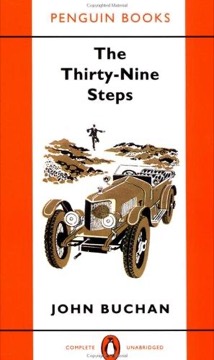
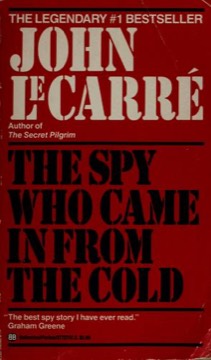
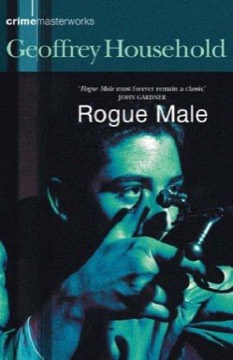
Ambler, Buchan, Household and le Carré each inherit something from it, and its claim to be the first modern spy novel rests on that combination rather than on any single element.
The apparatus
The book is presented as an edited account with a preface, charts, tide tables and footnotes, and the maps are meant to be consulted.
This is an early instance of the documentary technique that Forsyth and Clancy later industrialised — realism asserted by the presence of paperwork.
Difficulty
The nautical vocabulary is dense and largely unglossed, and readers without sailing experience will lose the thread of some manoeuvres.
The novel survives this better than expected, because the tension usually rests on time and visibility rather than on technique, but it is the main obstacle to a modern reader.
Childers himself
The author's later life is unusually dramatic: he ran guns for the Irish Volunteers in a private yacht, served in the Royal Navy in the First World War, took the republican side in the Irish Civil War and was executed by the Free State in 1922.
The biography is not required to read the book, but it does make the novel's convictions about small boats and national loyalty read differently.
The pace
It is slow by modern standards and slowest in its first third, where very little happens except an unhappy guest adjusting to an uncomfortable boat.
The payoff is that when the investigation begins, the reader has an unusually concrete sense of the vessel, the water and what is physically possible.
Reading it now
It is out of copyright and widely available, and readers who like sailing, fog, tide tables and slowly ripening dread will find that it holds up remarkably well for a book first published in 1903.
Anyone wanting espionage in the later sense should know that there is no tradecraft in it at all. There is no service, no handler and no training. The secret is found by two amateurs with a lead line and too much time.
What to take away
- 01The amateur discoveryTwo civilians on holiday uncover a state secret, establishing a premise the genre has used ever since.
- 02Geography as the mechanismThe shifting Frisian sandbanks are the only place the secret could be hidden and the only kind of place two men in a small boat could find it.
- 03Documentary realismCharts, tide tables and an editorial preface assert authenticity through paperwork, a technique later industrialised.
- 04Polemic carried by characterIt was written to change naval policy, and survives because the argument is subordinated to a friendship.
- 05Suspense from tide and fogTension comes from whether a passage can be made in time, not from confrontation.
- 06A first draft of the genreThe amateur hero, the procedural density and the reluctant patriotism all begin here in recognisable form.