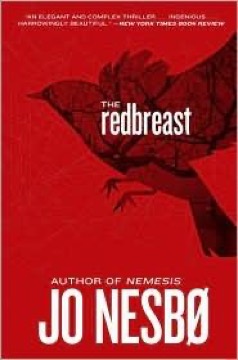
The Redbreast
Jo Nesbø's 2000 novel, the third Harry Hole book and the first widely translated, which moves between wartime Norwegian volunteers on the Eastern Front and a present-day investigation in Oslo.
- First published
- 2000
- Publisher
- Harper
- Pages
- 448
- Shelf
- Thriller
- Level
- Core
- ISBN-13
- 9780061133992
Record checked against
Two sources agreed on 2000; a third reported differently (openlibrary 2007, wikidata 2000, wikipedia 2000).
Catalogue note
- Reads as
- ReflectiveChanges how you see rather than what you do.
- Level
- Core / BuildingAssumes general familiarity with the subject.
- Approach
- Theoretical
- Written for
- Readers who mean to stop at one more chapter, Readers with some grounding
Saved in this browser only — no account, nothing sent anywhere. My library
Read this if
- You want to be kept up late, and made uneasy about who to believe.
- You want to understand how power is taken, kept and lost.
- You want a book that changes how you see things rather than what you do tomorrow.
- You know roughly how the subject works and want the fuller account.
The premise
Harry Hole, sidelined after an embarrassing incident during a presidential visit, is assigned to monitor neo-Nazi activity in Oslo. A rare and expensive rifle has entered the country, and nobody knows who bought it or why.
Alongside this runs a second narrative set in 1944, following Norwegian volunteers fighting for Germany in the trenches outside Leningrad.
A rifle bought in the present, and a debt incurred in 1944.
Devmark’s reading — not a quotation from the book
Norway's war
The novel's subject is the Norwegian volunteers who fought for the Waffen-SS, the treatment of them afterwards, and the country's preference for a simplified account of the occupation in which everyone resisted.
This is genuinely uncomfortable national material, and Nesbø handles it with more seriousness than anything else in the series.
Dual timeline
The 1944 sections are written as a continuous narrative rather than as flashback fragments, and they are substantial enough to function as a novella inside the book.
The two strands converge late, and the identity linking them is the plot's central concealment. The construction is ambitious and mostly successful.
The trenches
The Eastern Front material is the strongest writing Nesbø has done: cold, lice, boredom, sudden death and the specific psychology of men who have chosen the losing side for reasons they can no longer articulate.
It is researched carefully and rendered without either glamour or easy condemnation.
Betrayal and revenge
The present-day plot is ultimately a revenge narrative with a very long fuse, and the moral weighting is deliberately unstable: the avenger's grievance is real and his method is indefensible.
Nesbø refuses to resolve this. The book's sympathies are genuinely divided in a way his later novels rarely are.
Harry, earlier
He is already alcoholic and insubordinate but less damaged than in the later books, and his relationships here — with Ellen, with Rakel — set up consequences that run through the rest of the series.
This is where the series' emotional architecture is built, which is why it is usually recommended as the real starting point.
Neo-Nazism in the present
The contemporary far-right material is specific: a bookshop, a skinhead scene, a network of older sympathisers, and police who regard it as a nuisance rather than a threat.
Nesbø connects present and past without arguing that they are identical, which is a more careful position than the premise might suggest.
Structure and pace
It is long, with a slow first third that establishes two settings and a large cast before the connection between them becomes visible.
Readers who persevere generally find the final quarter the strongest writing in the entire series, where the two timelines resolve against each other and several apparently incidental details from the 1944 sections turn out to have been load-bearing all along.
Ellen
Harry's partner is the most likeable character in the book, and what happens to her drives several subsequent novels.
Her treatment has been criticised as an instance of a woman existing to motivate a male protagonist, which is a fair description of the function even if the writing is better than the pattern usually allows.
The prose
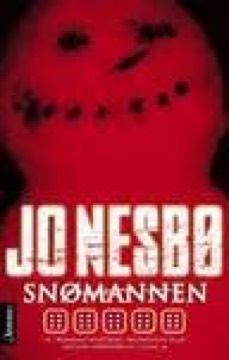
Plainer and less propulsive than The Snowman, with more descriptive writing and a slower rhythm.
The translation by Don Bartlett is generally considered good, and the 1944 sections in particular read with a gravity that the contemporary chapters do not always match. The tonal gap between the two strands is noticeable, and probably unavoidable.
Series order
It is the third Hole novel but the first translated into English, which caused lasting confusion. The two preceding books are set largely outside Norway and are not required.
It is the correct place to begin the series, since the consequences established here run through every subsequent volume.
Standing
It won the Norwegian booksellers' prize and has been voted the best Norwegian crime novel of all time by readers of a national newspaper.
Among Nesbø's own books it is generally considered his most substantial, chiefly because of the historical material and because it is the one novel where he is plainly writing about something other than a crime. The later books are more efficient and less serious.
What to take away
- 01A national story complicatedThe novel's subject is Norwegians who volunteered for the Waffen-SS, and a country that preferred a simpler account of occupation.
- 02A novella inside a thrillerThe 1944 sections run as continuous narrative rather than flashback, substantial enough to stand alone.
- 03Divided sympathiesThe avenger's grievance is legitimate and his method is not, and the book declines to resolve the imbalance.
- 04Where the series is builtThe relationships established here generate consequences that run through every later Harry Hole novel.
- 05Past and present, not equatedNesbø links wartime collaboration to contemporary neo-Nazism without claiming they are the same thing.
- 06Translation order confusionThird in the series but first into English, which is why the two earlier books are rarely read.