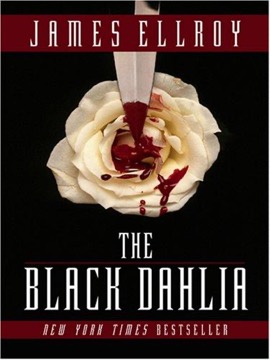
The Black Dahlia
James Ellroy's 1987 novel built around the real, unsolved 1947 murder of Elizabeth Short in Los Angeles. The first of the LA Quartet.
- First published
- 1987
- Publisher
- Rivages
- Pages
- 444
- Shelf
- Thriller
- Level
- Deep
- ISBN-13
- 9780712619950
Record checked against
Catalogue note
- Reads as
- ReflectiveChanges how you see rather than what you do.
- Level
- Advanced / AdvancedAssumes you have read around the subject already.
- Approach
- Theoretical
- Written for
- Readers who mean to stop at one more chapter, Specialists and serious readers
- Ideas
Saved in this browser only — no account, nothing sent anywhere. My library
Read this if
- You want to be kept up late, and made uneasy about who to believe.
- You want a book that changes how you see things rather than what you do tomorrow.
- You have read around this already and want a book that assumes it.
The premise
Two Los Angeles policemen, both former boxers, are partnered after a publicity bout and assigned to the investigation of a young woman found mutilated in a vacant lot in January 1947.
The case is real and was never solved. Ellroy builds a fiction around it in which the investigation consumes both men entirely.
The real case
Elizabeth Short was twenty-two, had come to Los Angeles with vague ambitions, and her killing produced one of the largest and most sensational manhunts in the city's history.
Ellroy keeps the documented facts of the discovery and the press frenzy and invents everything else, including a solution the historical record does not support.
The author's own history
Ellroy's mother was murdered in 1958 when he was ten, and the crime was never solved. He has written repeatedly about conflating her death with Short's as a child.
The novel is therefore a displacement, and it is unusually open about the psychology of obsession because its author was describing something he had lived.
A book about being unable to stop looking at a murdered woman, written by someone who could not.
Devmark’s reading — not a quotation from the book
Bucky Bleichert
The narrator is ambitious, self-serving and increasingly unable to distinguish his investigation from his private compulsions.
Ellroy's method is to let the reader watch a functional man disintegrate without the narration ever acknowledging that this is what is happening. Bucky reports his own decisions in the same even register throughout, and the gap between that steadiness and what he is actually doing is where the book generates its unease.
Obsession as structure
The plot is organised around the way the case colonises the men working it: their marriages, their finances, their sense of proportion.
This is the quartet's recurring subject. A crime is less an event to be solved than an infection that spreads through everyone who touches it.
The city
Postwar Los Angeles is rendered as a boom town — construction, vice, migration and a police force expanding faster than it can be supervised.
Ellroy's research into the period's geography, slang and institutions is extensive, and the texture is the most persuasive thing in the book.
The prose
Less compressed than the later novels, with longer sentences and more conventional description. The telegraphic style Ellroy became known for is still developing here.
Readers who find White Jazz impenetrable usually find this one entirely approachable, which makes it a reasonable place to start with him.
Violence against women
The mutilation is described, the sexual content is explicit, and the novel spends a great deal of time on the victim's sexual history.
Whether this constitutes examination or exploitation is the standing criticism of the book, and it is a fair question rather than a squeamish one.
Fiction on a real victim
Elizabeth Short was a real person with surviving family, and the novel gives her a fictional history, fictional relationships and a fictional killer.
Ellroy has defended this as the only honest response available to an unsolvable case. It remains the most serious ethical objection to the book.
The quartet
It is the first of four novels covering Los Angeles from 1947 to 1959, with overlapping characters and institutions, and it establishes the method the others refine.
L.A. Confidential is the strongest of the four; this is the most personal, and the one that explains what the sequence is for.
Structure
Three parts: the partnership, the investigation, and a long unravelling in which the case is nominally closed and nothing about it is resolved. The first part is almost a different novel, closer to a boxing story than to crime.
The final third is deliberately disorienting, with revelations arriving faster than the narrator can absorb them and several arriving through documents he misreads.
Who it is for
Readers willing to accept extreme content in the service of a genuine argument about obsession. It is the most emotionally exposed book Ellroy has written.
Readers who want a solved historical mystery should be clear that the solution offered is invented and has no evidentiary standing.
What to take away
- 01Fiction built on an open caseThe murder was real and unsolved; Ellroy keeps the documented discovery and invents a solution the record does not support.
- 02Displacement of a private griefThe author's own mother was murdered when he was ten, and he has described conflating the two killings as a child.
- 03A case as infectionThe investigation spreads through the investigators' marriages, finances and judgement — the quartet's recurring subject.
- 04Disintegration unacknowledgedThe narrator never registers his own collapse, which the reader is left to track around him.
- 05The standing objectionThe novel gives a real victim a fictional sexual history and a fictional killer, which is a fair ethical charge.
- 06The accessible EllroyThe telegraphic style is still forming here, making it the easiest entry point into the quartet.