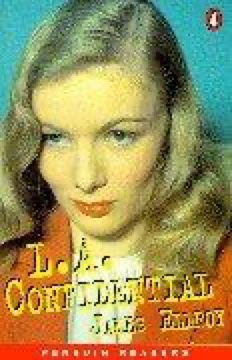
L.A. Confidential
James Ellroy's 1990 novel following three Los Angeles policemen through a decade of corruption, tabloid scandal and an unsolved massacre. The centre of his LA Quartet.
- First published
- 1990
- Publisher
- Random House Audio
- Pages
- 496
- Shelf
- Thriller
- Level
- Deep
- ISBN-13
- 9780804340113
Record checked against
Catalogue note
- Reads as
- ReflectiveChanges how you see rather than what you do.
- Level
- Advanced / AdvancedAssumes you have read around the subject already.
- Approach
- Theoretical
- Written for
- Readers who mean to stop at one more chapter, Specialists and serious readers
- Ideas
Saved in this browser only — no account, nothing sent anywhere. My library
Read this if
- You want to be kept up late, and made uneasy about who to believe.
- You want a book that changes how you see things rather than what you do tomorrow.
- You have read around this already and want a book that assumes it.
The premise
Los Angeles in the 1950s. A mass shooting at an all-night coffee shop called the Nite Owl is closed quickly with three suspects, and the closure is wrong.
Three policemen approach it from different directions: a political climber, a violent enforcer with a protective streak, and a well-born detective who sells information to a scandal magazine.
The three men
Ed Exley is ambitious, physically cowardly, and genuinely committed to a version of the law that serves his advancement. Bud White is brutal and fixated on men who hurt women. Jack Vincennes is corrupt, vain and technically a celebrity.
None is admirable and each is given a real interior life. The novel's shape is the slow, unwilling convergence of three people who dislike each other.
Three policemen who would not choose each other, working the same case from three directions.
Devmark’s reading — not a quotation from the book
Scope
The book covers roughly eight years and braids the Nite Owl case with heroin distribution, pornography, a planned suburban development, police scandal and organised prostitution.
Ellroy's method is accumulation. Threads that appear unrelated for hundreds of pages are eventually shown to share a cause, and the pleasure is structural as much as narrative.
The prose style
Sentences are clipped to their nouns and verbs, articles are dropped, and the register borrows from police reports, tabloid copy and racist barroom speech.
It is aggressive and takes some acclimatisation. Ellroy's later work pushes the compression much further; this novel is generally considered the point at which the style is at its most effective and still readable.
Documents as texture
Between chapters Ellroy inserts memoranda, surveillance logs, tabloid articles, internal affairs transcripts and coroner's findings, which advance the plot and supply institutional detail without any narration at all.
The device also controls information cleanly. The reader frequently knows something from a document that no character in the following scene has seen, so a conversation can be read two ways at once — as the participants understand it, and as the paperwork has already contradicted it.
The historical material
Bloody Christmas, the Sleepy Lagoon aftermath, the atmosphere around Mickey Cohen, the tabloid Confidential and the founding of a theme park all appear in lightly fictionalised form.
Ellroy mixes documented events with invention without marking the boundary, which is the book's most argued-over quality and is central to its effect.
Los Angeles as subject
The city here is a machine for converting land, publicity and violence into money, and the police are one of its operating departments rather than a check on it.
The vision is considerably darker than Chandler's. There is no honourable outsider, and the corruption is not an aberration in the system but the system's actual method.
Women in the novel
The most developed female character is a prostitute working at an agency where women are surgically altered to resemble film stars, and she is given more agency and clearer judgement than most of the policemen.
The book's general treatment of women is still brutal, and the violence against them is frequent and graphically rendered. Ellroy's defenders read this as diagnosis; it is legitimate to read it as indulgence.
Violence
It is extreme, frequent and described plainly. The novel opens with a police beating and does not moderate from there.
Readers should know this going in. The brutality is not gratuitous in the sense of being unmotivated, but it is relentless and the book offers very little relief from it.
The film
Curtis Hanson's 1997 adaptation compresses the timeline, drops several plot strands, and softens the ending considerably. It is excellent and it is a different work.
Readers arriving from the film will find the novel far longer, far darker, and structured around material the film could not accommodate.
The film keeps three characters and a case. The novel keeps a decade.
Devmark’s reading — not a quotation from the book
Its place in the quartet
It is the third of four LA novels and stands alone, though characters and consequences carry across all of them.
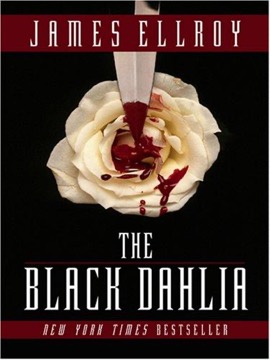
It is generally regarded as the strongest and is the usual entry point. The Black Dahlia precedes it chronologically and is the more conventional novel; White Jazz, which follows, is much harder going.
Who it is for
Readers who want ambition, density and a plot that genuinely rewards holding five threads at once. It is one of the most intricately constructed crime novels in English.
It is not for readers who want restraint, sympathetic protagonists or prose that gets out of the way. Every one of those is deliberately refused.
What to take away
- 01Three unwilling protagonistsA climber, an enforcer and a corrupt celebrity cop converge on one case from directions that keep them hostile.
- 02Accumulation as structureThreads that look unrelated for hundreds of pages prove to share a cause; the pleasure is architectural.
- 03Telegraphic proseArticles dropped, sentences clipped to nouns and verbs, register borrowed from police reports and tabloid copy.
- 04Documents carry the institutionMemos, logs and tabloid copy between chapters supply detail and let the reader know things the characters do not.
- 05Corruption as the methodThe police are an operating department of a machine that turns land and publicity into money, not a check on it.
- 06History without marked boundariesDocumented events and invention are mixed without signposting, which is the book's most contested quality.