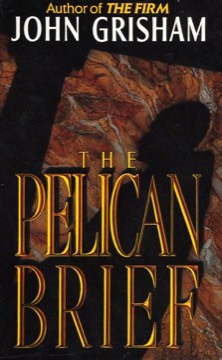
The Pelican Brief
John Grisham's 1992 novel in which a law student writes a speculative memorandum about two Supreme Court assassinations and becomes a target for having been right.
- First published
- 1992
- Publisher
- Random House Audio
- Pages
- 400
- Shelf
- Thriller
- Level
- Entry
- ISBN-13
- 9780582816978
Record checked against
Catalogue note
- Reads as
- ReflectiveChanges how you see rather than what you do.
- Level
- Accessible / FoundationalNo prior reading assumed.
- Approach
- Theoretical
- Written for
- Readers who mean to stop at one more chapter, Newcomers to the subject
Saved in this browser only — no account, nothing sent anywhere. My library
Read this if
- You want to be kept up late, and made uneasy about who to believe.
- You want to understand how power is taken, kept and lost.
- You read for the writing as much as for the argument.
- You want a book that changes how you see things rather than what you do tomorrow.
- You are starting from scratch here and want a way in that assumes no prior reading.
The premise
Two Supreme Court justices are assassinated on the same night. Darby Shaw, a second-year law student at Tulane, writes a speculative brief connecting the killings to a pending environmental case and an oil-drilling interest.
She gives it to her professor, who passes it to a friend at the FBI. Within days he is dead and she is being hunted.
A student's speculative memo turns out to be correct, which is the worst thing that could have happened to her.
Devmark’s reading — not a quotation from the book
The premise's strength
The novel's best idea is that the protagonist is endangered not by evidence but by a hypothesis, and that nobody needs to know whether she is right in order to want her dead.
The situation requires no conspiracy of unusual competence, only people protecting an investment.
Darby
She is intelligent, methodical and entirely unprepared for being pursued, and her survival depends on legal research skills rather than on physical capability.
Grisham keeps her competence in her own domain, which is more credible and more interesting than making her suddenly capable of everything.
Environmental politics
The case at the centre concerns drilling in a Louisiana marsh and a protected species, and the novel is more interested in the mechanics of influence than in the ecology.
The depiction of how a case reaches the Supreme Court and why a party would pay to change its composition is the book's most substantial material.
Journalism
The second half brings in a Washington reporter, and the investigation becomes a question of whether a story can be published without corroboration.
The newsroom material is thinner than the legal material and follows a familiar pattern, though the verification problem is handled concretely. Grisham also uses the reporter to supply a second perspective on Darby's situation, which lets the novel show her from outside after two hundred pages inside her head.
Pace
Short chapters, frequent viewpoint shifts and a chase structure that accelerates steadily.
Grisham's construction is reliable and the book is designed for continuous reading, with almost no passage that does not advance the situation. The viewpoint shifts also include the people pursuing her, which gives the reader information she does not have and converts several sequences into dread.
Plausibility
The central conspiracy requires a small number of people to act decisively and expensively, which is more credible than most thriller premises.
Several of Darby's escapes rely on coincidence, and the final third is looser than the setup. Grisham is also vague about several operational details, which is a reasonable decision given that specifying them would invite exactly the scrutiny they could not survive.
Prose
Plain, transparent and entirely functional, with dialogue carrying most of the work and no figurative language.
Grisham writes at speed for speed and the style is a delivery mechanism, as in all his work. The legal passages are also noticeably more confident than the action ones, which is consistent across Grisham's work and reflects where his expertise lies.
Politics
The novel is sceptical about the relationship between money and the courts and about executive interference in the FBI.
The position is stated rather than argued, and the book's politics are broadly liberal in a way that is uncomplicated. The novel is also more interested in institutional capture than in individual corruption, which is a slightly more sophisticated position than its treatment of it.
Its place in his work
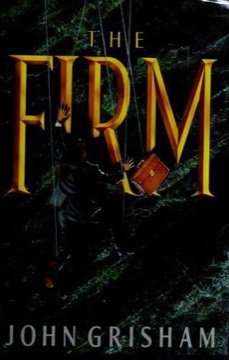
It followed The Firm and confirmed Grisham's commercial position, and it is generally considered among his better-plotted books.
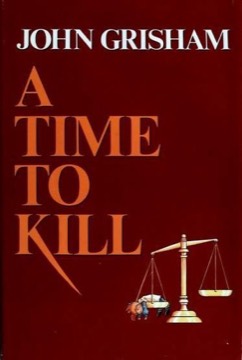
A Time to Kill remains his most substantial novel; this is his most efficient conspiracy thriller. It was published a year after The Firm and confirmed that the first book had not been an accident, which mattered considerably to his career at the time.
The film
A 1993 adaptation with Julia Roberts and Denzel Washington is faithful and successful, and is how most people know the story.
The novel gives more space to the legal reasoning behind the brief, which is the element the film necessarily compresses. The adaptation also casts the reporter as a considerably larger figure than the novel does, which balances the two leads more evenly than the book.
Who it is for
Readers who want a legal conspiracy thriller with a good premise and reliable momentum.
It requires no legal knowledge and is entirely self-contained. Readers who found The Firm satisfying will find this the same machine applied to a different situation. It is also short by Grisham's later standards, and readers who found his subsequent novels bloated will find this one notably disciplined.
What to take away
- 01Endangered by a hypothesisDarby is hunted for a speculation rather than for evidence, and nobody needs to verify it to want her dead.
- 02A conspiracy of ordinary sizeThe plot requires only a few people protecting an investment rather than an improbably competent organisation.
- 03Competence kept in its domainShe survives through legal research rather than by becoming suddenly capable of everything.
- 04Influence as the subjectHow a case reaches the Supreme Court and why someone would pay to change its composition is the book's best material.
- 05Verification as a plot problemThe second half turns on whether a story can be published without corroboration, handled concretely.
- 06The same machine, different situationIt applies The Firm's construction to a conspiracy premise, reliably and without stylistic ambition.