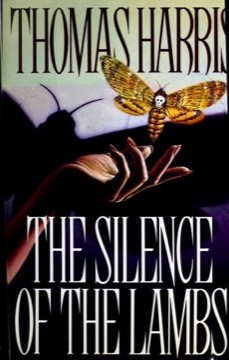
The Silence of the Lambs
Thomas Harris's 1988 novel in which an FBI trainee is sent to interview Hannibal Lecter as part of a hunt for a killer who skins his victims.
- First published
- 1988
- Publisher
- St Martins Press Inc (M/M)
- Pages
- 352
- Shelf
- Thriller
- Level
- Core
- ISBN-13
- 9788497599368
Record checked against
Catalogue note
- Reads as
- ReflectiveChanges how you see rather than what you do.
- Level
- Core / BuildingAssumes general familiarity with the subject.
- Approach
- Theoretical
- Written for
- Readers who mean to stop at one more chapter, Readers with some grounding
- Ideas
Saved in this browser only — no account, nothing sent anywhere. My library
Read this if
- You want to be kept up late, and made uneasy about who to believe.
- You want a book that changes how you see things rather than what you do tomorrow.
- You know roughly how the subject works and want the fuller account.
The premise
Clarice Starling, a trainee at the FBI academy, is sent to interview Hannibal Lecter ostensibly for a questionnaire, in fact because her superior believes Lecter may know something about an active case.
A killer the press calls Buffalo Bill has abducted and killed five women. A senator's daughter is taken, and the timetable becomes immediate.
A trainee sent to interview a man who will only talk to her, about a case she has not been assigned.
Devmark’s reading — not a quotation from the book
Starling
She is from a poor West Virginia background, orphaned, and acutely aware that she is being assessed continuously by men who outrank her.
Her class position is as important as her gender and the novel is precise about both. Nearly every exchange includes someone deciding what she is before listening to her.
The exchange
Lecter provides information in return for details of Starling's childhood, and the structure of the novel is a sequence of these transactions.
The device is the book's engine. Each piece of help costs her something private, and the escalating price is what generates the tension rather than any physical threat.
Lecter expanded
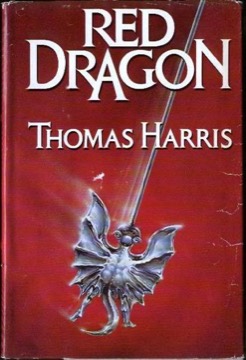
He has considerably more presence than in Red Dragon and is given both a theatrical set piece and a sustained relationship with the protagonist.
This is where the character becomes the cultural property he is now, and the inflation is already visible: he is more capable, more theatrical and less plausible than in the earlier book.
Buffalo Bill
The killer's psychology is explained specifically and the novel is careful to distinguish his condition from being transgender, having a character state the distinction directly.
The distinction is made and the portrayal has nevertheless been persistently harmful in reception, particularly through the film, and both facts are worth stating.
Institutions
The FBI here is political: Crawford manipulates his trainee, a rival agency obstructs, and a senator's involvement distorts the investigation's priorities.
Harris is consistently interested in how bureaucratic incentives shape what gets investigated, which gives the procedural texture more weight than a straightforward hunt would have.
The title
It refers to Starling's account of trying to rescue lambs from slaughter as a child, which Lecter extracts from her and uses.
The image is the book's organising metaphor for her motivation, and it is delivered late enough to reframe everything she has done up to that point.
Pace
It is considerably faster than Red Dragon, with a hard deadline, shorter chapters and a more conventional escalation.
The commercial shape is more evident, and the book is the more exciting of the two and the less unsettling. Harris also cuts between Starling, the killer and the abducted woman, which adds a third clock the earlier novel did not have.
The prose
Harris writes with the same spare attention as before and adds a slightly more mannered register for Lecter's dialogue.
The mannerism is effective here and became a liability in the later books, where the character's voice takes over the prose surrounding him. The forensic set pieces are also more explicit here, and the autopsy sequence in particular is written with a clinical precision that several readers find harder than the violence.
The film
Jonathan Demme's 1991 adaptation is extremely faithful and swept the major Academy Awards, and its performances have entirely defined both characters publicly.
The novel gives more room to Starling's institutional difficulties and to the forensic procedure, and Lecter is fractionally less dominant on the page.
The sequels
Hannibal and Hannibal Rising follow, and both are widely considered substantially weaker, particularly in their treatment of Starling.
Readers are generally advised to stop after this book, or to read Red Dragon and this and nothing else. Harris has said very little about them publicly, and the general view among readers is that the story was complete at the end of this book.
Who it is for
Readers who want a tightly plotted procedural with a genuinely good central relationship, and who can tolerate explicit forensic material.
It is the best-known book in this section and holds up well, though readers who prefer their thrillers unsettling rather than propulsive should start with Red Dragon.
What to take away
- 01Help that costs something privateEvery piece of information Lecter supplies is paid for with a childhood detail, and the escalating price is the engine.
- 02Class as much as genderStarling's poor West Virginia background is as constantly assessed as her being a woman, and the novel is precise about both.
- 03Bureaucratic distortionA senator's involvement and interagency rivalry reshape the investigation's priorities, which gives the procedure real weight.
- 04A distinction made and not receivedThe novel explicitly separates the killer's condition from being transgender, and the portrayal has still done harm in reception.
- 05A metaphor delivered lateThe lambs Starling failed to save arrive late enough to reframe everything she has done.
- 06A character beginning to inflateLecter is more theatrical and less plausible here than in Red Dragon, and the later books continue that trajectory.