Red Dragon
Thomas Harris's 1981 novel in which a retired FBI profiler is brought back to find a family annihilator, and consults the imprisoned psychiatrist who nearly killed him. The origin of the modern serial-killer procedural.
- First published
- 1981
- Publisher
- Gardners Books
- Pages
- 373
- Shelf
- Thriller
- Level
- Core
- ISBN-13
- 9783453198630
Record checked against
Catalogue note
- Reads as
- ReflectiveChanges how you see rather than what you do.
- Level
- Core / BuildingAssumes general familiarity with the subject.
- Approach
- Theoretical
- Written for
- Readers who mean to stop at one more chapter, Readers with some grounding
- Ideas
Saved in this browser only — no account, nothing sent anywhere. My library
Read this if
- You want to be kept up late, and made uneasy about who to believe.
- You want a book that changes how you see things rather than what you do tomorrow.
- You know roughly how the subject works and want the fuller account.
The premise
Will Graham left the FBI after being seriously injured capturing Hannibal Lecter. Two families have been murdered on consecutive full moons, and his former superior comes to Florida to ask him to look at the scenes.
Graham's method is imaginative reconstruction: standing where the killer stood and working out what he wanted. To recover his facility for it, he visits Lecter.
A man whose talent is understanding killers, asked to use it again by the one who nearly killed him.
Devmark’s reading — not a quotation from the book
Empathy as a professional tool
Graham's ability is presented as a liability rather than a gift: he can inhabit a murderer's reasoning, and doing so costs him his marriage, his health and very nearly his mind.
This is the book's central idea and the one that reshaped the genre. The investigator's insight is understanding rather than deduction, and understanding is treated as contamination.
Francis Dolarhyde
The killer is given a full and sympathetic backstory — an abusive grandmother, a cleft palate, a childhood of humiliation — and roughly a third of the novel is told from his perspective.
Harris's refusal to keep him a cipher is what distinguishes the book. He is comprehensible, and comprehensibility is considerably more disturbing than mystery would be.
The Blake painting
Dolarhyde's identification with the figure in Blake's The Great Red Dragon and the Woman Clothed in Sun organises his psychology and his self-narration.
The device gives the killer an internal logic and an aesthetic, and the sequence in which he confronts the painting itself is among the novel's best.
Lecter
He appears in only a few scenes and is confined throughout, and his contribution is conversation rather than action.
The restraint is what made the character work before his later inflation. Here he is a resource Graham must pay for in personal information, and the transactions are the most tense material in the book.
Procedure
The forensic detail — hair and fibre analysis, fingerprint recovery, the processing of a crime scene, the Behavioral Science Unit's methods — is accurate for its period and delivered concretely.
Harris researched at Quantico, and the book effectively introduced the public to profiling as a discipline.
Reba
Dolarhyde's relationship with a blind colleague is the novel's most unusual material: genuinely tender, and conducted by a man who selects her partly because she cannot see him.
The sequence is sustained and uncomfortable, and it gives the final act a stake beyond the investigation.
Structure
The novel alternates between Graham's investigation and Dolarhyde's life, with the reader knowing the killer's identity long before the FBI does.
The suspense is therefore about timing rather than identity, and Harris manages the convergence with considerable precision. Harris also gives Dolarhyde a working life and colleagues, which keeps him embedded in an ordinary world rather than isolated in a lair.
Prose
Spare, present-tense in places, and unusually attentive to physical sensation and to smell.
Harris writes crime scenes with a restraint that makes them worse: he describes what is present rather than dwelling on what happened, and the reader supplies the rest. He also uses second person occasionally, addressing the killer directly, which is a small formal risk that pays off in the final act.
What it started
The profiler, the imprisoned consultant, the killer with a comprehensible psychology, and the investigation conducted partly inside the murderer's head all descend from this book.
An entire commercial genre and a great deal of television is working inside the pattern Harris established here. Harris has written very little since, and the scarcity has probably helped the reputation of the two books that matter.
The adaptations
Michael Mann's Manhunter and a later film both adapt it, and the television series Hannibal draws heavily on its material while restructuring it substantially.
Mann's version is the closest in tone. The novel remains more procedural and gives Dolarhyde considerably more room. Hannibal the television series in particular borrows this novel's structure for its third season while rearranging almost everything about it.
Who it is for
Readers who want the serial-killer procedural in its original and most disciplined form, before the genre's conventions hardened.
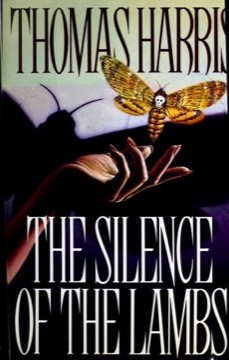
It is shorter and tighter than The Silence of the Lambs and is the better novel by most measures, and it requires no knowledge of anything that follows.
What to take away
- 01Understanding as contaminationGraham's ability to inhabit a killer's reasoning costs him his marriage and his health, and is presented as a liability.
- 02A killer made comprehensibleA third of the novel is Dolarhyde's perspective, and his being explicable is considerably worse than mystery would be.
- 03A consultant who must be paidLecter appears rarely and charges in personal information, which is why the character worked before his later inflation.
- 04Suspense about timing, not identityThe reader knows the killer long before the FBI does, so the tension is entirely in the convergence.
- 05Restraint at crime scenesHarris describes what is present rather than what happened, and the reader supplies the remainder.
- 06A genre establishedThe profiler, the imprisoned consultant and the investigation conducted inside the killer's head all begin here.