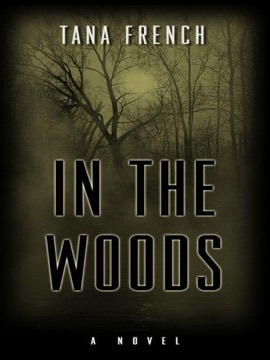
In the Woods
Tana French's first Dublin Murder Squad novel, in which a detective investigating a child's death at an archaeological site is the same boy who survived a disappearance in the same woods twenty years earlier.
- First published
- 2007
- Publisher
- Scherz Verlag GmbH
- Pages
- 578
- Shelf
- Mystery
- Level
- Core
- ISBN-13
- 9783502101918
Record checked against
Two sources agreed on 2007; a third reported differently (openlibrary 2001, wikidata 2007, wikipedia 2007).
Catalogue note
- Reads as
- ReflectiveChanges how you see rather than what you do.
- Level
- Core / BuildingAssumes general familiarity with the subject.
- Approach
- Theoretical
- Written for
- Readers who want to be kept up late, Readers with some grounding
- Ideas
Saved in this browser only — no account, nothing sent anywhere. My library
Read this if
- You want to be kept up late, and made uneasy about who to believe.
- You want a book that changes how you see things rather than what you do tomorrow.
- You know roughly how the subject works and want the fuller account.
The premise
In 1984 three children went into the woods outside a Dublin suburb. One was found hours later, gripping a tree, his shoes filled with blood, remembering nothing. The other two were never found.
Twenty years on, Rob Ryan is a murder detective who has told nobody. A twelve-year-old girl is found dead on an archaeological dig in the same wood, and he takes the case.
He takes the case knowing exactly why he should not, and the novel is about that decision.
Devmark’s reading — not a quotation from the book
What kind of book it is
French writes literary crime: the procedural is real and well handled, but the subject is the narrator's psychology and the partnership between Rob and his colleague Cassie Maddox, which is the best-drawn relationship in the series.
Her prose is much denser than the genre norm, and the Irish setting — Celtic Tiger development destroying archaeological sites — is doing thematic work rather than providing atmosphere.
The thing readers argue about
The book resolves one of its two mysteries and not the other, deliberately. Readers divide permanently on whether this is the novel's most honest move or a failure of nerve.
French has been consistent that memory and recovery do not work the way crime fiction requires, and that supplying an answer would have falsified the book's own subject.
One mystery is solved and one is not, on purpose, and readers have never stopped arguing about it.
Devmark’s reading — not a quotation from the book
The series
First of six loosely linked Dublin Murder Squad novels, each narrated by a different detective who appeared as a secondary character in an earlier book.
They can be read in any order, but this one first gives the structure its effect.
French left journalism and acting for fiction and the books show it: each narrator's voice is genuinely distinct, which is unusual in a series and is the main reason readers keep going.
Two cases
A present-day murder of a child in a wood is investigated by a detective who, as a boy, was found in the same wood with blood in his shoes and no memory of the two friends who vanished. French runs both and resolves only one, which is the source of most reader complaint and is clearly deliberate.
Rob and Cassie
The partnership is the book's real achievement: a friendship between two detectives written with such specificity that it becomes the thing the reader is invested in. The private shorthand, the evenings in Cassie's flat, the takeaway, the jokes nobody else would find funny. Its slow deterioration is the actual tragedy of the novel, regardless of what happens to either of the cases.
The murder is solved. What is destroyed is the friendship, and that is the book.
Devmark’s reading — not a quotation from the book
An untrustworthy narrator who warns you
Rob opens the book by telling the reader directly that he lies, that he is drawn to the dramatic gesture over the sensible one, and that he damages things and people. It is stated plainly in the first few paragraphs, before any plot arrives, and readers routinely forget it entirely by the halfway point. That forgetting is precisely the effect French is working for, and the ending depends on it.
The archaeological dig
The wood is being cleared to make way for a motorway, and an archaeological excavation is racing the bulldozers to record what is there first. This supplies the plot's deadline and its theme simultaneously: a country building over its own past at speed and calling it progress. The boom-era economics are not atmosphere in this novel; they are motive, and they reach into the investigation itself.
Where it is divisive
The unresolved thread is the most complained-about element in contemporary crime fiction, and French has been unapologetic: the book is about a man who cannot recover what happened to him, and supplying the answer would falsify its subject. Readers should decide before starting whether that is acceptable.
How the series works
Each Dublin Murder Squad novel promotes a minor character from the previous book to narrator, so the sequel is Cassie's. It means no book resolves the one before it, and it means the reader's view of any given detective is permanently shaped by someone else's account of them.
What to take away
- 01The detective is the survivorHe investigates the wood he was found in as a child.
- 02Literary crimeDense prose and psychology carrying a real procedural.
- 03Rob and CassieThe partnership is the strongest element in the book.
- 04A deliberate non-resolutionOne mystery is left open, and French defends the choice.
- 05A rotating seriesEach subsequent book is narrated by a previous minor character.