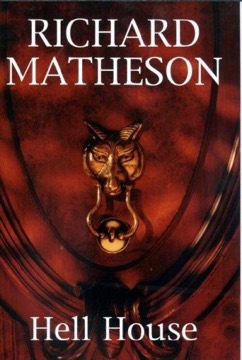
Hell House
Richard Matheson's 1971 novel in which four people are paid to spend a week in a house with a notorious history and establish whether survival after death is real.
- First published
- 1971
- Publisher
- Corgi
- Pages
- 268
- Shelf
- Thriller
- Level
- Core
- ISBN-13
- 9780552091763
Record checked against
Catalogue note
- Reads as
- ReflectiveChanges how you see rather than what you do.
- Level
- Core / BuildingAssumes general familiarity with the subject.
- Approach
- Theoretical
- Written for
- Readers who mean to stop at one more chapter, Readers with some grounding
- Ideas
Saved in this browser only — no account, nothing sent anywhere. My library
Read this if
- You want to be kept up late, and made uneasy about who to believe.
- You want a book that changes how you see things rather than what you do tomorrow.
- You know roughly how the subject works and want the fuller account.
The premise
A dying millionaire hires a physicist, his wife, a mental medium and a physical medium to determine whether anything survives death, and sends them to the Belasco house in Maine — the only one of its kind still standing.
They have a week. Previous investigations have produced one survivor, who is among the four.
Four people, one week, and a house that has already destroyed everyone else who tried.
Devmark’s reading — not a quotation from the book
The scientific frame
Dr Barrett has a theory: apparent hauntings are residual electromagnetic energy, and he has built a machine he believes will discharge the house entirely.
The novel takes his position seriously and gives him real arguments, which makes the book considerably more interesting than a straightforward ghost story.
Four positions
Each character holds an incompatible view: the physicist's materialism, the mental medium's spiritualism, the physical medium's experience, and the wife's scepticism about all of them.
The conflict between explanations generates most of the novel's tension, and the house exploits the disagreement between them deliberately. Matheson is also careful to give each of them a professional reason to want their own explanation confirmed, which means the disagreement is self-interested as well as intellectual.
Belasco
The house's former owner is described through documents and testimony as having conducted an extended programme of corruption among his guests.
The backstory is delivered rather than shown and is the novel's weakest element, tending toward a catalogue of depravity that is more listed than felt.
Sexual content
The house's method is primarily sexual: it works on its occupants through desire, shame and compulsion, and several sequences are explicit.
This was unusual in 1971 and is central rather than incidental. Readers should expect material that is intended to be uncomfortable and that occasionally reads as gratuitous.
Structure
The novel is organised by timestamp, with each section headed by a date and time, which produces a documentary rhythm and a constant sense of the week running down.
The device is simple and effective, and it gives the book an urgency that a conventional chapter structure would not.
Pace
It is fast and short, with incidents arriving steadily and almost no reflective passages.
Matheson was a working screenwriter and the construction shows: scenes are brisk, dialogue carries exposition, and the book does not linger. The week-long frame also means the novel never has room to slow down, and the incidents arrive at roughly the rate a reader can absorb them.
The house
The physical description is specific — a chapel, a steam room, a great hall, no windows — and the geography is consistent enough to be followed.
The interior is the novel's best material, and the absence of natural light is used continuously rather than mentioned once.
Its relation to Jackson
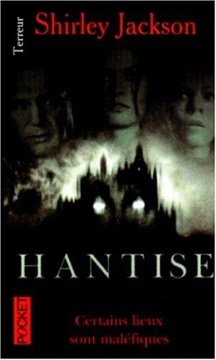
Shirley Jackson's The Haunting of Hill House preceded it by more than a decade and is the obvious comparison, and Matheson's book is deliberately its opposite.
Where Jackson withholds and implies, Matheson explains and depicts. Both approaches are legitimate and Jackson is the better writer; Matheson is the more propulsive.
The ending
The resolution provides a specific explanation for the house that is either satisfying or deflating depending on the reader, and it turns on a physical detail.
It is a genre solution rather than a metaphysical one, which is consistent with the book's method throughout. It also explains rather more than the genre usually permits, and readers who prefer their hauntings unexplained will find the final chapters deflating.
Matheson's position
He wrote I Am Legend, The Shrinking Man and a substantial amount of television, and his influence on King and on horror generally is considerable.
This is among his most sustained novels, and King has repeatedly named him as a formative influence. He also wrote extensively for The Twilight Zone, and the economy of his construction here owes a great deal to years of writing to a half-hour format.
Who it is for
Readers who want a fast, incident-heavy haunted-house novel with an argument about evidence underneath it.
It is not subtle and does not attempt to be. Readers who want atmosphere and restraint should read Jackson instead, and readers who want both should read both. It is also short enough to be read in a sitting, which suits a novel organised around a single week and designed to maintain continuous pressure.
What to take away
- 01Four incompatible explanationsA physicist, two mediums and a sceptic hold positions the house exploits against one another.
- 02A materialist theory taken seriouslyBarrett's electromagnetic account is given real arguments rather than being set up to fail.
- 03Desire as the mechanismThe house works through shame and compulsion rather than through fear, which was unusual in 1971 and is central.
- 04Timestamps as structureDated section headings produce a documentary rhythm and a constant sense of the week running out.
- 05The opposite of JacksonWhere Hill House withholds and implies, this explains and depicts, which is a deliberate and legitimate alternative.
- 06A genre solutionThe ending turns on a physical detail rather than on anything metaphysical, consistent with the book's method.