20th Century Boys
The Perfect Edition, Vol. 2
Naoki Urasawa's series, begun in 1999, in which a group of middle-aged friends realise that a cult is enacting an apocalypse they invented as children.
- First published
- 1999
- Publisher
- VIZ Media LLC
- Pages
- 416
- Shelf
- Anime
- Level
- Core
- ISBN-13
- 9782809488302
Record checked against
Catalogue note
- Reads as
- ReflectiveChanges how you see rather than what you do.
- Level
- Core / BuildingAssumes general familiarity with the subject.
- Approach
- Theoretical
- Written for
- Readers of comics, and anyone curious how the form works, Readers with some grounding
Saved in this browser only — no account, nothing sent anywhere. My library
Read this if
- You read for the writing as much as for the argument.
- You want a book that changes how you see things rather than what you do tomorrow.
- You know roughly how the subject works and want the fuller account.
What it is
Kenji, a failed musician running a convenience store, begins noticing events that match a story he and his friends made up in 1969 — a symbol, a plan for world destruction, a sequence of disasters.
The group reassembles in middle age to work out who is using their childhood game, and the series moves between 1969, the late 1990s and a future several decades further on.
Someone is following the apocalypse they drew in a field when they were ten.
Devmark’s reading — not a quotation from the book
The premise's strength
The central idea is genuinely original: a childhood fantasy, half-remembered by its own authors, being executed literally by someone who was there.
It generates an unusual investigative problem. The protagonists must reconstruct what they themselves invented, and their memories are unreliable in ways that matter to the plot.
Memory as the mechanism
Much of the series concerns what the friends recall differently, who was present at a given moment, and which details have been supplied later by retelling.
Urasawa builds genuine suspense out of misremembering, and several key revelations are simply a character finally recalling an afternoon correctly.
The Friend
The antagonist is masked, known only by a title, and his identity is the series' organising question — one that is answered, then complicated, then answered again.
The extended concealment is both the work's greatest strength and the source of its main weakness, since sustaining it requires several reversals that strain plausibility.
Nostalgia and its uses
The 1969 sections are precise about Japanese childhood at the time: the Osaka Expo, manga magazines, Western rock records, the specific social order of a group of ten-year-olds.
The series takes nostalgia seriously as a political force. The cult recruits by offering people a past they remember fondly, which is an unusually sharp observation for a thriller.
Structure and timelines
Three main periods run in parallel, with frequent movement between them and occasional jumps to other decades, and the reader must track who knows what in each.
It is more demanding than Monster and less disciplined. The middle third in particular introduces more threads than it eventually resolves.
The rock music
Kenji's guitar, the T. Rex song the title comes from, and the idea that a song might matter enough to change something recur throughout.
The sentimentality here is undisguised and mostly earned. The series is genuinely about whether the things that mattered to you at fifteen retain any force at forty.
Cults and belief
The Friend's organisation is drawn with attention to how such groups actually grow: local charity, political candidates, media management, and a slow accumulation of ordinary members who are not fanatics.
Urasawa was writing in the shadow of the 1995 sarin attack, and the procedural realism about recruitment is the book's most serious material.
The ending
The resolution arrives across an extended final sequence and a supplementary volume, and it answers the central question in a way many readers find anticlimactic.
The problem is structural: a mystery sustained for twenty volumes cannot easily produce an explanation proportionate to the wait, and this one does not quite manage it.
The art
Urasawa's realistic faces are used here to track the same characters across forty years, and the ageing is done convincingly enough to be a storytelling device in itself.
The set pieces — a crowd, a robot, an empty Tokyo — are staged with the same spatial clarity as his other work.
Awards and reception
It won the Eisner Award and multiple Japanese prizes and is among the most commercially successful manga of its period.
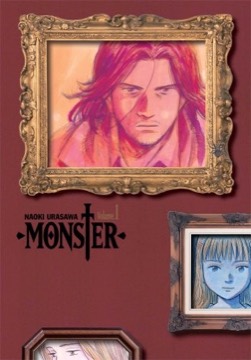
Critical opinion is more divided than for Monster, largely on the ending, and readers deciding between the two are generally advised to start with the earlier series.
Who it is for
Readers who want a long mystery with a genuinely original premise and can tolerate a resolution that does not fully repay the setup.
It is funnier and warmer than Monster, and the childhood sections are among the most affecting things Urasawa has drawn. Readers should be warned that the pleasure is front-loaded and the payoff is not.
What to take away
- 01A fantasy executed literallySomeone is enacting the apocalypse a group of children invented, and the protagonists must reconstruct what they themselves made up.
- 02Suspense from misrememberingSeveral key revelations are simply a character finally recalling one afternoon correctly.
- 03Nostalgia as a political forceThe cult recruits by offering people a past they remember fondly, which is a sharper observation than thrillers usually make.
- 04Recruitment drawn realisticallyLocal charity, political candidates and ordinary non-fanatical members, written in the shadow of the 1995 sarin attack.
- 05Ageing as a storytelling deviceTracking the same realistic faces across forty years does work that dialogue would otherwise have to carry.
- 06A mystery too long sustainedTwenty volumes of concealment cannot easily yield a proportionate explanation, and the ending divides readers.