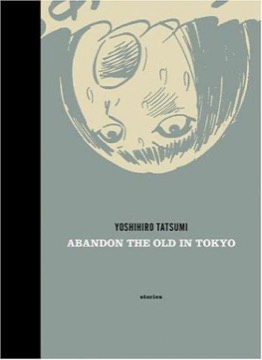
Abandon the Old in Tokyo
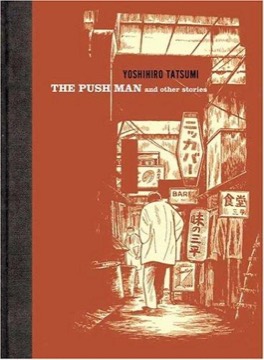
A collection of Yoshihiro Tatsumi's short stories from 1970, published in English in 2006. Gekiga at slightly greater length and with more control.
- First published
- 2006
- Publisher
- Drawn and Quarterly
- Pages
- 224
- Shelf
- Anime
- Level
- Core
- ISBN-13
- 9781894937870
Record checked against
Only one source carried a publication date for this work, so the year is uncorroborated.
Catalogue note
- Reads as
- ReflectiveChanges how you see rather than what you do.
- Level
- Core / BuildingAssumes general familiarity with the subject.
- Approach
- Theoretical
- Written for
- Readers of comics, and anyone curious how the form works, Readers with some grounding
Saved in this browser only — no account, nothing sent anywhere. My library
Read this if
- You read for the writing as much as for the argument.
- You want a book that changes how you see things rather than what you do tomorrow.
- You know roughly how the subject works and want the fuller account.
What it is
Eight stories, longer than those in the preceding collection, about men in post-war Tokyo: a garbage collector caring for his mother, a cartoonist who has stopped working, a man obsessed with a stray dog.
The additional length gives Tatsumi room for situation rather than only incident, and the stories are correspondingly less abrupt.
Eight stories, each with room to breathe, about men who have run out of options.
Devmark’s reading — not a quotation from the book
Development from the earlier work
The 1969 stories are compressed to the point of terseness; these are substantially more developed, with clearer motivation and less reliance on a final shock.
The difference across a single year is noticeable and makes the two volumes useful to read in sequence as a record of an artist working something out.
Obligation
The title story concerns a man whose life is entirely consumed by caring for his mother, and several others turn on duties that cannot be discharged or escaped.
Family obligation is the collection's recurring subject, and Tatsumi treats it as a trap rather than as a virtue.
The cartoonist stories
Several pieces concern men who draw for a living, badly paid and producing work they do not respect, which is plainly autobiographical in origin.
They are the collection's most self-aware material and the least bleak, though that is a relative judgement. Tatsumi was himself working at high volume for low pay throughout this period, and the stories read as a fairly direct account of that.
Tokyo
The city is drawn as cramped, provisional and under construction, with buildings going up around people whose circumstances do not change.
The urban detail is precise and functions as argument: the expansion is physically present in every panel and touches none of the characters. The 1964 Olympics and the construction that preceded them are close behind these stories, and the city they depict is one still being rebuilt around its residents.
Bodies
The stories are attentive to physical unpleasantness — illness, smells, decay, the specific indignities of poverty — and the drawing does not look away.
This is consistent with gekiga's founding intention, which was to make comics capable of things the form had previously avoided. Tatsumi is also unusual among his contemporaries in drawing ordinary unattractive bodies, which was itself a departure from the conventions of the period.
The drawing
Slightly more assured than the earlier collection, with more varied panel composition and more attention to faces.
The style remains plain by design. Tatsumi is not interested in beauty and the flatness is what makes the material land as observation rather than as expression. The panel grids are regular and the compositions are static, which suits stories about people who cannot move and would suit nothing else.
Animals
Dogs, cats and insects appear repeatedly, usually as objects of cruelty or as mirrors for the characters' situations.
The device is used more often than it can bear, and it is the collection's most obvious weakness. It appears in at least three of the eight stories, and by the third the reader can anticipate the function, which blunts the effect considerably.
Tone
Bleak, but less unremittingly so than the 1969 stories, with occasional moments of something close to tenderness.
The variation makes this the more readable of the two collections and arguably the better introduction to Tatsumi's short fiction. The title story in particular ends on something genuinely ambiguous rather than on defeat, which is a register the 1969 collection never reaches.
The edition
Drawn and Quarterly's volume is designed by Adrian Tomine and includes an interview with Tatsumi that supplies useful context about the period and the working conditions.
The three collections together — with Good-Bye — constitute the main English presentation of his short work. The interview is conducted by Tomine and covers Tatsumi's working conditions, his relationship with Tezuka, and the origins of the gekiga label.
Historical position
These stories were produced as gekiga was establishing itself commercially, and they demonstrate the form at the point where it had a readership and had not yet been absorbed into the mainstream.
The moment is short and the collections document it clearly. Within a decade the mainstream magazines had absorbed adult subject matter entirely, and the independent gekiga scene these stories came from had largely dissolved.
Who it is for
Readers who found the earlier collection interesting but too terse, and readers approaching Tatsumi for the first time.
It is short, complete and the better of the two entry points. As with all of his work, it is valuable rather than pleasant, and readers should expect to admire it rather than to enjoy it.
What to take away
- 01A year's development, visibleThe longer stories have clearer motivation and less reliance on a closing shock than the 1969 collection.
- 02Obligation as a trapDuties to family cannot be discharged or escaped, and Tatsumi treats this as confinement rather than virtue.
- 03Expansion that touches nobodyBuildings go up around characters whose circumstances never change, and the urban detail functions as argument.
- 04Physical indignity refused nothingIllness, smell and decay are drawn directly, consistent with gekiga's founding aim of doing what comics had avoided.
- 05Autobiography through cartoonistsSeveral stories concern badly paid artists producing work they do not respect, and are the most self-aware material.
- 06The better entry pointLess unremitting than the earlier stories, which makes it the more readable introduction to his short fiction.