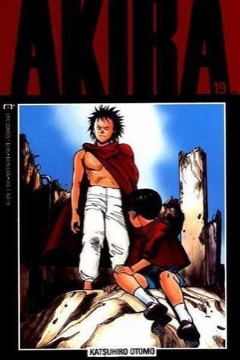
Akira
Katsuhiro Otomo's series, serialised from 1982, set in a rebuilt Tokyo where a motorcycle gang member develops uncontrollable psychic power. The work that carried manga to a Western audience.
- First published
- 1982
- Publisher
- Marvel Worldwide, Incorporated
- Pages
- 64
- Shelf
- Anime
- Level
- Core
- ISBN-13
- 9780871355881
Record checked against
Catalogue note
- Reads as
- ReflectiveChanges how you see rather than what you do.
- Level
- Core / BuildingAssumes general familiarity with the subject.
- Approach
- Theoretical
- Written for
- Readers of comics, and anyone curious how the form works, Readers with some grounding
Saved in this browser only — no account, nothing sent anywhere. My library
Read this if
- You read for the writing as much as for the argument.
- You want a thought experiment you can live inside for a while.
- You want a book that changes how you see things rather than what you do tomorrow.
- You know roughly how the subject works and want the fuller account.
What it is
Neo-Tokyo, 2019, built on the ruins of a city destroyed thirty years earlier by an explosion nobody has explained. Kaneda leads a motorcycle gang; his friend Tetsuo is injured in an encounter with an escaped child and begins developing abilities he cannot control.
What follows runs to roughly two thousand pages and takes in military conspiracy, religious cults, civil collapse and the destruction of the city a second time.
A city rebuilt on a crater, by people who were never told what made it.
Devmark’s reading — not a quotation from the book
Scale
Otomo drew it over eight years, and the finished work is enormous: crowds rendered individually, architecture drawn in perspective across full spreads, and destruction sequences that run for dozens of pages with almost no dialogue.
The commitment to detail is the point. Nothing about the city is implied; it is drawn, which is why the collapse carries the weight it does.
Power without capacity
Tetsuo's abilities arrive faster than any judgement about how to use them. He is a resentful adolescent handed the capacity to level buildings, and the series is precise about how quickly grievance becomes atrocity.
This is the work's central argument and the reason it has outlasted its imitators. The horror is not the power but the entirely ordinary person holding it.
The bomb
The explosion that destroyed old Tokyo, the government programme behind it, and the compulsion to rebuild directly on the site are the series' organising material.
Otomo was born in 1954 and the imagery is unmistakable. The work belongs to a specific Japanese tradition of post-nuclear narrative, and it is more interested in institutional secrecy than in the weapon itself.
Otomo's realism
His figures are proportioned realistically, faces are individual rather than typed, and the linework is dense and technical — a deliberate break from the Tezuka-descended house style.
The influence on subsequent manga and animation is direct and enormous. Detailed urban realism became a viable register for the medium largely because this series demonstrated it.
Motion
The action sequences are constructed with unusual clarity: the reader always knows the geography, the direction of travel and what is about to be hit.
Otomo achieves this with panel rhythm rather than speed lines, using consistent camera positions across a sequence in a way that borrows directly from storyboarding.
Politics
Neo-Tokyo is governed badly by a coalition of military officers, technocrats, politicians and eventually a cult, and the ordinary population is treated as a logistical problem throughout.
The series is consistently cynical about institutions and offers no alternative. Nobody in a position of authority acts well at any point.
Kaneda and Tetsuo
The friendship between them, and specifically Tetsuo's resentment at having always been protected, is the emotional engine of the whole work.
It is a small, exact piece of characterisation carrying an extremely large apocalypse, and the series keeps returning to it even at its most cosmological.
The film, and the difference
Otomo's own 1988 animated adaptation covers roughly the first third of the story and invents an ending, because the manga was still running.
The film is the more famous work and is what introduced most Western viewers to anime. The manga is longer, stranger, considerably more political, and resolves what the film could only gesture at.
The ending
The final volumes become genuinely metaphysical, with the surviving characters attempting to build something out of a ruined city under conditions the series declines to explain fully.
Readers divide on it. The conclusion is more abstract than the preceding material and either earns its scale or abandons its characters, depending on the reader.
Publication history in English
It was among the first manga published in English, initially colourised and in American comic format, and only later reissued in the original black and white at full size.
The colour edition is not recommended. Otomo's linework carries the tonal information, and the added colour substantially flattens it.
Why it matters
It changed what manga was assumed to be capable of, both inside Japan and outside it, and demonstrated that the form could sustain a long, formally rigorous, adult narrative.
Readers who want one work to understand why the medium is taken seriously have a strong case for beginning here, provided they can commit to its length.
What to take away
- 01Ordinary person, extraordinary capacityTetsuo's power arrives faster than his judgement, and the series is precise about how quickly grievance becomes atrocity.
- 02A city drawn rather than impliedCrowds and architecture are rendered individually across eight years of work, which is why the destruction lands.
- 03Institutional secrecy as the real subjectThe explosion matters less than the programme that caused it and the decision to rebuild on the site.
- 04Realism as a breakProportioned figures and dense technical linework departed from the Tezuka house style and made urban realism viable for the medium.
- 05Geography kept legibleAction reads clearly because Otomo holds camera positions across sequences, borrowing directly from storyboarding.
- 06The film is a third of itOtomo's 1988 adaptation covers the opening and invents an ending; the manga is longer, more political and actually resolves.