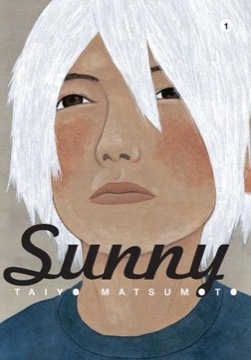
Sunny
Taiyo Matsumoto's series, begun in 2011, about children living in a residential home in 1970s Japan, drawing on his own childhood. Quiet, episodic and largely plotless.
- First published
- 2011
- Publisher
- Jian duan chu ban
- Pages
- 216
- Shelf
- Anime
- Level
- Core
- ISBN-13
- not established
Record checked against
Catalogue note
- Reads as
- ReflectiveChanges how you see rather than what you do.
- Level
- Core / BuildingAssumes general familiarity with the subject.
- Approach
- Theoretical
- Written for
- Readers of comics, and anyone curious how the form works, Readers with some grounding
Saved in this browser only — no account, nothing sent anywhere. My library
Read this if
- You read for the writing as much as for the argument.
- You want a life told honestly, at full length.
- You want a book that changes how you see things rather than what you do tomorrow.
- You know roughly how the subject works and want the fuller account.
What it is
Star Kids is a children's home in a provincial Japanese town. Its residents have been placed there for different reasons — a parent who cannot cope, a parent who will not, a parent who visits and does not take them home — and they are waiting in various states of hope.
An abandoned Nissan Sunny in the yard is where they go to be somewhere else.
An abandoned car in a children's home yard, which is where they go to be somewhere else.
Devmark’s reading — not a quotation from the book
Autobiography
Matsumoto spent part of his childhood in such a home, and the series is his most directly personal work.
The material is handled without self-pity and without the shape a memoir would impose. There is no arc and no lesson, and the specificity of the detail is what carries it.
Structure
Chapters follow individual children in rotation, each a self-contained episode about an afternoon, a visit, a lie or a disappointment.
Nothing accumulates into a plot. The series is a set of portraits, and its effect depends on the accumulation of small observed moments rather than on any development.
The children
Sei, Haruo, Kiko, Junsuke and the others are written as actual children: cruel to each other, self-deceiving about their parents, and capable of sudden tenderness.
Matsumoto never makes them symbolic. Their behaviour is specific and frequently unattractive, which is why the sympathy the series generates is earned.
The adults
The staff are decent, tired and insufficient, and the parents are drawn without judgement — people who are failing for reasons the series does not adjudicate.
The refusal to condemn the parents is notable. Several are plainly inadequate, and the series leaves the assessment to the reader.
The car
The Sunny is the series' organising image: a vehicle that cannot go anywhere, used by children to imagine being elsewhere.
It is not laboured. The metaphor is available and the series mostly just lets the children sit in the car, which is considerably more effective than explaining it.
The art
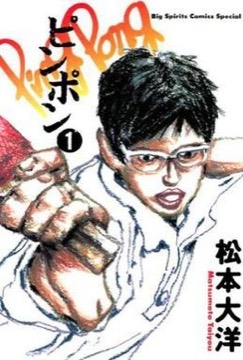
Matsumoto's style here is softer than in Ping Pong or Tekkonkinkreet, with delicate linework, watercolour-influenced colour pages and considerable attention to provincial Japanese landscape.
The drawing of children is exceptional — proportions, posture and the particular way a child occupies space are all observed rather than stylised.
Period detail
1970s Japan is rendered through specific objects: toys, television programmes, snacks, cigarette brands, the texture of a provincial town before it was developed.
The nostalgia is concrete rather than atmospheric, and it does not sentimentalise the period. Matsumoto has said the objects are drawn from memory rather than reference, which accounts for the particular specificity and the occasional inaccuracy.
Pace
Six volumes, slow and quiet, with very little incident and no urgency of any kind.
Readers who need narrative will find it inert. Those who settle into it generally describe it as one of the more affecting things they have read, which is a wide range of response for a book with no plot.
Hope and its management
The children's relationships to the possibility of going home are the series' real subject, and each manages it differently: denial, performance, rage, careful low expectation.
The series is precise about the difference between a child who has stopped hoping and one who is pretending to have stopped.
Matsumoto's range
Between Tekkonkinkreet's violence, Ping Pong's distortion and this book's quiet, he demonstrates a range few authors in the medium attempt.
Readers who know him only through the more aggressive work will find this almost unrecognisable, and it is frequently named his best. Sunny is also the work he has spoken about most directly in interviews, and the reticence elsewhere makes that unusual.
Who it is for
Readers who want observation rather than story, and who are interested in childhood written without nostalgia or moral.
It is complete at six volumes and is among the quietest things in this section. Readers should approach it as a set of portraits and not expect it to resolve into anything.
What to take away
- 01Portraits rather than plotChapters rotate through individual children with no accumulation, and the effect depends entirely on observed detail.
- 02Children written unattractivelyThey are cruel, self-deceiving and occasionally tender, and the sympathy is earned rather than requested.
- 03Parents not adjudicatedSeveral are plainly inadequate and the series declines to condemn them, leaving the assessment to the reader.
- 04A metaphor left aloneThe car that cannot go anywhere is available as an image and the series mostly just lets the children sit in it.
- 05Hope managed differentlyEach child handles the possibility of going home through a different strategy, and the series distinguishes them precisely.
- 06Concrete nostalgia1970s Japan arrives through specific toys, snacks and television rather than through atmosphere.