Brave New World
Aldous Huxley's 1932 novel of a stable, engineered society in which people are manufactured to want exactly the life they are assigned — a dystopia maintained not by terror but by pleasure, conditioning and the elimination of anything worth being unhappy about.
- First published
- 1932
- Publisher
- Chatto & Windus
- Pages
- 240
- Shelf
- Fiction
- Level
- Core
- ISBN-13
- 9798365087255
Record checked against
Catalogue note
- Reads as
- ReflectiveChanges how you see rather than what you do.
- Level
- Core / BuildingAssumes general familiarity with the subject.
- Approach
- Theoretical
- Written for
- Readers of literature, Readers with some grounding
Saved in this browser only — no account, nothing sent anywhere. My library
Read this if
- You want a thought experiment you can live inside for a while.
- You want to understand what technology is doing to how we live.
- You want a book that changes how you see things rather than what you do tomorrow.
- You know roughly how the subject works and want the fuller account.
The premise
A world state has achieved permanent stability. Humans are produced in hatcheries, chemically and psychologically conditioned to a caste, and kept content through consumption, casual sex and a side-effect-free drug called soma.
There is no secret police in any meaningful sense, and almost no coercion. Everyone is happy, and the novel's question is what exactly has been lost for that to be true. The setup is all this summary will give.
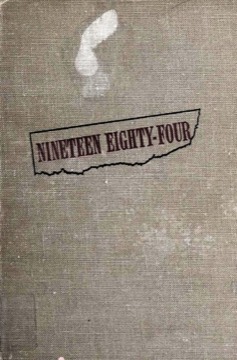
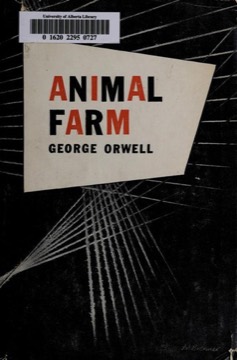
The argument against Orwell's
The two canonical dystopias propose opposite mechanisms, and reading them together is the most productive thing to do with either. Orwell's state controls through pain, surveillance and the destruction of truth. Huxley's controls through pleasure, distraction and the destruction of any *desire* for truth.
Huxley's claim is that his is the more durable design, because it requires no enforcement. A population that has been given what it wants does not need to be watched.
Orwell's state bans the book. Huxley's makes sure nobody wants to read one.
Devmark’s reading — not a quotation from the book
Conditioning and caste
The society's stability rests on manufacturing people to fit their positions. Embryos are chemically limited to suit their caste; children are conditioned by sleep-teaching and aversion training to love their work and their station.
The unsettling move is that this eliminates injustice as a felt experience. Nobody resents their caste because nobody was ever allowed to be the kind of person who could. The novel's critique is not that people are oppressed but that the capacity to be oppressed has been engineered out.
Soma
The drug is the book's sharpest invention: a holiday from reality with no hangover and no cost. Any unpleasant emotion is met with a dose rather than a response.
Its function in the argument is to remove the friction that produces change. If discomfort can always be dissolved, nothing is ever bad enough to require anything, and the state does not need to suppress dissent because dissent has no fuel.
What has been traded away
The novel's answer to what was lost is specific: art, science pursued for its own sake, religion, family, deep attachment, tragedy, and the possibility of being unhappy for reasons that matter.
Huxley's argument is that these all depend on instability — on longing, loss and the friction between what is and what could be. A society that has abolished suffering has also abolished what suffering was a by-product of.
The Savage, and the argument made explicit
The outsider character functions as the novel's device for putting the case directly, and the extended confrontation between him and one of the World Controllers is the philosophical centre.
The Controller's case is not a villain's rant. It is a coherent utilitarian argument that the trade was worth making, and Huxley gives it real force — which is what prevents the book from being a simple warning and makes it a genuine question.
Where it is dated and where it is not
The biology is of its period: eugenic assumptions sit unexamined in the premise, and the novel's treatment of women and of the "savage reservation" carries the prejudices of 1932 without interrogating them. These are real flaws, not merely quaint.
What is not dated is the mechanism. Pleasure-based compliance, consumption as identity, mood management by pharmacology, and entertainment that removes the appetite for anything demanding are all recognisable, and the novel saw them before there was much evidence for them.
Brave New World Revisited
Huxley's 1958 non-fiction follow-up is worth knowing about. He argued that the world was moving toward his prediction faster than he had expected, and examined propaganda, overpopulation and chemical persuasion directly.
It is a more anxious and more conventional book, and it makes explicit arguments the novel leaves as questions. Read it after, not instead.
How to read it now
As a thought experiment about the price of stability rather than a prediction. The novel's value is that it makes the trade legible: it names what is given up for comfort and forces the reader to decide whether they would refuse.
It is also usefully uncomfortable, because the World Controller's argument is not easy to dismiss. Most readers find they cannot simply say the society is wrong, which is the effect Huxley wanted.
What it is good for
It supplies a vocabulary for a kind of control that is otherwise hard to name, because it does not look like control. The most useful question it leaves behind is not "who is watching?" but "what has been made so pleasant that nobody objects?"
As a novel it is schematic — characters exist to carry positions — but it is short, sharp, and the argument is genuinely unresolved, which is why it has outlasted books with better characters.
What to take away
- 01Pleasure is the more durable mechanismA population given what it wants requires no enforcement, which makes this design cheaper than terror.
- 02Conditioning removes the capacity to objectThe critique is not that people are oppressed but that the ability to experience it was engineered out.
- 03Friction is what produces changeIf every discomfort can be dissolved on demand, nothing is ever bad enough to require anything.
- 04The Controller's case is strongHuxley gives the opposing argument real force, which is what makes the book a question rather than a warning.
- 05Ask what was made pleasantThe useful question is not who is watching, but what nobody objects to any more.