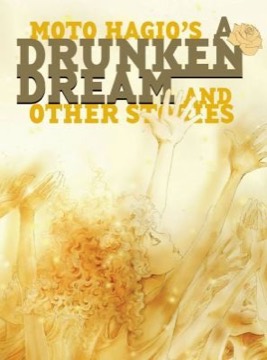
A Drunken Dream and Other Stories
A 2010 English collection of ten short stories by Moto Hagio spanning 1970 to 2007. The most accessible route into her work.
- First published
- 2010
- Publisher
- Fantagraphics Books
- Pages
- 288
- Shelf
- Anime
- Level
- Core
- ISBN-13
- 9781606993774
Record checked against
Only one source carried a publication date for this work, so the year is uncorroborated.
Catalogue note
- Reads as
- ReflectiveChanges how you see rather than what you do.
- Level
- Core / BuildingAssumes general familiarity with the subject.
- Approach
- Theoretical
- Written for
- Readers of comics, and anyone curious how the form works, Readers with some grounding
Saved in this browser only — no account, nothing sent anywhere. My library
Read this if
- You read for the writing as much as for the argument.
- You want to think about how gender shapes a life, including your own.
- You want a book that changes how you see things rather than what you do tomorrow.
- You know roughly how the subject works and want the fuller account.
What it is
Ten stories selected and translated by Matt Thorn, arranged chronologically and covering nearly four decades of Hagio's career, from an early piece about a girl and a bee to late work about memory and family.
Each is self-contained, and the range of register across the collection is considerable.
Four decades of one of the medium's major authors, in ten stories and under three hundred pages.
Devmark’s reading — not a quotation from the book
The range
The collection includes science fiction, domestic realism, fantasy and psychological drama, and the tonal variety demonstrates that Hagio was never a single-mode author.
Iguana Girl and Hanshin are the most frequently cited, and both work through family relationships using a fantastic premise as the mechanism.
Iguana Girl
A woman sees her daughter as an iguana and cannot love her, and the daughter grows up seeing the same thing in the mirror.
It is the collection's best-known piece and among the most effective treatments of maternal rejection in any medium, achieving in forty pages what most novels on the subject cannot.
Hanshin
Conjoined twins are separated, and the surviving sister inherits the beauty the other had taken.
The story runs to sixteen pages and is among the most compressed pieces of work in this section. Its final line is frequently quoted and genuinely earns the reputation. Hagio has said she wrote it very quickly, which is consistent with its compression and with the sense that it arrives fully formed.
Formal invention
The stories experiment continuously with panel structure, narration and sequence, and the early pieces are noticeably more radical than a reader expecting 1970s girls' comics would predict.
Hagio treats each story as an opportunity to try a structure rather than as a delivery vehicle for a plot.
The introduction and notes
Thorn's introductory essay and his interview with Hagio provide substantial historical context about the Year 24 Group and about the conditions women worked under in the industry.
The apparatus is genuinely useful and makes the volume function as an introduction to a period as well as to an author.
Development across the decades
Arranged chronologically, the collection shows her drawing becoming simpler and her structures becoming more confident over time.
The late stories are quieter and more direct than the early ones, and the progression is legible in a way a themed arrangement would have obscured. The earliest piece dates from 1970 and the latest from 2007, which is a span few authors in any medium sustain at this level.
Science fiction
Several pieces are straightforwardly science-fictional, and Hagio's work in the mode was influential on the genre in Japan.
They Were Eleven, not in this collection but from the same period, is her best-known science fiction, and these stories indicate why she was taken seriously in that field.
Family
The recurring subject across almost every story is family: mothers who cannot love, siblings who are not equal, and children who understand more than they can say.
The consistency is striking given the variety of settings, and it is the clearest through-line in her work.
The edition
Fantagraphics produced a single hardcover with colour pages preserved and a generous trim size.
It was among the first serious presentations of classic shōjo in English and established the approach that later editions of her longer works followed. It also includes colour pages reproduced properly, which is rare for translated manga and makes a genuine difference to several of the stories.
As an entry point
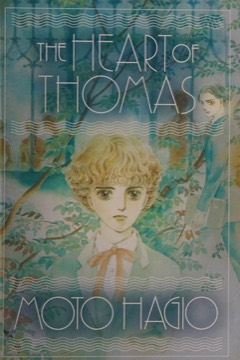
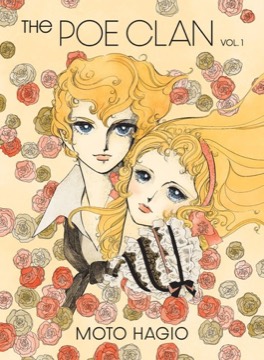
For readers uncertain about committing to The Heart of Thomas or The Poe Clan, this is the obvious starting place: short, varied and complete.
Readers who respond to two or three of the stories will know whether the longer works are worth attempting. It is also short enough to finish in an evening, which lowers the cost of finding out whether an unfamiliar author is for you.
Who it is for
Readers interested in the short story as a form, in the history of Japanese comics, or in an author widely regarded as among the medium's most important.
It is the most immediately rewarding Hagio available in English and requires no prior knowledge of anything. Readers who generally dislike serialised comics may find the short form suits them considerably better than anything else in this section.
What to take away
- 01Four decades in one volumeChronological arrangement makes the development of her drawing and structure legible across nearly forty years.
- 02Compression as achievementHanshin does in sixteen pages what most novels on its subject cannot, and Iguana Girl in forty.
- 03Structure tried per storyEach piece experiments with panel arrangement and narration rather than using a settled form as a delivery vehicle.
- 04Family as the through-lineMothers who cannot love and siblings who are not equal recur across every setting and register.
- 05Apparatus that teaches a periodThorn's essay and interview make the volume an introduction to the Year 24 Group as well as to an author.
- 06The obvious entry pointShort, varied and complete, it lets a reader find out whether the longer works are worth attempting.