The Heart of Thomas
Moto Hagio's 1974 series, set in a German boarding school where a boy's suicide reshapes the students who survive him. A founding work of literary shōjo.
- First published
- 1974
- Publisher
- Diamond Comic Distributors, Inc.
- Pages
- 568
- Shelf
- Anime
- Level
- Core
- ISBN-13
- 9781606995518
Record checked against
Catalogue note
- Reads as
- ReflectiveChanges how you see rather than what you do.
- Level
- Core / BuildingAssumes general familiarity with the subject.
- Approach
- Theoretical
- Written for
- Readers of comics, and anyone curious how the form works, Readers with some grounding
Saved in this browser only — no account, nothing sent anywhere. My library
Read this if
- You read for the writing as much as for the argument.
- You want to think about how gender shapes a life, including your own.
- You want a book that changes how you see things rather than what you do tomorrow.
- You know roughly how the subject works and want the fuller account.
What it is
At a boys' boarding school in Germany, Thomas Werner throws himself from a bridge, leaving a letter addressed to Juli, an older student who had rejected him. Weeks later a boy who resembles Thomas exactly arrives at the school.
The series follows Juli, his roommate Oskar, and the new arrival through the consequences of a death none of them can account for.
A boy dies, leaves a letter, and something that looks exactly like him arrives a month later.
Devmark’s reading — not a quotation from the book
The Year 24 Group
Hagio was central to a loose generation of women born around 1949 who transformed shōjo manga in the 1970s, introducing psychological complexity, literary ambition and adult subject matter to a category previously dismissed.
This series is among the movement's defining works, and its existence is why shōjo is taken seriously as a literary form.
Boys' love, before the genre
The relationships between the boys are romantic and the setting is deliberately European and historical, which allowed material that could not have been published in a contemporary Japanese school setting.
The series is a foundational text for what became a very large genre, though Hagio's interests here are closer to Catholic guilt and grief than to romance.
Juli
The central character is devout, self-punishing, and carrying an experience of abuse he has told nobody about, which the series discloses carefully and late.
His conviction that he is unworthy of affection is the book's actual subject, and Thomas's death functions as the pressure that eventually forces it into the open.
Religion
Catholic framing is pervasive: sin, confession, unworthiness, and the question of whether a suicide can be loved after the fact.
Hagio uses the theology seriously rather than decoratively, and much of the emotional logic depends on characters who genuinely believe it. The school itself is a religious institution, so the theology is structural rather than merely thematic: confession, penance and hierarchy organise the daily life the characters live inside.
Structure
It is long for its period and moves slowly, with extended interior monologues, letters, and scenes that advance nothing except a character's understanding.
The pacing is closer to a novel than to a comic of 1974, which was part of what made the work startling at the time.
The art
Delicate, heavily decorative, with flowers, sparkles and dissolving panel borders — the visual vocabulary that shōjo manga is now identified by, used here at an early point in its development.
Hagio's page composition is ambitious, with overlapping images and text placed outside panels entirely, and the layouts carry emotional information directly.
Its influence
Hagio's work reshaped what shōjo could contain, and the specific configuration here — European setting, boys' school, romantic and tragic — was reproduced widely.
Its descendants include most of the boys' love genre and a substantial part of literary manga generally. Hagio's own account of writing it, after seeing a French film about a boys' school, is well documented and is part of the work's established history.
Difficulty
The narration shifts between characters without clear signalling, several important events occur off the page, and the emotional logic depends on information withheld until late.
It is a demanding read by the standards of the medium and rewards attention, but readers should expect to be uncertain for long stretches.
The English edition
Fantagraphics published a single hardcover volume with an introduction by Matt Thorn, whose translation notes are genuinely useful for the historical context.
It is one of the better-presented classic manga translations available and is the only practical way to read the work in English. It runs to more than five hundred pages in a single volume, which is a substantial physical object and reflects the length of the original serialisation.
Hagio's other work
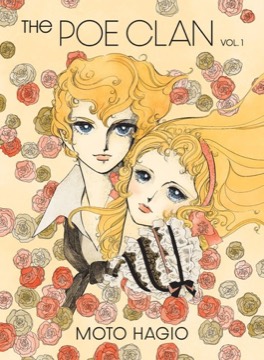
A Drunken Dream collects her short stories across several decades, and The Poe Clan is her other major long work from the same period.
Readers who respond to this will find the short fiction the fastest route into the rest of her output, since it demonstrates the same concerns at less length.
Who it is for
Readers interested in the medium's literary history, and readers who want emotional fiction that takes grief, faith and abuse seriously.
It is not an easy read and is not a pleasant one. It is one of the most important works in this section and one of the least comfortable.
What to take away
- 01A category rebuiltHagio and the Year 24 Group brought psychological complexity and literary ambition to shōjo, which is why it is taken seriously now.
- 02Distance that permitted the subjectA European historical boarding school allowed material that could not have been published in a contemporary Japanese setting.
- 03Unworthiness as the real subjectJuli's conviction that he cannot be loved is the book's centre, and the suicide is the pressure that exposes it.
- 04Theology used seriouslySin, confession and whether a suicide can be loved afterwards are treated as things the characters genuinely believe.
- 05Novelistic pacing in 1974Extended monologue and scenes that advance only understanding were startling for a comic of its period.
- 06The visual vocabulary formingFlowers, sparkles and dissolving panel borders appear here at an early stage of the grammar shōjo is now identified by.