Sailor Moon
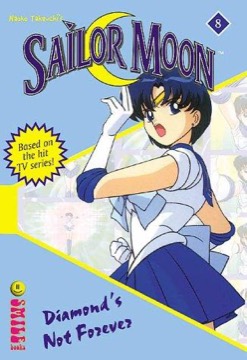
Naoko Takeuchi's series, begun in 1991, in which a fourteen-year-old is told she is the reincarnated guardian of a lost kingdom. The work that rebuilt the magical-girl genre.
- First published
- 1991
- Publisher
- Tandem Library
- Pages
- 120
- Shelf
- Anime
- Level
- Entry
- ISBN-13
- 9781892213617
Record checked against
Catalogue note
- Reads as
- ReflectiveChanges how you see rather than what you do.
- Level
- Accessible / FoundationalNo prior reading assumed.
- Approach
- Theoretical
- Written for
- Readers of comics, and anyone curious how the form works, Newcomers to the subject
Saved in this browser only — no account, nothing sent anywhere. My library
Read this if
- You read for the writing as much as for the argument.
- You want to think about how gender shapes a life, including your own.
- You want a book that changes how you see things rather than what you do tomorrow.
- You are starting from scratch here and want a way in that assumes no prior reading.
What it is
Usagi Tsukino is lazy, emotional, academically hopeless and fourteen. A talking cat tells her she is Sailor Moon, guardian of a kingdom destroyed in the distant past, and gives her a brooch that transforms her.
She gradually assembles a team of other guardians, each with her own personality and specialism, and the series moves through several arcs of increasing cosmological scale.
A fourteen-year-old who cries easily, informed that she is responsible for the solar system.
Devmark’s reading — not a quotation from the book
What it changed
Magical-girl stories before it generally featured a single heroine using magic for domestic or romantic purposes. Takeuchi combined that tradition with the team structure and escalating combat of boys' adventure comics.
The synthesis is the genre's defining moment. Almost every magical-girl work since is either following this model or reacting against it.
The team
Each guardian has a planet, a colour, an element and a distinct personality, and the series gives them genuine friendships that survive disagreement.
The relationships between the girls matter more than any of the romances, and the series is consistently interested in what they owe each other rather than in what they owe their mission.
Usagi as heroine
She is not competent, not brave by default, and not improved into either. She remains frightened, greedy and easily upset, and the series treats her capacity for attachment as the actual source of her power.
This is a genuinely unusual proposition, and it is maintained rather than abandoned as the stakes rise.
Queer content
Several relationships between women are unambiguous in the manga, most notably Haruka and Michiru, and two characters undergo transformations that change their presented gender.
Early English-language adaptations altered or removed much of this. Later editions and translations restore it, and the original text is considerably less coy than the reputation of the 1990s dubs suggests.
Scale
The arcs escalate from local monsters to planetary threats to entities that predate the universe, and the final confrontation is essentially metaphysical.
Takeuchi's willingness to go this far in a comic for girls is part of what made it durable, and the cosmological material is played entirely straight.
The art
Extremely distinctive: elongated limbs, enormous eyes, elaborate costume detail, and page layouts that frequently abandon panel borders for decorative composition.
Takeuchi trained partly in jewellery design and the influence is visible in the accessory work. The fight sequences are the weakest element and are often close to illegible.
Fashion and the body
The transformation sequences and costume designs are central rather than incidental, and the series takes real pleasure in clothes, hair and ornament.
The visual identity it established — the sailor collar, the specific silhouette — is among the most recognisable in the medium worldwide. Takeuchi also uses transformation to mark growth rather than merely power, so a new costume usually signals that something has changed.
Weaknesses
The plotting is loose, the pacing uneven, and several arcs resolve through abrupt escalations of power that have not been prepared.
Takeuchi was working at speed under considerable commercial pressure, and the manga shows it. Its strengths are emotional and visual rather than structural. The English editions have also had a complicated history, with the earlier release long out of print and widely criticised for its translation.
Manga against anime
The 1992 animated series is far longer, adds substantial filler, and softens several characters considerably; it is how most people outside Japan first encountered the property.
The manga is shorter, stranger, darker and moves much faster. A later adaptation follows it more closely and is generally preferred by readers of the original.
Its reach
It was one of the works that carried manga and anime to a mass audience outside Japan in the 1990s, and it created or expanded the market for girls' comics in several countries.
Its influence on subsequent magical-girl works, in Japan and elsewhere, is close to total, and the visual grammar it established is still in use.
Who it is for
Readers interested in the genre's history, and readers who want a work whose emotional generosity is its organising principle rather than an afterthought.
The current English editions are well produced and complete. Readers should expect loose plotting and should read it for its ideas about friendship, obligation and power rather than for narrative discipline.
What to take away
- 01Two genres combinedDomestic magical-girl stories were fused with the team structure and escalation of boys' adventure comics, and the genre never went back.
- 02Attachment as the power sourceUsagi is never made brave or competent; her capacity to care for people is treated as the actual mechanism.
- 03Friendship above romanceWhat the guardians owe each other consistently outweighs both their romances and their mission.
- 04Unambiguous in the originalQueer relationships and gender transformation are explicit in the manga and were altered by early English adaptations.
- 05Cosmology played straightA comic for teenage girls escalates to entities predating the universe without any change of register.
- 06Emotional and visual, not structuralThe plotting is loose and the fights are often illegible; the strengths are elsewhere and are considerable.