Rurouni Kenshin
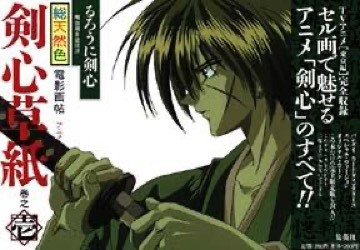
Nobuhiro Watsuki's series, begun in 1994, about a former assassin of the Meiji Restoration who has sworn never to kill again and carries a reversed-edge sword.
- First published
- 1994
- Publisher
- Viz
- Pages
- 188
- Shelf
- Anime
- Level
- Entry
- ISBN-13
- 9781591167037
Record checked against
Catalogue note
- Reads as
- ReflectiveChanges how you see rather than what you do.
- Level
- Accessible / FoundationalNo prior reading assumed.
- Approach
- Theoretical
- Written for
- Readers of comics, and anyone curious how the form works, Newcomers to the subject
Saved in this browser only — no account, nothing sent anywhere. My library
Read this if
- You read for the writing as much as for the argument.
- You want to think harder about what is actually right.
- You want a book that changes how you see things rather than what you do tomorrow.
- You are starting from scratch here and want a way in that assumes no prior reading.
What it is
Ten years after the wars that ended the shogunate, Himura Kenshin wanders Japan as a vagrant swordsman. He was the most feared assassin of the Restoration and has renounced killing, carrying a blade with the cutting edge on the wrong side.
He settles at a Tokyo dojo and the series follows the people from his past who come to find him.
The most effective killer of his generation, carrying a sword deliberately made useless for killing.
Devmark’s reading — not a quotation from the book
The historical setting
The Meiji period — the collapse of the samurai class, the abolition of swords, rapid Westernisation and the unresolved grievances of those who lost — is central rather than decorative.
Watsuki researched the period closely and several characters are based on documented figures. The series is genuinely about the cost of a political transition to the people who fought for it.
Atonement as the subject
Kenshin's vow is treated as a practical difficulty rather than as a character trait: he is repeatedly placed in situations where not killing requires greater skill and greater risk.
The series is serious about whether atonement is possible for someone who killed on that scale, and it declines to let him off.
The Kyoto arc
The extended confrontation with Shishio, a rival assassin who survived being burned and betrayed by the new government, is the series' peak.
Shishio's argument — that the Restoration produced a weak and dishonest state and deserves to be overthrown by force — is given real weight, and the political disagreement is the substance of the conflict.
Fighting style
Combat is fast, technique-focused and grounded in actual kenjutsu terminology, with named forms that have consistent mechanics.
Watsuki's action is legible and inventive, and the series avoids power escalation largely by keeping skill rather than strength as the variable. Opponents are beaten by being read correctly rather than by being overpowered, and several major fights turn on a single observed habit.
Tone
The register swings between broad comedy — Kenshin's apologetic manner, the dojo's domestic bickering — and extremely dark material about political violence.
The comedy is thinner than the drama and occasionally undercuts it, which is the most common criticism of the earlier volumes. Watsuki gradually reduces the comedy as the series proceeds, and the Kyoto arc is almost entirely free of it.
The supporting cast
Sanosuke, Saitō and Aoshi each carry their own relationship to the Restoration, and the series is careful that its antagonists are frequently people who chose a different side of the same war.
Saitō in particular, a real historical figure, is written as genuinely unrepentant and is among the series' most effective creations.
Women in the series
Kaoru is given a real role as a dojo master and moral anchor, and Misao and Megumi both have independent motivations.
The women nonetheless spend most of the major confrontations waiting, which is a genre-standard limitation the series does not escape. Takani Megumi's medical work is the exception, since her competence is directly useful to the plot rather than decorative.
The art
Clean, energetic linework with strong character silhouettes and an obvious debt to both period illustration and Western comics.
Watsuki's design work is distinctive and his action pages are unusually easy to follow, which is not universal in the magazine he was writing for. His designs for the antagonists in particular are memorable, and several have been widely imitated in the decades since.
The ending and the sequel
The final arc is widely considered weaker than the Kyoto material, and the series concludes in a somewhat rushed manner.
A later sequel series has been published intermittently and is generally regarded as unnecessary. The original run is the work. Watsuki has said he was running out of energy by the final arc, which is visible in both the plotting and the drawing.
The author's conviction
Watsuki was convicted in 2018 of possessing child abuse images, was fined, and resumed publication afterwards.
This is a fact about the author rather than the 1990s series, and readers are entitled to decide what to do with it. It is stated here because omitting it would be a choice too.
Who it is for
Readers who want historical action with a genuine political subject, and who value skill-based fighting over escalating power.
It is a shorter commitment than most series in this section at twenty-eight volumes, and the Kyoto arc alone is a complete and well-constructed story that can be read largely on its own.
What to take away
- 01A vow that costs somethingNot killing is written as a practical difficulty requiring greater skill and greater risk, rather than as a character label.
- 02A transition with losersThe Meiji Restoration is treated as a political event whose costs fell on the people who fought for it.
- 03An antagonist with a caseShishio argues that the new state is weak and dishonest, and the series treats the disagreement as the substance of the conflict.
- 04Skill rather than powerKeeping technique as the variable lets the series largely avoid the escalation problem that afflicts its contemporaries.
- 05Antagonists from the same warSeveral opponents chose a different side of the Restoration, which keeps the conflict political rather than moral.
- 06A fact about the authorWatsuki's 2018 conviction is recorded here because leaving it out would itself be an editorial decision.