Vagabond
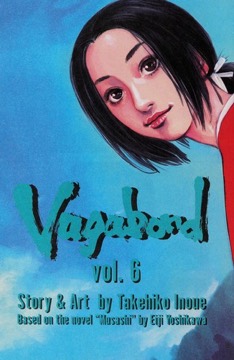
Takehiko Inoue's series, begun in 1998, adapting Eiji Yoshikawa's novel about the swordsman Miyamoto Musashi. Among the most technically accomplished drawing in the medium.
- First published
- 1998
- Publisher
- VIZ Media LLC
- Pages
- 208
- Shelf
- Anime
- Level
- Core
- ISBN-13
- 9784063286854
Record checked against
Catalogue note
- Reads as
- ReflectiveChanges how you see rather than what you do.
- Level
- Core / BuildingAssumes general familiarity with the subject.
- Approach
- Theoretical
- Written for
- Readers of comics, and anyone curious how the form works, Readers with some grounding
Saved in this browser only — no account, nothing sent anywhere. My library
Read this if
- You read for the writing as much as for the argument.
- You want to examine an assumption you have never examined.
- You want a book that changes how you see things rather than what you do tomorrow.
- You know roughly how the subject works and want the fuller account.
What it is
Shinmen Takezō survives the battle of Sekigahara in 1600 as a violent, half-feral seventeen-year-old and is taken in hand by a monk who renames him Musashi and sets him on a path toward becoming something other than a killer.
The series follows his duels, his rivalry with the swordsman Kojirō, and his slow and incomplete movement toward a philosophy of the sword.
A feral boy who is very good at killing, being asked to become something else.
Devmark’s reading — not a quotation from the book
The source
It adapts Eiji Yoshikawa's 1935 serialised novel, itself a heavily fictionalised treatment of a historical figure who wrote The Book of Five Rings.
Inoue departs from the novel increasingly as the series proceeds, particularly in the later volumes, and the two works diverge substantially in emphasis and in their treatment of several characters.
The drawing
Inoue moved from pen to brush during the series, and the later volumes are drawn with an ink technique closer to classical painting than to commercial manga.
Single figures are given full pages, landscapes are rendered with enormous tonal range, and the duels are choreographed with a precision that makes individual movements legible. It is widely considered among the best drawing the medium has produced.
Violence and its cost
The fights are extremely graphic and the series is insistent that killing damages the killer, returning repeatedly to Musashi's inability to stop and to the people left behind by those he has killed.
The Yoshioka arc, in which he faces an entire school, is the clearest statement: technically magnificent and presented as a moral catastrophe.
Musashi's development
He begins as someone who fights because he does not know how else to exist, and the series is about the slow substitution of understanding for aggression.
The progress is not linear and is frequently reversed. Inoue is careful not to present enlightenment as an achievement that holds.
Kojirō
Inoue's version of the rival swordsman is deaf, raised outside language, and almost entirely without the social framework Musashi is struggling with.
It is a significant invention and one of the series' best decisions. Kojirō represents an alternative that is neither better nor worse, and the two are studied against each other rather than ranked.
The farming arc
A long late section removes Musashi from fighting entirely and places him in a village attempting to grow rice on poor soil.
It is the most divisive part of the series and, for many readers, the best: the argument that the discipline required to farm is continuous with the discipline of the sword, made at length and without irony.
Buddhism and the sword
The series engages seriously with Zen practice, the relationship between mastery and self-erasure, and whether excellence in killing can be spiritually meaningful at all.
It does not settle the question. Several characters offer coherent and incompatible answers, and the series treats the disagreement as genuine.
Incompleteness
The series has been on hiatus since 2015 and remains unfinished, stopping before the duel the entire work has been building toward.
This is worth knowing before starting. Readers who require resolution should be aware that thirty-seven volumes lead to a pause rather than to an ending.
Inoue's other work
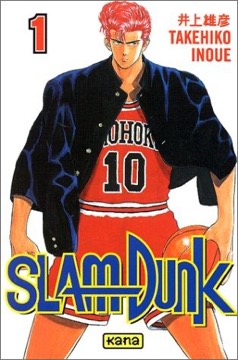
He also created Slam Dunk and Real, and the interest in physical discipline, training and bodies under strain runs through all three.
Vagabond is the most formally ambitious. Readers who like his drawing but not historical fiction generally find Real the better fit. Real, about wheelchair basketball, is the most emotionally direct of the three and the only one he has finished.
Historical texture
Period detail on swordsmanship schools, village economics, temple politics and the immediate aftermath of Sekigahara is handled carefully.
Inoue is not writing history and departs from the record freely, but the material world is convincing and the research is visible in the drawing more than in the dialogue.
Who it is for
Readers who want to look at pages. The series can be read for its art alone and rewards that approach, since several sequences are close to wordless.
Readers who want a completed narrative should weigh the hiatus seriously. What exists is magnificent and it stops mid-sentence.
What to take away
- 01Brush over penInoue changed technique mid-series, and the later volumes are drawn closer to classical ink painting than to commercial manga.
- 02Technical magnificence as moral catastropheThe Yoshioka arc is the series' most accomplished fighting and is presented unambiguously as a disaster.
- 03Enlightenment that does not holdMusashi's development is repeatedly reversed, and the series refuses to present understanding as a permanent achievement.
- 04An invented rivalMaking Kojirō deaf and raised outside language creates an alternative that is studied against Musashi rather than ranked below him.
- 05Farming as swordsmanshipA long late arc argues that the discipline of growing rice on bad soil is continuous with the discipline of the sword.
- 06Thirty-seven volumes to a pauseThe series has been on hiatus since 2015 and stops before the duel it has been building toward throughout.