Uzumaki
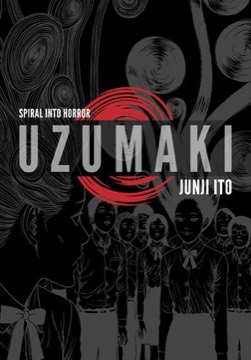
Junji Ito's series, published 1998 to 1999, in which a small Japanese town becomes contaminated by the shape of the spiral. Horror built from a geometric idea.
- First published
- 1998
- Publisher
- Editorial Ivrea
- Pages
- 653
- Shelf
- Anime
- Level
- Core
- ISBN-13
- 9788575327302
Record checked against
Catalogue note
- Reads as
- ReflectiveChanges how you see rather than what you do.
- Level
- Core / BuildingAssumes general familiarity with the subject.
- Approach
- Theoretical
- Written for
- Readers of comics, and anyone curious how the form works, Readers with some grounding
Saved in this browser only — no account, nothing sent anywhere. My library
Read this if
- You read for the writing as much as for the argument.
- You want to be kept up late, and made uneasy about who to believe.
- You care why some things are obvious to use and others are not.
- You want a book that changes how you see things rather than what you do tomorrow.
- You know roughly how the subject works and want the fuller account.
What it is
Kurouzu-cho is a coastal town where people begin to develop obsessions with spirals. A man stares at snail shells for hours; another becomes unable to stop his body rotating; hair, smoke, pottery and eventually the town's architecture organise themselves into the same form.
Kirie Goshima and her boyfriend Shuichi watch the contamination spread across three volumes of largely self-contained chapters.
Not a monster and not a curse. A shape, and the fact that it will not stop appearing.
Devmark’s reading — not a quotation from the book
An abstraction as the antagonist
The premise's strength is that the threat has no intention, no body and no motive. A spiral cannot be fought, negotiated with or escaped, because it is a property of the world rather than a thing in it.
Ito has said the idea came from wanting a horror with no explanation available. The refusal to supply one is what keeps the series genuinely unsettling rather than merely grotesque.
Body horror
The transformations are the series' most famous element: people becoming snails, hair acquiring will, bodies compressed into coiled forms, and a sequence involving pregnant women that is among the most disturbing things in the medium.
Ito draws these with meticulous, patient detail, and the horror comes from how carefully rendered they are rather than from shock.
Structure
Chapters function as short stories, each introducing a manifestation and following it to a conclusion, with the town's overall deterioration accumulating underneath.
The design means it can be read in pieces, and several chapters are frequently anthologised alone. The cumulative effect across the three volumes is nevertheless considerably greater than any single episode.
The drawing
Ito's linework is precise, controlled and almost clinical, with heavy hatching and an architectural attention to backgrounds.
The precision is the technique. A looser style would make the images read as fantasy; drawn this carefully, they read as documentation, and the effect is much harder to dismiss.
Escalation
The series begins with individual obsessions and ends with the town's physical geometry reorganised, and the escalation is gradual enough that no single step seems impossible.
By the final volume the setting has become genuinely alien, and Ito manages the transition without ever announcing it.
Kirie
The narrator is ordinary, observant and largely powerless, and the series gives her almost no agency by design.
She is a witness rather than a protagonist, and the absence of any plausible action she could take is a substantial part of the book's atmosphere of helplessness.
Comedy
Several chapters are funny, sometimes deliberately absurd, and Ito's timing is better than his reputation suggests.
The humour does not undercut the horror. The spiral's absurdity is part of why it is frightening, and the series is aware that its premise is ridiculous without ever becoming ironic about it.
The ending
The conclusion offers an explanation of sorts, reaching back into the town's prehistory, and it is the most divisive element.
Readers who valued the absence of cause find it a mistake; readers who wanted a shape for the whole find it satisfying. It is deliberately not a resolution in any comforting sense.
Editions
The English release is available as a single hardcover collecting all three volumes, printed at a size that serves the detail well.
The deluxe edition is the one to seek out, since much of Ito's effect depends on hatching and fine linework that is lost at smaller reproduction.
Ito's position
He is the most widely known horror manga author outside Japan, and this is generally considered his major work.
His short stories are also substantial, and readers who find a full series too much are usually better served by one of the collections, which contain several of his strongest individual pieces.
Who it is for
Readers who want horror built from an idea rather than from a threat, and who can tolerate extremely graphic body transformation.
It is short, complete, and unlike anything else in this section. Readers who dislike open-ended horror, or who need a protagonist capable of acting, should choose something else.
What to take away
- 01A shape as the antagonistThe threat has no body, intention or motive, which removes every form of resistance available to the characters.
- 02Precision that reads as documentationIto's clinical linework makes impossible images look recorded rather than imagined, which is why they are hard to dismiss.
- 03Escalation without announcementThe series moves from individual obsessions to reorganised geometry gradually enough that no single step seems impossible.
- 04A witness, not a protagonistKirie is deliberately given no plausible action, and the helplessness is most of the atmosphere.
- 05Absurdity that increases the fearThe premise is ridiculous and the series knows it, without ever becoming ironic about it.
- 06An explanation some readers rejectThe conclusion supplies a cause, which readers who valued the absence of one consider a mistake.