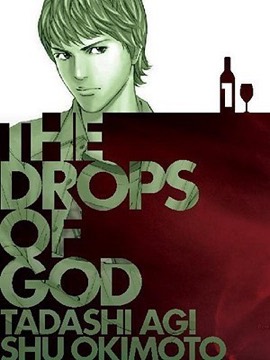
The Drops of God
Tadashi Agi and Shu Okimoto's series, begun in 2004, in which a man must identify twelve wines described in his father's will to inherit an estate. Wine manga with real influence on the trade.
- First published
- 2004
- Publisher
- Vertical
- Pages
- 423
- Shelf
- Anime
- Level
- Core
- ISBN-13
- 9781935654292
Record checked against
Catalogue note
- Reads as
- PracticalWritten to be applied, not only understood.
- Level
- Core / BuildingAssumes general familiarity with the subject.
- Approach
- Practical
- Written for
- Readers of comics, and anyone curious how the form works, Readers with some grounding
Saved in this browser only — no account, nothing sent anywhere. My library
Read this if
- You read for the writing as much as for the argument.
- You make things, and want to understand the work rather than wait for inspiration.
- You want something to apply, not only something to think about.
- You know roughly how the subject works and want the fuller account.
What it is
Shizuku Kanzaki has spent his life rejecting his father's obsession with wine. On the father's death, the will specifies that the estate goes to whoever can identify twelve wines from poetic descriptions, plus a thirteenth called the Drops of God.
A rival claimant is named: a young wine critic the father adopted without telling his son.
Twelve wines, described in poetry, with an estate going to whoever can name them.
Devmark’s reading — not a quotation from the book
The contest structure
Each arc concerns one wine: the clue is read, candidates are investigated, and the identification is argued for by both claimants.
The format supplies a reliable shape and lets the series cover an enormous range of regions, producers and vintages without ever needing a wider plot.
Describing taste
The series' technical problem is conveying flavour in a silent visual medium, and its solution is elaborate visual metaphor: a wine becomes a landscape, a piece of music, a memory.
The imagery is extravagant and frequently ridiculous, and it works better than a technical vocabulary would for readers who do not have one.
Real wines
The wines are actual bottles with named producers and vintages, and the tasting notes are researched.
This is the source of the series' unusual commercial effect: specific wines featured in it experienced measurable demand increases in Asian markets, and producers have acknowledged the influence. The descriptions are also specific enough to be checked, which is unusual and which is part of why the trade took the series seriously.
Education
Regions, grape varieties, vinification, decanting, glassware and storage are all explained through the plot, and a reader finishes with a working vocabulary.
It is among the more effective introductions to the subject in any medium, precisely because the information arrives attached to a dispute. The series also explains the social apparatus around wine — pricing, auctions, critics, collectors — which is frequently what a newcomer actually finds opaque.
The rivalry
Issei Tomine, the adopted rival, is initially presented as an antagonist and becomes considerably more complicated.
The family material is thinner than the wine material and exists mainly to supply structure, which the series is reasonably honest about. Tomine's own history with the father is eventually developed and gives the contest a stake beyond the inheritance, though it arrives later than it should.
The art
Okimoto's drawing is clean and conventional, and the imaginative tasting sequences are where the visual ambition is concentrated.
The contrast between the ordinary scenes and the extravagant flavour imagery is deliberate and is the series' main formal device. Okimoto also draws the bottles and labels accurately enough to be identified, which matters given that the wines are real and readers may want to find them.
Authorship
Tadashi Agi is the pen name of a brother-and-sister writing team, Shin and Yuko Kibayashi, who are not professional sommeliers and researched the subject for the series.
The amateur enthusiasm shows in a good way: the series explains things because its authors had to learn them.
Its trade impact
Wine merchants and producers have credited the series with expanding interest in French wine in Japan, Korea and China, and it has been used in marketing.
Few comics have a documented effect on a commodity market, and this is one of the clearer cases. Japanese and Korean importers have described restructuring orders around titles featured in the series, which is a considerable amount of influence for a comic to exert.
The English edition
Vertical published several volumes and the English release is incomplete, stopping well before the series concludes.
Readers should know this in advance, since the twelve-wine structure means an incomplete run leaves the central question unanswered. A separate sequel series has also been published in Japan, which means the English reader is missing both the end of this run and everything after it.
Pace
The identification arcs run long, with substantial digression into producers' histories and the characters' personal lives.
The digressions are where most of the information lives, and readers primarily interested in the puzzle may find the pacing slow. The producers' histories in particular are frequently the best material in a given volume, and readers who skip them for the puzzle miss most of what the series knows.
Who it is for
Readers interested in wine, and readers curious about how a didactic comic can shape a real market.
It is enjoyable without any prior knowledge and is likely to produce some, which is the best thing that can be said about an educational entertainment. A reader with no interest in wine at all will find the format repetitive, since the identification structure is the same every time and only the subject changes.
What to take away
- 01Taste rendered as landscapeFlavour is conveyed through extravagant visual metaphor, which works better than technical vocabulary for readers who lack one.
- 02Real bottles, researched notesNamed producers and vintages are used, which is why the series had a measurable effect on demand in Asian markets.
- 03Information attached to disputeRegions, vinification and glassware are explained because two people are arguing, which is why the teaching works.
- 04Written by enthusiastic amateursThe authors are a sibling team who researched the subject, and the series explains things because they had to learn them.
- 05A comic that moved a marketMerchants and producers credit it with expanding French wine interest across several countries, which is a rare documented effect.
- 06Incomplete in EnglishThe translated run stops well before the twelve-wine structure resolves, which readers should know before starting.