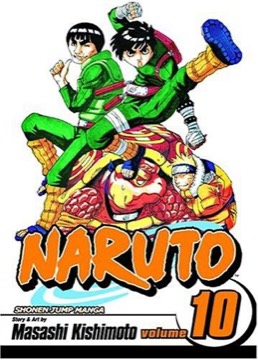
Naruto
Masashi Kishimoto's series, begun in 1999, about an orphaned ninja child carrying a sealed monster and wanting to be acknowledged by the village that fears him.
- First published
- 1999
- Publisher
- Dong Li
- Pages
- 175
- Shelf
- Anime
- Level
- Entry
- ISBN-13
- 9788415866053
Record checked against
Only one source carried a publication date for this work, so the year is uncorroborated.
Catalogue note
- Reads as
- ReflectiveChanges how you see rather than what you do.
- Level
- Accessible / FoundationalNo prior reading assumed.
- Approach
- Theoretical
- Written for
- Readers of comics, and anyone curious how the form works, Newcomers to the subject
Saved in this browser only — no account, nothing sent anywhere. My library
Read this if
- You read for the writing as much as for the argument.
- You want a book that changes how you see things rather than what you do tomorrow.
- You are starting from scratch here and want a way in that assumes no prior reading.
What it is
Naruto Uzumaki is a loud, failing student in a village of ninja, ostracised for reasons nobody will explain to him: a destructive spirit was sealed inside him as an infant, and the adults remember what it did.
He is assigned to a three-person team, and the series follows that team through training, examinations, war and a long generational conflict.
A child nobody will explain himself to, trying to be acknowledged by the people avoiding him.
Devmark’s reading — not a quotation from the book
Loneliness as the theme
Almost every significant character is defined by an absence — dead parents, a destroyed clan, a village that will not accept them — and the series returns to isolation with real consistency.
This is its most genuine quality. The fighting is the surface; the recurring subject is people trying to be recognised by others who have decided in advance what they are.
Sasuke
Naruto's rival is a survivor of a massacred clan pursuing revenge, and the relationship between the two is the spine of the entire series.
It is written as something close to love, and the series' refusal to resolve it simply — the pursuit runs for hundreds of chapters — is both its most compelling thread and its most frequently criticised.
The world's construction
Ninja villages function as military contractors to feudal states, with economies, treaties and a history of wars fought by child soldiers.
The political structure is more carefully built than the genre requires, and several arcs are explicitly about cycles of retaliation between villages that each remember a different grievance.
Fighting and technique
Combat is organised around named techniques, elemental affinities and hand seals, with a consistent internal system that the series teaches progressively.
The early fights are the best: tactical, resource-limited, and frequently won by preparation. The later ones inflate considerably and rely more on revelation than on strategy.
The middle problem
A long stretch of the series consists of extended flashbacks, filler-adjacent digressions and fights that resolve through previously unmentioned abilities.
Readers frequently identify a specific point at which the discipline drops, and the final war arc in particular is much longer than its material supports.
Pain and the argument about violence
One antagonist mounts a sustained case that peace is only ever produced by shared suffering, and the confrontation with him is the series' intellectual high point.
Kishimoto gives the position genuine force and has Naruto answer it with something other than a punch, which the series rarely manages elsewhere.
Women in the series
The treatment is a recurring criticism: female characters are given substantial backstories and then consistently sidelined in the conflicts that matter.
Sakura in particular is set up as a third protagonist and progressively reduced, and the pattern is difficult to defend on any reading. Kishimoto has acknowledged difficulty writing female characters, which is candid but does not repair the finished work.
The art
Kishimoto's drawing improves markedly across the run, and his design work — particularly for masks, seals and the village aesthetic — is distinctive and widely imitated.
The action pages are clear in the early volumes and become busier and harder to parse as the scale of the fighting increases.
Its global reach
It was among the works that carried manga and anime to a mass international audience in the 2000s, and its vocabulary and imagery are widely recognised well outside readers of the medium.
The animated series ran for many years with substantial non-canonical material, which is why the manga is generally the recommended route.
Length and reading
Seventy-two volumes, with a clear division between the first twenty-seven and the continuation that follows a time skip.
Readers who want the strongest material can stop at the end of the first part and lose relatively little, since it resolves the early relationships and is considerably tighter than what comes after.
Who it is for
Readers who want long-form shōnen with a genuine emotional core and are willing to accept substantial unevenness in the second half.
It is one of the defining works of its generation and is best approached with clear expectations: the beginning is very good, the middle is patchy, and the ending divides its readership sharply.
What to take away
- 01Isolation as the recurring subjectNearly every major character is defined by an absence, and the fighting sits on top of people wanting to be recognised.
- 02A rivalry that will not resolveThe pursuit of Sasuke runs for hundreds of chapters and is the series' most compelling and most criticised thread.
- 03Villages as military contractorsThe political structure is built more carefully than the genre requires, with treaties, economies and remembered grievances.
- 04An antagonist with a real casePain's argument that peace requires shared suffering is given genuine force and answered with something other than violence.
- 05Preparation before inflationEarly fights are tactical and resource-limited; later ones resolve through revelation rather than strategy.
- 06A pattern hard to defendFemale characters receive substantial backstories and are then consistently removed from the conflicts that matter.