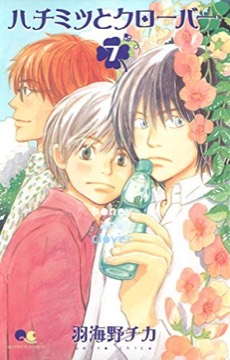
Honey and Clover
Chica Umino's series, begun in 2000, following five art students through unrequited love, graduation and the problem of what to do next.
- First published
- 2000
- Publisher
- Shūeisha
- Pages
- 180
- Shelf
- Anime
- Level
- Entry
- ISBN-13
- 9784088652733
Record checked against
Catalogue note
- Reads as
- ReflectiveChanges how you see rather than what you do.
- Level
- Accessible / FoundationalNo prior reading assumed.
- Approach
- Theoretical
- Written for
- Readers of comics, and anyone curious how the form works, Newcomers to the subject
Saved in this browser only — no account, nothing sent anywhere. My library
Read this if
- You read for the writing as much as for the argument.
- You are asking what you should be doing with your working life.
- You want a book that changes how you see things rather than what you do tomorrow.
- You are starting from scratch here and want a way in that assumes no prior reading.
What it is
Five students at a Tokyo art college share cheap food, cheaper accommodation and a set of largely unreciprocated attachments. Takemoto does not know what he wants to make; Morita disappears for months at a time; Hagumi is eighteen, tiny, and a genuine prodigy.
The series follows them from the middle of their courses to several years after graduation.
Five people who can all draw, and only one of whom knows what for.
Devmark’s reading — not a quotation from the book
Unrequited love as structure
Almost every attachment in the series is one-directional, and most remain so. The book is organised around people caring for others who are looking elsewhere.
Umino refuses the usual resolution. Very few of these feelings are returned, and the series treats the experience of caring without return as worth a hundred chapters.
What to do with a life
The central anxiety is vocational rather than romantic: Takemoto's inability to identify what he is for is the series' most sustained thread.
His eventual answer arrives through a long, physically demanding journey with no obvious relation to art, and the series is honest that the question is not answered so much as survived.
Talent
Hagumi's gift is treated as a burden and a complication rather than as a gift, and the series is interested in what it costs the people around a prodigy as well as the prodigy herself.
The contrast with Takemoto's ordinary competence is handled without either condescension or envy.
Tone
It is very funny — Morita in particular is a sustained comic invention — and the humour sits directly against genuine melancholy.
The comedy is not relief. It is how these people manage being disappointed, and the series is precise about the difference between cheerfulness and happiness.
Art school
The setting is specific: materials, deadlines, studio politics, the economics of being a young artist, and the gulf between a student's ambition and a student's ability.
Umino attended an art college and the texture is convincing, particularly about the unglamorous parts. The series is also specific about money, and several characters' decisions are constrained by what they can actually afford to attempt.
The art
Loose, sketchy and deliberately unpolished, with frequent chibi asides and an unusual willingness to break into marginal doodles.
The style suits the subject exactly. A more finished drawing would have made a book about art students look like a book about professionals. Umino's faces carry the work, and the shift between her loose comic mode and her more controlled serious one is the main tonal signal.
Structure
Ten volumes, largely episodic, with time passing in real increments and characters graduating, taking jobs and moving away.
The passage of time is the series' most effective device. People drift, and the book lets them, which is rarer than it sounds. Umino also lets characters be absent for long stretches, which is unusual and contributes to the sense of a group coming apart naturally.
The ending
It resolves the vocational question and declines to resolve most of the romantic ones, which is the correct proportion given what the series has been about.
The final volumes are quieter than what precedes them and are generally considered among the best writing in the josei category.
Adaptations
Two animated seasons adapt the series closely and are well regarded; live action film and drama versions also exist.
The animation's music and pacing suit the material, and it is one of the few cases in this section where the adaptation is a genuine equal to the source.
Umino's later work
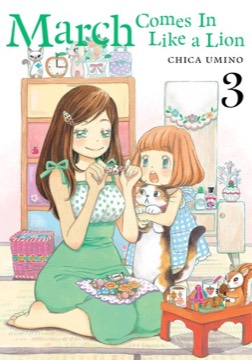
She subsequently produced March Comes in Like a Lion, which is longer, sadder and more formally ambitious, and the two are frequently read together.
Readers who like one almost always like the other, and the progression between them is instructive. Both share a preoccupation with people who are technically fine and privately struggling, and with the usefulness of being fed by someone.
Who it is for
Readers in or near the position the book describes — uncertain about work, attached to people who are attached elsewhere — and readers who want comedy that does not cancel its own sadness.
It is ten volumes, complete, and among the warmest and most honest things in this section.
What to take away
- 01One-directional attachmentNearly every feeling in the book goes unreturned, and the series treats that experience as worth a hundred chapters.
- 02A vocational rather than romantic anxietyTakemoto's inability to say what he is for is the most sustained thread, and it is survived rather than answered.
- 03Talent as a complicationHagumi's gift is a burden, and the series is as interested in its cost to the people around her as to her.
- 04Cheerfulness distinguished from happinessThe comedy is how these people manage disappointment, not relief from it.
- 05Time allowed to passPeople graduate, take jobs and drift apart, and the book lets them rather than holding the group together.
- 06Unpolished drawing that fitsA more finished style would have made a book about art students look like a book about professionals.