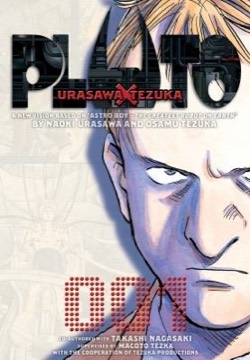
Pluto
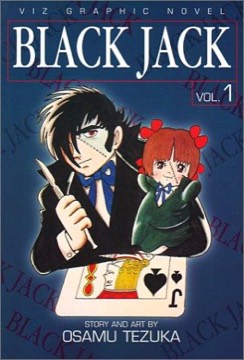
Naoki Urasawa's series, begun in 2003, retelling an Astro Boy storyline as a murder investigation conducted by a robot detective. A rewriting of Tezuka for adults.
- First published
- 2003
- Publisher
- not established
- Pages
- 186
- Shelf
- Anime
- Level
- Core
- ISBN-13
- 9784091815569
Record checked against
Catalogue note
- Reads as
- ReflectiveChanges how you see rather than what you do.
- Level
- Core / BuildingAssumes general familiarity with the subject.
- Approach
- Theoretical
- Written for
- Readers of comics, and anyone curious how the form works, Readers with some grounding
Saved in this browser only — no account, nothing sent anywhere. My library
Read this if
- You read for the writing as much as for the argument.
- You want a thought experiment you can live inside for a while.
- You want to think harder about what is actually right.
- You want a book that changes how you see things rather than what you do tomorrow.
- You know roughly how the subject works and want the fuller account.
What it is
Gesicht, a robot detective with Europol, investigates the killings of the world's seven most advanced robots and of prominent humans associated with robot rights.
The story is a direct reworking of The Greatest Robot on Earth, a 1964 Astro Boy arc, retold at far greater length and as a procedural rather than as an adventure.
A children's adventure from 1964, retold as a murder investigation.
Devmark’s reading — not a quotation from the book
Adapting Tezuka
Urasawa worked with Tezuka's son and with a supervising editor, and the project is explicitly a homage that also argues with its source.
Characters keep their names and functions, and almost everything else is reconsidered: the robots have jobs, marriages, trauma and legal standing, and Atom himself is a supporting character.
Gesicht
The detective is methodical, quiet and troubled by memories he cannot account for, and the investigation into the killings runs alongside an investigation into himself.
Making a robot the viewpoint character rather than the subject is the adaptation's central move, and it relocates the original's questions inside the person they concern.
War and its aftermath
The backstory concerns a conflict fought on a false pretext over weapons that turned out not to exist, and the series deals throughout with veterans, occupation and reconstruction.
It was serialised from 2003, and the parallel to the Iraq war is deliberate and unmistakable. The political anger is more direct than in Urasawa's other work.
Hatred as the subject
The killings are driven by an emotion the robots involved were not designed to experience, and the series treats the acquisition of hatred as the thing that makes a machine fully a person.
This is a bleak inversion of the usual formulation. Consciousness here is demonstrated not by love or creativity but by the capacity to want someone destroyed.
Structure
Eight volumes, each largely following a different character, with the murder plot advancing across them and several volumes functioning as near-standalone novellas.
The North No. 2 chapter, concerning a war robot who wishes to learn the piano, is frequently named among the finest single sequences in modern manga.
The art
Urasawa's realistic style is applied to robots designed to pass as human, which produces a specific unease — figures that are almost but not quite conventional faces.
The action is sparse and heavily weighted, with long quiet sequences and sudden, brief violence, and the restraint makes the destruction land.
Grief
Nearly every major character is mourning someone, and the series is consistently interested in how a being with perfect recall experiences loss.
The question of whether memory that cannot fade is a gift or a wound recurs, and the answer the series gives is not comforting.
Rights and law
Robot legal personhood, international treaties, weapons inspection regimes and courts are all present, and the political machinery is worked out with care.
This is a direct continuation of Tezuka's own preoccupation with robot civil rights, updated into a recognisably contemporary international order. Tezuka's robot-rights material is treated as a legal system rather than as a moral sentiment, with treaties, inspectors and case law.
Compared to Monster
It is shorter, tighter and more controlled, and it resolves its central question cleanly, which Urasawa's longer series do not always manage.
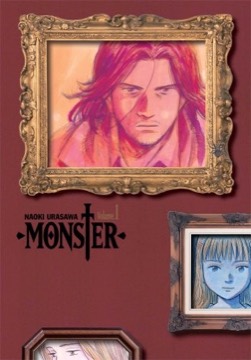
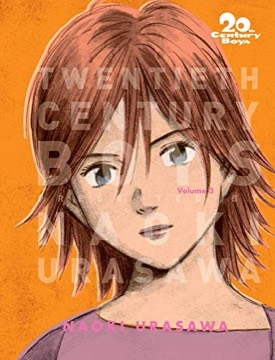
Readers who found Monster or 20th Century Boys too sprawling frequently find this the most satisfying of his works. At eight volumes it is also by far the easiest of his major works to finish, which matters more than it should.
The adaptation
A 2023 animated series covers all eight volumes across eight long episodes and is closely faithful, including the political material.
It is one of the better manga adaptations and does not require reading the source, though the pacing of the book is deliberate in ways the screen version compresses.
Who it is for
Readers who want science fiction that takes its ethical questions seriously and is built as a detective story rather than as an action narrative.
No knowledge of Astro Boy is required. Readers who do know it will find the reworking considerably richer, since much of the effect comes from what has been changed.
What to take away
- 01Homage that argues backA 1964 children's arc is retold with its robots given jobs, marriages and legal standing, and Atom demoted to a supporting role.
- 02The investigator, not the subjectMaking a robot the detective relocates the original's questions about personhood inside the person they concern.
- 03Hatred as proof of personhoodConsciousness is demonstrated not by love or creativity but by the capacity to want someone destroyed.
- 04A war on a false pretextSerialised from 2003, the backstory's weapons that did not exist make the contemporary parallel unmistakable.
- 05Perfect recall as a woundThe series keeps asking whether memory that cannot fade is a gift, and declines to answer comfortingly.
- 06Restraint that makes violence landLong quiet sequences and sudden brief destruction, rather than sustained action.