Antifragile
Nassim Nicholas Taleb's argument for a property he says has no name in any language: not merely resisting disorder but gaining from it — and his case that this, rather than robustness, should be the design goal for systems facing an unpredictable world.
- First published
- 2012
- Publisher
- Random House ''(US)''Penguin Books ''(UK)
- Pages
- 639
- Shelf
- Money
- Level
- Deep
- ISBN-13
- 9781846141577
Record checked against
Catalogue note
- Reads as
- StrategicAbout choosing between options under uncertainty.
- Level
- Advanced / AdvancedAssumes you have read around the subject already.
- Approach
- Applied
- Written for
- Investors and savers, Specialists and serious readers
Saved in this browser only — no account, nothing sent anywhere. My library
Read this if
- You want to think clearly about risk before you think about returns.
- You want to examine an assumption you have never examined.
- You keep fixing symptoms and want to see the structure producing them.
- You are weighing options and want a way to think about the trade-offs.
- You have read around this already and want a book that assumes it.
The triad
Taleb's organising structure. The fragile is harmed by volatility and shocks. The robust resists them and is unchanged. The antifragile gains from them — improving, strengthening or profiting when subjected to stress.
His claim is that the third category is real, widespread and unnamed, and that the absence of a word for it has made it invisible to planners who therefore aim at robustness when they could aim higher.
Robust is not the opposite of fragile. The opposite is something that gets better when you shake it.
Devmark’s reading — not a quotation from the book
Why this is not resilience
The distinction is worth holding precisely, because it is the one most often lost. A resilient system returns to its previous state after a shock. An antifragile one ends up in a better state than before.
Muscles under load, immune systems after exposure, and evolutionary selection are his biological examples; a portfolio structured to profit from volatility is his financial one.
Fragility as a detectable property
His most useful technical contribution: fragility can be identified without predicting anything, because it has a signature — a non-linear response where harm from a large shock exceeds the sum of harms from many small ones.
This is the book's practical core. You cannot forecast the earthquake; you can measure whether the building's damage curve is convex, and that is a present-tense observable rather than a prediction.
Via negativa
His argument that we know far more about what is harmful than about what is beneficial, and that removal is therefore more reliable than addition.
Applied to health, diet, portfolios and organisations, the instruction is to subtract the things that cause fragility rather than add things intended to produce strength — and he argues that subtraction is systematically under-attempted because it is professionally unrewarding.
Skin in the game
The ethical argument that later became its own book: those who make decisions must bear the consequences of them, or the system accumulates fragility as risk is transferred from decision-makers to others.
His examples — bankers, forecasters, policy advisers, consultants — are pointed and repeated. The structural claim is that asymmetric exposure is not merely unfair but actively generates hidden risk.
Risk transferred away from the person deciding does not disappear. It accumulates somewhere less visible.
Devmark’s reading — not a quotation from the book
The barbell
His practical strategy: combine extreme safety for most of your exposure with small, capped, speculative positions — and avoid the middle, where risk is present, poorly measured and uncompensated.
The generalisation beyond finance is the useful part: a stable income alongside genuinely ambitious side projects is a barbell; a moderately risky career is the middle.
Iatrogenics and naive intervention
His term for harm caused by the healer — interventions whose damage exceeds their benefit, particularly where the condition would have resolved on its own.
He extends it to economic policy, management and education, arguing that intervention is systematically over-supplied because the costs of acting are visible and attributable while the costs of restraint are neither.
Where the argument overreaches
Two places, and they should be stated. The book applies one framework to medicine, diet, urban planning, education, economics and religion, with uneven expertise, and several of the applied claims are considerably less supported than the core concept.
The dietary and medical material in particular goes well beyond what the cited evidence supports, and a reader should hold it much more loosely than the fragility analysis.
The tone problem, again
Taleb is combative, digressive, and spends substantial space on named antagonists and on a semi-fictional alter ego. Many readers find the manner sufficient reason to stop.
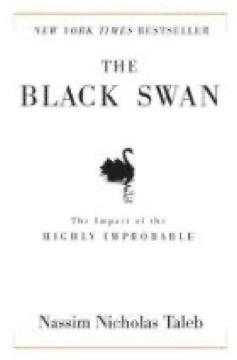
The structure is also loose: the book circles rather than builds, and the same points recur in different registers. It is a considerably harder read than *The Black Swan* and a less disciplined one.
What to take from it
The fragility-detection idea is genuinely valuable and under-used: ask of any plan, system or position whether a large shock hurts more than proportionally, because that question needs no forecast to answer.
Then via negativa and the barbell, both of which are actionable. Treat the wider cultural and dietary claims as one person's strongly held opinion, which is what they are.
What to take away
- 01Antifragile is not resilientResilient returns to the previous state; antifragile ends up better than before the shock.
- 02Fragility is observable nowA disproportionate response to large shocks is a present-tense property, requiring no prediction.
- 03Subtract rather than addWe know more about what harms than what helps, and removal is professionally under-rewarded.
- 04Barbell, avoid the middleExtreme safety plus small capped bets beats a moderate position whose risk is present and unmeasured.
- 05Hold the applied chapters looselyThe core concept is strong; the dietary, medical and policy extensions go well beyond the evidence.