Justice
Michael Sandel's tour of the major approaches to justice — utilitarian, libertarian, Kantian, Rawlsian and Aristotelian — built from his long-running Harvard lecture course and organised around cases rather than theories.
- First published
- 2009
- Publisher
- Debate
- Pages
- 320
- Shelf
- Philosophy
- Level
- Core
- ISBN-13
- 9781429952682
Record checked against
Catalogue note
- Reads as
- ReflectiveChanges how you see rather than what you do.
- Level
- Core / BuildingAssumes general familiarity with the subject.
- Approach
- Theoretical
- Written for
- Reflective readers, Readers with some grounding
Saved in this browser only — no account, nothing sent anywhere. My library
Read this if
- You want to think harder about what is actually right.
- You want to understand how power is taken, kept and lost.
- You want a book that changes how you see things rather than what you do tomorrow.
- You know roughly how the subject works and want the fuller account.
The method
Sandel opens each subject with a concrete dilemma — a runaway trolley, price-gouging after a hurricane, a purple heart for psychological injury, paid surrogacy — and works outward to the theory that would resolve it.
The approach is pedagogically deliberate. A reader forms an intuition first, then discovers which philosophical position their intuition commits them to, which is considerably more effective than presenting the positions and asking which is correct.
You form the intuition first, then learn which position you have just committed yourself to.
Devmark’s reading — not a quotation from the book
Utilitarianism examined
His treatment of Bentham and Mill: the appeal of a single measurable standard, and the objections — that it permits sacrificing individuals, and that it requires reducing incommensurable values to one currency.
His use of a real corporate cost-benefit analysis that assigned a monetary value to human lives makes the objection concrete in a way the abstract version never does.
Libertarianism examined
His presentation of the position that people own themselves and therefore own what they produce, with Nozick's argument that redistributive taxation is on a par with forced labour.
His probing cases — consensual cannibalism, selling organs, military conscription versus a volunteer army versus paid substitutes — test whether self-ownership really licenses everything it appears to.
Kant and the dignity argument
His most difficult chapter, made unusually accessible: morality is not about consequences or inclination but about acting from duty in accordance with a law you could will to be universal.
His treatment of the categorical imperative's second formulation — treat humanity never merely as a means — is the version most readers can use, and it does most of the work in the book's later arguments about markets.
Rawls presented and questioned
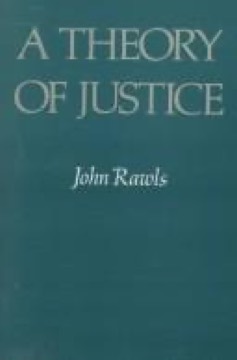
His account of the original position and the two principles, with attention to the claim that the distribution of natural talent is morally arbitrary and should not determine life outcomes.
His questioning is gentle but real: he asks whether the self behind the veil, stripped of everything that makes a person who they are, can coherently choose anything.
The communitarian turn
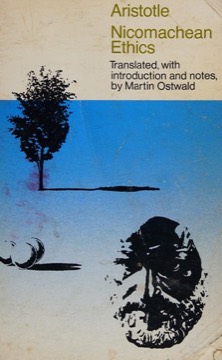
His own position, arrived at through Aristotle: justice cannot be determined without asking what a practice is for and what virtues it should honour.
His argument is that liberal neutrality — the attempt to settle questions of justice without taking a position on the good life — is not achievable, and that pretending to it removes exactly the arguments people actually care about from public debate.
Markets and moral limits
His recurring concern, developed further in his later work: that extending market reasoning into spheres where it does not belong corrupts the goods being exchanged.
His examples — paid queuing, sold kidneys, commercial surrogacy, purchased military service — are chosen to test whether an exchange between consenting adults can still be objectionable, and his answer is that some goods are degraded by being priced.
His test is whether a consensual exchange can still be wrong, and his answer is that some goods are degraded by price.
Devmark’s reading — not a quotation from the book
What kind of book it is
It is an introduction rather than an original contribution, and it is frank about that. Sandel's own communitarian position appears explicitly in the final chapters rather than being smuggled in.
Its distinction is the quality of the exposition. It is the best available single volume for someone who wants to understand what the major positions actually claim and why each has serious adherents.
Where it is criticised
Specialists object that the treatments are compressed to the point of distortion, particularly on Kant, and that the case-based method selects examples that favour the author's conclusions.
The second charge has some force. The market cases in particular are chosen where intuitions run against pure market reasoning, and a reader should notice that the deck is not quite level.
What to take from it
The recognition that most disagreements about policy are disagreements between philosophical positions that the participants have never articulated.
And the specific move at the centre of the book: when you have a strong intuition about a case, ask what principle would have to be true for it to be correct, and then ask whether you are willing to hold that principle everywhere.
What to take away
- 01Start from the case, not the theoryForming the intuition first shows you which position you already hold, which is better than being told.
- 02Some goods are degraded by pricingThe test is whether a consensual exchange between adults can still be objectionable.
- 03Neutrality is not achievableAttempting to settle justice without a view of the good removes the arguments people actually care about.
- 04Talent is morally arbitraryRawls's claim that natural endowment should not determine outcomes is the crux most readers resist.
- 05Test your principle everywhereAsk what would have to be true for your intuition to hold, then whether you accept it in every case.