Letters from a Stoic
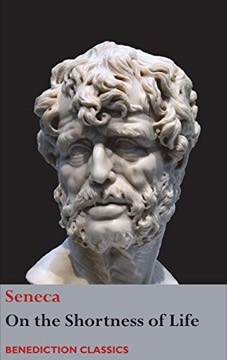
Seneca's letters to his friend Lucilius — a hundred and twenty-four of them, written near the end of his life — which teach Stoic practice through the ordinary business of illness, dinner parties, travel, noise and the fear of dying.
- Composed
- not established
- Publisher
- not established
- Pages
- not established
- Shelf
- Philosophy
- Level
- Core
- ISBN-13
- not established
Record checked against
This work predates printing, so it has no publication year. The years the sources report — openlibrary 2015 — are those of later editions or translations, not of the work. No page count is recorded, so no reading estimate is shown for the book itself.
Catalogue note
- Reads as
- ReflectiveChanges how you see rather than what you do.
- Level
- Core / BuildingAssumes general familiarity with the subject.
- Approach
- Theoretical
- Written for
- Reflective readers, Readers with some grounding
Saved in this browser only — no account, nothing sent anywhere. My library
Read this if
- You want a practical philosophy for things outside your control.
- You want to think harder about what is actually right.
- You want a book that changes how you see things rather than what you do tomorrow.
- You know roughly how the subject works and want the fuller account.
What the letters are
The *Epistulae Morales ad Lucilium* were written in Seneca's final years, after his withdrawal from Nero's court. They are addressed to a real correspondent but were almost certainly composed for publication, which makes their intimacy a deliberate literary form rather than private correspondence.
Each begins with something ordinary — a journey, a noisy bathhouse below his lodgings, a visit to a villa he once owned — and works from it to a philosophical point. The structure is the method: philosophy is shown applying to the day rather than discussed in the abstract.
Each letter starts with something trivial. The point is that this is where philosophy is supposed to work.
Devmark’s reading — not a quotation from the book
Seneca's position among the Stoics
Of the three Roman Stoics commonly read, Seneca is the most literary and the most personable. Epictetus is a teacher issuing instructions; Marcus Aurelius is writing to himself; Seneca is writing to a friend, and it reads that way.
He is also the least systematic. The letters circle back on the same themes from different angles, and Seneca is more interested in whether an argument will actually help someone at three in the morning than in whether it completes a system.
On time as the only possession
The first letter sets the theme he returns to most: that we guard property carefully and give away time to anyone who asks, though time is the only thing genuinely ours and the only loss that cannot be recovered.
His observation that most people are not short of time but wasteful with it is the ancestor of a great deal of modern writing on attention, and it is put more sharply here than in most of its descendants.
On premeditating adversity
The practice of rehearsing misfortune in advance — poverty, exile, illness, death — so that it arrives as something already considered rather than as a shock.
Seneca's argument is that the mind's suffering is largely anticipatory, and that we are more often tormented by imagination than by fact. The practice is not pessimism but inoculation: what has been faced calmly in thought has less power to arrive as catastrophe.
On death, at length
Seneca returns to mortality constantly, and it is the subject where his tone is least comfortable for a modern reader. His position is that a life is complete in itself rather than measured by length, and that the fear of death spoils the life it is meant to protect.
There is a hard edge here. Seneca defends the right to end one's own life when it can no longer be lived well, a position he eventually acted on. The letters should be read knowing that.
On friendship and solitude
His treatment of friendship is one of the warmest things in Stoic writing. Judge a person before you make them a friend, he says, but once you have, trust them completely — deliberating after committing is the error.
He pairs this with a defence of solitude, and with a warning about crowds: his account of returning from a public spectacle more cruel and less human than he went in is among the sharpest things written about how company changes a person.
Decide before you trust. Deliberating after you have committed is the error, not the trust.
Devmark’s reading — not a quotation from the book
The hypocrisy problem
This has to be faced. Seneca wrote about the worthlessness of wealth while being one of the richest men in Rome, and about virtue while serving as Nero's tutor and adviser through a reign he could not have mistaken.
He addresses the charge directly, arguing that a philosopher may possess wealth without being possessed by it, and that he is describing the road rather than claiming to have arrived. Whether that is honest or self-serving is a genuine question the letters do not settle.
What survives the objection
The strongest defence of the letters is practical. Whatever Seneca's own conduct, the advice is tested against real situations and is usable by someone who is not a saint.
His candour about his own failures is also part of the case. He writes as a patient rather than a physician, which is a different relationship to the reader than a teacher's, and it makes the letters easier to use.
How to read them
Not in order and not all of them. The letters vary considerably in quality and several are occasional pieces of limited interest. Most selected editions carry the strongest forty or so, and that is the right way in.
Seneca is quotable to a fault, which is a hazard: he is easy to reduce to aphorisms, and the aphorisms lose the argument that earned them. The letters are better than their most-quoted lines.
What to take from them
Three practices transfer cleanly. Guard time the way you guard money. Rehearse adversity so it arrives already considered. Notice what crowds and company do to your judgement, and choose both deliberately.
What is harder to take, and the most valuable thing here, is his repeated insistence that philosophy is worthless if it does not change what you do — and that a person who can discuss virtue fluently and live badly has simply learned a vocabulary.
What to take away
- 01Time is the only real possessionWe defend property and give away hours, though only one of the two is unrecoverable.
- 02Rehearse the lossWhat has been faced calmly in imagination arrives with much less force in fact.
- 03Crowds change youHis account of leaving a spectacle more cruel than he arrived remains the sharpest version of this.
- 04Decide before you trustJudge a person before befriending them; continuing to deliberate afterwards is the actual failure.
- 05Fluency is not virtuePhilosophy that does not change conduct has taught a vocabulary and nothing else.