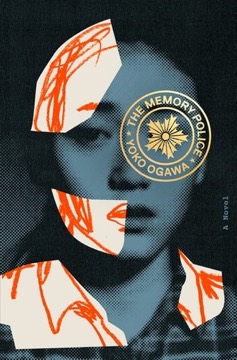
The Memory Police
Yoko Ogawa's 1994 novel, translated into English in 2019, set on an island where categories of object disappear and the memory of them goes with it.
- First published
- 1994
- Publisher
- Mai tian chu ban
- Pages
- 288
- Shelf
- Thriller
- Level
- Core
- ISBN-13
- 9789520427344
Record checked against
Catalogue note
- Reads as
- ReflectiveChanges how you see rather than what you do.
- Level
- Core / BuildingAssumes general familiarity with the subject.
- Approach
- Theoretical
- Written for
- Readers who mean to stop at one more chapter, Readers with some grounding
Saved in this browser only — no account, nothing sent anywhere. My library
Read this if
- You read for the writing as much as for the argument.
- You want a thought experiment you can live inside for a while.
- You want a book that changes how you see things rather than what you do tomorrow.
- You know roughly how the subject works and want the fuller account.
The premise
On an unnamed island, things vanish. Ribbons, birds, roses, photographs: each disappearance is announced by a feeling, the objects are destroyed, and the population forgets what they were for.
A small number of people cannot forget. The Memory Police locate and remove them. The narrator, a novelist, hides her editor beneath the floor of her house.
Things disappear from the island, and so does everyone's memory of what they were.
Devmark’s reading — not a quotation from the book
The mechanism
Disappearance is collective and physical: everyone wakes knowing something has gone, the objects are gathered and burned, and the concept follows.
The novel does not explain the cause and is not interested in doing so. The process is a condition of the world rather than a mystery to be solved.
Accumulating loss
The disappearances escalate from objects to categories to parts of the human body, and the novel's final movement is almost unbearable in its logic.
The progression is unhurried and entirely consistent, and the reader understands well before the narrator does where it must end. Ogawa also never specifies how long the process has been running or how much has already gone, which means the reader cannot establish how much remains.
The hidden room
The editor is concealed in a space between floors, and the practical details — food, waste, the danger of sound, the absence of anything to do — are rendered specifically.
The material is closer to occupation literature than to dystopia, and it is the novel's most grounded and most affecting writing.
The novel within
The narrator is writing a book about a typist who loses her voice and is confined by her instructor, and extracts appear throughout.
The inner narrative parallels and eventually overtakes the outer one, and the relationship between them is the novel's formal achievement. The typist's confinement also intensifies at the same rate as the island's losses, so the two narratives deteriorate in parallel.
Political reading
The book can be read as being about censorship, occupation, authoritarian control or state-managed forgetting, and its 1994 Japanese context supports several.
Ogawa declines to specify. The allegory is deliberately unfixed, which is why it has been read productively in very different political situations. Ogawa has also said relatively little about intended meaning, and the novel's resistance to a single interpretation appears deliberate rather than accidental.
Grief
An equally available reading is that the novel is about bereavement and about the loss of a person by degrees, with the narrator's dead parents present throughout.
The two readings do not compete, and the book supports both without committing to either. The old man who helps her, and the slow reduction of her circle to one person, gives the bereavement reading substantial support throughout.
Prose
Quiet, precise and unemphatic in Stephen Snyder's translation, with almost no figurative language and a great deal of physical detail.
Ogawa's restraint is total. Nothing is dramatised, and the flatness is what makes the escalation land. Snyder has translated much of Ogawa's work into English, and the consistency of register across those books is itself a considerable achievement.
Pace
It is slow and largely uneventful, with long passages concerning cooking, walking and the maintenance of a hiding place.
The domestic ordinariness is the point, and readers who want incident will find very little of it. The novel is also short, so the slowness is a matter of register rather than of length, and readers are not asked to sustain it for long.
Its English reception
The translation appeared twenty-five years after publication and was shortlisted for the International Booker, which brought Ogawa a substantial new readership.
Its arrival during a period of political anxiety about institutional memory contributed to how it was read. Comparisons to Orwell and to Kafka were made frequently, and Ogawa has noted that she had not read the latter when she wrote it.
Ogawa's other work
The Housekeeper and the Professor and Revenge are also available in English and share the same restraint applied to very different material.
Revenge is the closest in register, and readers who respond to the coolness here should go to it next. She is enormously prolific in Japanese, and the English translations represent a small and somewhat arbitrary selection of a career spanning four decades.
Who it is for
Readers who want literary fiction that uses a speculative premise seriously, and who do not need the premise explained.
It sits on this shelf because it is genuinely frightening rather than because it is a thriller. Readers who want plot should be clear that the book is constructed to remove things rather than to deliver them.
What to take away
- 01A condition, not a mysteryThe cause of the disappearances is never explained and the novel has no interest in explaining it.
- 02Escalation that is entirely logicalThe progression from objects to body parts is unhurried and consistent, and the reader sees where it ends before the narrator does.
- 03Occupation literature rather than dystopiaThe hidden room's practicalities — food, waste, silence, boredom — are the book's most grounded writing.
- 04An inner narrative that overtakesThe novel the narrator is writing parallels and eventually consumes the frame, which is the formal achievement.
- 05Allegory deliberately unfixedCensorship, occupation and bereavement are all supported, and Ogawa declines to specify which is intended.
- 06Restraint making escalation landNothing is dramatised and there is almost no figurative language, which is precisely why the ending works.