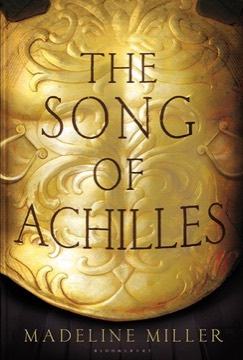
The Song of Achilles
Madeline Miller's retelling of the Iliad from the perspective of Patroclus, from his exile as a child to the last year of the Trojan War.
- First published
- 2011
- Publisher
- Belog
- Pages
- 386
- Shelf
- Fiction
- Level
- Entry
- ISBN-13
- 9789041714879
Record checked against
Catalogue note
- Reads as
- ReflectiveChanges how you see rather than what you do.
- Level
- Accessible / FoundationalNo prior reading assumed.
- Approach
- Theoretical
- Written for
- Readers of literature, Newcomers to the subject
Saved in this browser only — no account, nothing sent anywhere. My library
Read this if
- You read for the writing as much as for the argument.
- You want evidence about why people behave as they do, not folklore.
- You want a book that changes how you see things rather than what you do tomorrow.
- You are starting from scratch here and want a way in that assumes no prior reading.
The premise
Patroclus, a clumsy and disappointing prince, is exiled to Phthia after killing another boy. There he meets Achilles, the king's son, the best of the Greeks, and becomes his companion.
The novel follows them through Chiron's tutelage, the gathering of the fleet, and ten years at Troy, narrated entirely by Patroclus.
The Iliad told by the man whose death is its turning point, up to the moment it becomes one.
Devmark’s reading — not a quotation from the book
What it does with the source
Miller is a classicist and the novel is close to the tradition: the relationship between the two is treated as romantic and sexual, which follows Aeschylus and Plato rather than departing from Homer.
Her more significant choice is narrating from a non-heroic position. Patroclus is not a great fighter and does not want to be, and the war is seen by someone with no appetite for it.
The war is narrated by the one Greek who has no interest in glory, which changes everything.
Devmark’s reading — not a quotation from the book
Themes
Achilles's choice — a short glorious life or a long obscure one — is the book's spine, and Miller makes Patroclus the cost of that choice rather than its witness.
Thetis, Achilles's divine mother, is the antagonist, and her hostility to a mortal attachment is the novel's most effective invention.
Reading it
No prior knowledge of the Iliad is required, though readers who know it will see the shape of the ending from the first page, which is the intended effect.
It is Miller's first novel and is less formally controlled than Circe. Read in either order.
Patroclus narrates
The choice of narrator is the book's foundation: the Iliad's most famous warrior seen entirely through the eyes of a minor, exiled, physically unimpressive companion who is not a hero and knows it. It relocates an epic into an intimate register without changing a single event.
Ten years before the war
Roughly half the novel takes place before the war begins at all: Patroclus's exile to Phthia, the two boys' years of training under the centaur Chiron on Mount Pelion, adolescence, and the hiding on Scyros. None of this is covered in the Iliad. Miller is doing the work of building a relationship the epic simply assumes, which is exactly what makes its consequences land later.
The Iliad assumes they matter to each other. This book does the work of showing why.
Devmark’s reading — not a quotation from the book
Making the relationship explicit
Ancient sources treat the pair's bond as central and ambiguous, and later readers argued for centuries about its nature. Miller's decision to write it as an unambiguous love story is an interpretation with real classical support rather than an invention, and she has defended it on those grounds.
Thetis
The sea-goddess mother who despises Patroclus and cannot be reasoned with is the novel's most effective antagonist. She is genuinely inhuman — indifferent to mortal argument, operating on a timescale that makes a life trivial — and the book is better for not softening her.
The prophecy
Achilles knows the terms of his life from boyhood: lasting glory paired with an early death, or a long and entirely unremembered one. Miller keeps that choice present on the page from adolescence onward rather than saving it for a late revelation, so the novel becomes a sustained study of what it is to live alongside continuous knowledge of roughly how and roughly when you are going to die.
What it is not
It is not a retelling of the Iliad and compresses or omits a great deal of the war, the politics and the other Greek leaders. Readers wanting the epic should go to a translation; this is a novel about two people that uses the epic as its setting.
What to take away
- 01A non-heroic narratorPatroclus has no appetite for war and no talent for it.
- 02Following the traditionThe romantic reading comes from Aeschylus and Plato, not from invention.
- 03Achilles's choiceShort and glorious against long and obscure, with Patroclus as the cost.
- 04Thetis as antagonistA divine mother hostile to a mortal attachment.
- 05Read before or after CirceHer first novel, and the less formally controlled of the two.