The Four Steps to the Epiphany
Steve Blank's founding text of the customer-development movement, arguing that startups fail not from bad execution of product development but from applying product-development process to the entirely separate problem of finding a customer.
- First published
- 2006
- Publisher
- Wiley & Sons, Incorporated, John
- Pages
- 384
- Shelf
- Business
- Level
- Deep
- ISBN-13
- 9781411601727
Record checked against
Only one source carried a publication date for this work, so the year is uncorroborated.
Catalogue note
- Reads as
- StrategicAbout choosing between options under uncertainty.
- Level
- Advanced / AdvancedAssumes you have read around the subject already.
- Approach
- Applied
- Written for
- Founders and operators, Specialists and serious readers
Saved in this browser only — no account, nothing sent anywhere. My library
Read this if
- You are starting or growing a company and want the unglamorous parts.
- You are building something new and want to know why most new things fail.
- You are weighing options and want a way to think about the trade-offs.
- You have read around this already and want a book that assumes it.
The diagnosis
Blank's observation is that startups adopt the product-development process of established companies — concept, development, alpha/beta, launch — which assumes a known customer and a known problem.
A startup has neither. The process therefore drives the company toward a launch date with a fully built product for a market nobody has verified exists, which is Blank's account of how well-funded, well-run startups fail.
Product development assumes you know who the customer is. A startup's whole problem is that it does not.
Devmark’s reading — not a quotation from the book
Customer development as a parallel process
His solution is a second process running alongside product development, with its own steps, its own deliverables and its own milestones: customer discovery, customer validation, customer creation and company building.
The insistence that this is a *parallel* process with formal gates is what distinguishes the book from general advice to talk to customers. It gives the activity a structure a board can review.
Step 1 — Customer discovery
Turn the founders' vision into testable hypotheses about problem, product, channel, pricing, demand creation and market type — then get out of the building and test them with prospective customers.
Blank's rule is that discovery is not about selling or about asking people what they want; it is about finding whether the problem you assumed exists is one people recognise and already try to solve. A prospect who has built a workaround is the strongest signal available.
Step 2 — Customer validation
Prove that you have a repeatable, scalable sales process — that someone will actually buy, through a channel you can afford, at a price that works.
The gate is strict and the reason for it is the book's most important structural argument: if validation fails, you return to discovery rather than proceeding. Iteration between the first two steps is the expected state, not a failure.
If validation fails you go back, not forward. Everything expensive happens after this gate, on purpose.
Devmark’s reading — not a quotation from the book
Step 3 — Customer creation
Only after validation does the company spend on demand generation — and how it spends depends entirely on market type.
This is Blank's most underrated contribution. Entering an existing market, resegmenting one, or creating a new one require completely different spending, timelines and expectations, and applying the playbook for one to another is a reliable way to burn a launch budget.
Step 4 — Company building
The transition from a learning organisation to an executing one — functional departments, formal processes, scaling the team.
Blank is explicit that this step is where customer development ends and conventional management begins, and that doing it too early is the more common error. Building a full sales organisation before validation is the classic expensive mistake.
Market type as the hidden variable
Worth separating because it runs through everything. In an existing market the customer and the competition are known and the basis of competition is performance. In a resegmented market it is niche or low cost. In a new market there is no customer to ask, adoption is slow, and revenue forecasts are fiction.
His observation that new-market companies routinely fail by spending like existing-market companies is the single most expensive mistake the book identifies.
Its relationship to lean startup
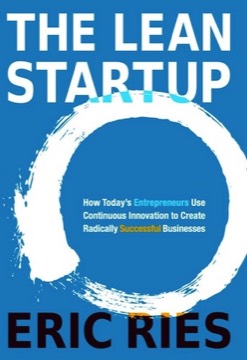
Eric Ries was Blank's student, and *The Lean Startup* is the more widely read popularisation of these ideas with the build-measure-learn loop and MVP vocabulary layered on.
Blank's version is more detailed, more enterprise-oriented, and more concerned with sales process and market type. Ries is more accessible and more oriented to consumer software. Reading Blank after Ries fills in what the popularisation compressed.
Where it is hard going
It is poorly organised, repetitive, and was self-published without heavy editing. The prose is workmanlike and the structure circles back on itself repeatedly.
The examples lean toward enterprise hardware and software of the 1990s and 2000s, and the process as written assumes a sales-led business with identifiable buyers — which maps awkwardly onto consumer or product-led companies.
What to take from it
The parallel-process idea is the core: finding the customer is a discipline with its own steps and its own evidence, not something that happens while you build.
Then market type, which almost nobody asks about explicitly and which determines what a reasonable plan looks like. And the validation gate — the discipline of not spending until someone has actually bought.
What to take away
- 01Finding the customer is its own processIt runs parallel to building, with its own gates, not as something that happens along the way.
- 02Look for existing workaroundsA prospect who has already jury-rigged a solution is the strongest evidence the problem is real.
- 03Failing validation means going backThe gate exists so that everything expensive happens after someone has actually bought.
- 04Market type changes the whole planNew, existing and resegmented markets need different spending, timelines and forecasts.
- 05Do not build the sales team earlyScaling an organisation before the sales process is repeatable is the classic expensive error.