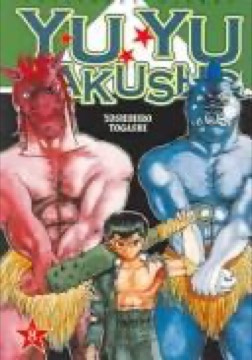
Yu Yu Hakusho
Yoshihiro Togashi's series, begun in 1990, about a delinquent teenager who dies saving a child and is given a job policing the boundary between the living and the spirit world.
- First published
- 1990
- Publisher
- Turtleback
- Pages
- 192
- Shelf
- Anime
- Level
- Entry
- ISBN-13
- 9782871291657
Record checked against
Catalogue note
- Reads as
- ReflectiveChanges how you see rather than what you do.
- Level
- Accessible / FoundationalNo prior reading assumed.
- Approach
- Theoretical
- Written for
- Readers of comics, and anyone curious how the form works, Newcomers to the subject
Saved in this browser only — no account, nothing sent anywhere. My library
Read this if
- You read for the writing as much as for the argument.
- You want a book that changes how you see things rather than what you do tomorrow.
- You are starting from scratch here and want a way in that assumes no prior reading.
What it is
Yusuke Urameshi is fourteen, violent and generally regarded as a waste, and he dies pushing a child out of the path of a car. The afterlife, which had not expected this, offers him a route back.
He returns as a spirit detective, investigating incursions from the demon world, and the series moves from case-of-the-week supernatural investigation into a long tournament and then into political conflict.
He dies doing the only decent thing he has ever done, and the afterlife does not know what to do with him.
Devmark’s reading — not a quotation from the book
The genre shift
The series changes shape twice: from supernatural detective stories to a martial arts tournament, and then into a conflict about the governance of the demon world.
The tournament section is where it became commercially enormous and where its influence on later series is clearest, though the early detective material is tighter.
The four leads
Yusuke, Kuwabara, Kurama and Hiei form a group with genuinely different motivations, and the two demons among them were originally antagonists.
The relationships are the series' strength. Kurama and Hiei in particular are given interiority unusual for supporting characters in the format, and their histories carry real weight.
Fighting
Combat is inventive and reasonably disciplined, with abilities that have costs and a consistent sense of what each character can actually do.
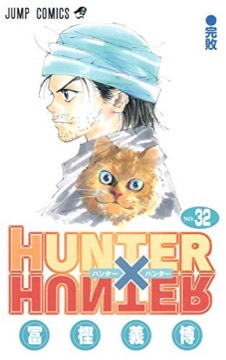
Togashi's interest in conditional, rule-bound powers — which he develops far further in Hunter x Hunter — is already visible here, particularly in the later tournament rounds.
The Chapter Black arc
A late sequence concerning a human who has concluded that humanity deserves extinction is the series' most serious material.
The antagonist's case is built from documented human cruelty and is not easily dismissed, and Yusuke's answer to it is notably not a refutation. It is also where Togashi's interest in his own premise is most obvious, and where the series stops being about fighting at all.
Death and its administration
The spirit world is a bureaucracy with departments, paperwork and an adolescent administrator, and the comic treatment of the afterlife is consistent throughout.
The joke conceals a real structure: much of the plot concerns jurisdictional disputes about who has authority over whom, which the final arc takes seriously.
Tone
It is funnier than most series of its kind, with a strong line in deadpan and a protagonist who is rude to nearly everyone including his employers.
The comedy survives the shift into more serious material better than in most comparable works, largely because it comes from character rather than from set pieces.
The ending
The final arc resolves through an election rather than a battle, and the series concludes abruptly.
Togashi has been open that he was exhausted and wanted to stop, and the compression is visible. It is one of the more famous cases of a hugely successful serial being ended by its author's unwillingness to continue.
The art
Clean and energetic, with strong character designs and clear action, and a noticeable improvement across the run.
It is more conventional than his later work and correspondingly easier to read, and the fight pages are consistently well staged. Togashi's character designs from this period remain widely recognised, and Hiei and Kurama in particular have had a long afterlife in the medium.
Influence
The tournament structure, the four-person team dynamic and several specific character archetypes were widely adopted by series that followed.
Its influence is less discussed than that of its contemporaries, largely because Togashi's later work overshadowed it, but it is substantial. Several series that followed borrowed its structure almost wholesale, including the progression from detective cases to a tournament to a war.
Relation to Hunter x Hunter
Nearly everything Togashi does better later is present here in early form: rule-bound abilities, antagonists with arguments, a willingness to let protagonists lose.
Readers who admire the later series frequently find this one interesting as a first attempt at the same concerns in a more conventional package.
Who it is for
Readers who want a complete, relatively short shōnen series with good characters and a genuine ending, even a hurried one.
Nineteen volumes is a modest commitment by the standards of this section, and the series is entirely self-contained. It is a reasonable place to start for readers curious about the format without wanting seventy volumes of it.
What to take away
- 01A death that changes the termsYusuke dies performing the only decent act of his life, and the afterlife's confusion about it starts the series.
- 02Antagonists recruitedTwo of the four leads began as enemies and are given interiority unusual for supporting characters in the format.
- 03Rule-bound powers, earlyTogashi's later obsession with conditional abilities and costs is already visible in the tournament rounds.
- 04An argument for extinctionThe Chapter Black antagonist builds his case from documented human cruelty, and the answer is not a refutation.
- 05Bureaucracy played for comedy and used seriouslyThe afterlife's departments are a running joke and also the source of the jurisdictional conflict that ends the series.
- 06Ended by its authorTogashi stopped because he was exhausted, and the visible compression makes it a well-known case of a serial cut short from inside.