Beastars
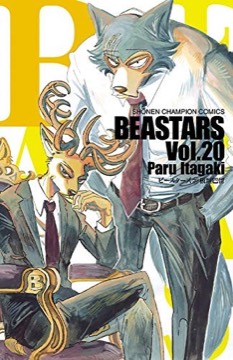
Paru Itagaki's series, begun in 2016, set in a society of anthropomorphic animals where carnivores and herbivores live under an uneasy settlement. A school drama about appetite.
- First published
- 2016
- Publisher
- VIZ Media LLC
- Pages
- 192
- Shelf
- Anime
- Level
- Core
- ISBN-13
- 9781974726059
Record checked against
Catalogue note
- Reads as
- ReflectiveChanges how you see rather than what you do.
- Level
- Core / BuildingAssumes general familiarity with the subject.
- Approach
- Theoretical
- Written for
- Readers of comics, and anyone curious how the form works, Readers with some grounding
Saved in this browser only — no account, nothing sent anywhere. My library
Read this if
- You read for the writing as much as for the argument.
- You want a book that changes how you see things rather than what you do tomorrow.
- You know roughly how the subject works and want the fuller account.
What it is
At Cherryton Academy, carnivores and herbivores study together under strict rules: meat consumption is illegal, and predatory instinct is something every carnivore is expected to manage privately.
An alpaca is killed and eaten on campus. Legoshi, a large grey wolf in the drama club, becomes entangled in the aftermath and in his own response to a dwarf rabbit named Haru.
A school where eating someone is both a crime and an appetite everyone is expected to manage quietly.
Devmark’s reading — not a quotation from the book
The central metaphor
The carnivore-herbivore division maps onto several things at once — race, class, gender, sexual desire, physical threat — and the series deliberately refuses to fix it to any one of them.
The looseness is a risk and mostly works. A tighter allegory would collapse into a single argument, and the instability keeps the situations genuinely uncomfortable.
Desire and violence
Legoshi's attraction to Haru is inseparable from his instinct to eat her, and the series does not resolve that into something safe.
It is an unusually frank treatment of desire as a thing that contains aggression, and the fact that it is conducted between a wolf and a rabbit is what permits the directness.
Itagaki's drawing
The style is unstable and deliberately so: anatomically strange, with proportions that shift according to emotional register, heavy shadow, and faces that are frequently unsettling.
It is not conventionally attractive and is extremely expressive, and the discomfort of looking at it is consistent with the material.
Social structure
The society is worked out in detail: a black market in meat, a legal framework, species-based discrimination in employment, and institutions that exist to manage tension rather than resolve it.
The world-building is among the series' strengths and supports arcs that have nothing to do with the school at all.
Legoshi
He is enormous, socially incapable, and determined to be harmless, and the series treats his self-suppression as costly rather than admirable.
His arc is toward accepting what he is rather than toward controlling it, which is a more interesting destination than the setup initially suggests.
Haru
She is small, sexually forthright, and entirely uninterested in being protected, and the series gives her a clear view of how other animals treat her size.
Her refusal to be a victim in anyone's narrative is the book's most direct piece of characterisation. Itagaki also allows her to be unlikeable, which is rarer than it should be for a character positioned as the object of someone else's attention.
Tone
It moves between school comedy, crime investigation, body horror and occasional musical-theatre absurdity, and the shifts are abrupt.
The instability is characteristic of Itagaki and is the main thing that determines whether a reader connects with the series at all. Itagaki's father is a manga author known for extreme fight sequences, and the influence shows in the sudden escalations into physical violence.
The later arcs
The series moves away from the school into wider society, including the criminal underworld and a long sequence about a self-styled leader figure.
The expansion is ambitious and less controlled than the early volumes, and opinion divides on whether the ending earns what precedes it.
Sexuality
The series is franker about sex than most of its category, treating attraction, frustration and the physical facts of interspecies relationships directly.
The frankness is not titillating. It is used to keep the central metaphor uncomfortable rather than to provide any other kind of interest.
The adaptation
A computer-animated series adapted the early volumes and is well regarded, with fur and movement handled better than the technique usually manages.
The manga's drawing is stranger and the adaptation necessarily normalises it, which removes some of the discomfort the original relies on. The second season in particular handles the crime material well, though the series was left without a full adaptation of its final arcs.
Who it is for
Readers who want allegory that refuses to resolve, and who can accept unstable tone and deliberately uncomfortable art.
It is complete at twenty-two volumes. Readers who want a clean metaphor or a conventional school story should be clear that the series is actively working against both.
What to take away
- 01An allegory deliberately unfixedThe carnivore division maps onto race, class, gender and desire at once, and the series refuses to settle on one.
- 02Desire containing aggressionLegoshi's attraction and his instinct to eat are inseparable, and the animal premise is what permits the frankness.
- 03Self-suppression as costLegoshi's determination to be harmless is treated as damaging rather than admirable, and his arc is toward acceptance.
- 04Art that is meant to unsettleShifting proportions and unsettling faces are deliberate, and the discomfort of looking is consistent with the subject.
- 05A society worked outBlack markets, employment discrimination and institutions that manage rather than resolve tension support arcs far from the school.
- 06A refusal to be protectedHaru's clear-eyed view of how her size is treated is the series' most direct piece of characterisation.