Malice
Keigo Higashino's 1996 novel, told through the conflicting written accounts of a murder suspect and the detective investigating him.
- First published
- 1996
- Publisher
- Macmillan Audio
- Pages
- 288
- Shelf
- Thriller
- Level
- Core
- ISBN-13
- 9780349141060
Record checked against
Catalogue note
- Reads as
- ReflectiveChanges how you see rather than what you do.
- Level
- Core / BuildingAssumes general familiarity with the subject.
- Approach
- Theoretical
- Written for
- Readers who mean to stop at one more chapter, Readers with some grounding
- Ideas
Saved in this browser only — no account, nothing sent anywhere. My library
Read this if
- You want to be kept up late, and made uneasy about who to believe.
- You want a book that changes how you see things rather than what you do tomorrow.
- You know roughly how the subject works and want the fuller account.
The premise
A successful novelist is found dead in his locked study on the night before he was to emigrate. His friend Osamu Nonoguchi, a children's author, found the body.
The novel is assembled from Nonoguchi's written record of events and Detective Kaga's notes, and the identity of the killer is established unusually early.
The killer is known by the third of the way through. The remaining question is why.
Devmark’s reading — not a quotation from the book
The structure
It alternates between two documents, each written after the fact, each selective, and each intended for a reader.
The form is the novel's entire method: everything the reader receives has been composed by someone with an interest, and the investigation becomes an exercise in reading two accounts against each other.
Why, not who
Higashino disposes of the identification early and spends the remainder on motive, which is the reverse of the conventional shape.
The question of why becomes progressively harder rather than easier, and each answer the novel supplies is subsequently shown to be another construction. Higashino also supplies at least three successive explanations for the motive, each of which appears complete before the next dismantles it.
Kaga
The detective is a former teacher, methodical, and interested in what an account leaves out rather than in what it asserts.
His method is textual: he checks manuscripts, compares handwriting, examines what was written when, and the investigation is conducted largely in libraries and archives.
Writing as evidence
Both men are professional writers, and the case turns on manuscripts, drafts, publication histories and the question of who actually composed what.
Using authorship as the investigative object is an excellent fit for a novel built from documents, and the eventual disclosure depends on it completely.
Malice
The title names the motive, and the novel's final position is that the emotion driving the crime is disproportionate to anything that happened.
The refusal to supply a proportionate cause is what distinguishes the book, and it is considerably more unsettling than a comprehensible motive would be.
School
A substantial thread concerns both men's shared history as pupils and the bullying that occurred, and Kaga's own experience as a teacher informs how he reads it.
The material on institutional responses to bullying is precise and is the novel's most socially specific content. Higashino is also precise that the institution's response at the time made everything worse, and that nobody involved has revised their account since.
Length
It is short, around three hundred pages, and tightly constructed with no digression.
Higashino is an extremely efficient plotter and the novel does not contain a scene that is not doing structural work. The novel also contains no subplot at all, which is unusual even for a puzzle mystery and contributes substantially to its effect.
Prose
Plain and deliberately unliterary in translation, appropriate to two documents written as records rather than as prose.
The flatness is functional: the reader must attend to content rather than to style, since the concealment operates entirely at the level of fact. The two documents are also distinguished by small habits rather than by voice, which is a subtler technique than the category usually attempts.
Higashino's other work
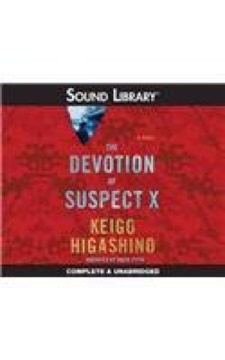
The Devotion of Suspect X is his best-known novel internationally and uses a similar structure of early disclosure followed by a question about method.
He is enormously prolific and the English translations represent a small fraction of his output. He has also written across several registers, including police procedurals and science fiction, and the English translations are heavily weighted toward his puzzle novels.
The series
Kaga appears in several novels, and the English translations have not followed the Japanese order, which means the character's history arrives out of sequence.
This one stands alone entirely and requires nothing. Readers who want to follow Kaga in order should be aware that the translations have appeared in an order that reflects English-language publishing rather than the original sequence.
Who it is for
Readers who want a formally ingenious mystery in which the puzzle is the narration itself.
It is among the cleverest constructions in this section and is short enough to be read in a sitting. Readers who want atmosphere or character will find it austere. It is also an unusually clean demonstration of a single idea, and readers interested in how a mystery can be built from documents will find it exemplary.
What to take away
- 01Identification early, motive lateThe killer is known well before the midpoint, and the remaining question of why becomes progressively harder.
- 02Two documents read against each otherEverything reaches the reader through accounts composed by interested parties, and the investigation is an exercise in comparison.
- 03Authorship as the investigative objectManuscripts, drafts and the question of who composed what is a perfect fit for a novel assembled from documents.
- 04A motive deliberately disproportionateThe novel's final position is that the emotion exceeds anything that happened, which is more unsettling than a proportionate cause.
- 05Detection conducted in archivesKaga checks handwriting and publication histories rather than physical evidence, and the case is solved textually.
- 06Concealment at the level of factThe prose is deliberately flat because the deception operates entirely in what is stated and omitted, not in how.