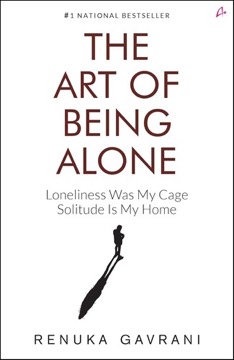
The Art of Being Alone
Renuka Gavrani's short self-help book on the difference between loneliness and solitude, and on learning to be by yourself without treating it as a failure state.
- First published
- 2023
- Publisher
- Amaryllis
- Pages
- 152
- Shelf
- Habits
- Level
- Entry
- ISBN-13
- 9789355434029
Record checked against
Only one source carried a publication date for this work, so the year is uncorroborated.
Catalogue note
- Reads as
- PracticalWritten to be applied, not only understood.
- Level
- Accessible / FoundationalNo prior reading assumed.
- Approach
- Practical
- Written for
- Anyone changing how they work, Newcomers to the subject
- Ideas
Saved in this browser only — no account, nothing sent anywhere. My library
Read this if
- You want evidence about why people behave as they do, not folklore.
- You want something to apply, not only something to think about.
- You are starting from scratch here and want a way in that assumes no prior reading.
The argument
Gavrani's premise is that many people organise their lives around avoiding being alone, and that the avoidance costs more than the condition — bad relationships kept, boundaries not set, decisions made to stay in company.
Her distinction is the standard one but usefully insisted on: loneliness is the pain of unwanted disconnection, solitude is a chosen state, and the same evening can be either depending on what you brought to it.
The same evening alone is loneliness or solitude depending entirely on whether you chose it.
Devmark’s reading — not a quotation from the book
The practical content
Short chapters on sitting with discomfort rather than reaching for a phone, on doing things alone in public, on the difference between rest and distraction, and on rebuilding a relationship with your own company.
The exercises are simple and repetitive by design, aimed at a reader who finds the underlying idea plausible but the practice difficult.
What kind of book it is
It is self-published, short, and written in a plain conversational register with a great deal of repetition. It has no research apparatus and does not claim one.
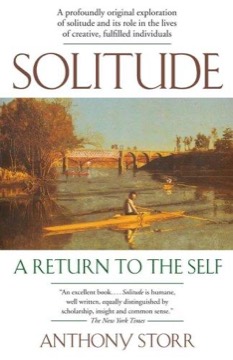
Read it as encouragement rather than as psychology. For the evidence base on solitude, Anthony Storr's Solitude is the substantial treatment; this is the accessible door into the same territory.
Encouragement rather than psychology, and it does not pretend to be more.
Devmark’s reading — not a quotation from the book
The distinction it rests on
The whole book turns on separating loneliness, which is distress at the absence of connection, from solitude, which is time alone that is chosen and used. Gavrani's argument is that people who have never made the distinction experience every unoccupied evening as the first thing, and organise their lives to avoid it.
One of them is a lack. The other is a resource. Most people have only ever experienced the first.
Devmark’s reading — not a quotation from the book
What the avoidance costs
Her central claim is that the cost of avoiding solitude is paid in relationships kept past their usefulness, boundaries not stated, and agreements made to prevent being left alone. The point is that the avoidance is rarely visible as avoidance — it presents as sociability, loyalty or accommodation.
Sitting with discomfort
The practical recommendation is to remain in an unoccupied moment without reaching for a phone, a screen or company, long enough for the initial restlessness to pass. It is a small instruction and the book is honest that the first attempts are unpleasant rather than peaceful.
Rest is not distraction
A useful distinction drawn several times is between genuine rest and the consumption that substitutes for it: an evening of scrolling leaves a person no less depleted than before, while doing nothing at all is restorative and is much harder to tolerate. The difference is presented as trainable.
Self-relationship first
The book's underlying position is that the relationship a person has with themselves sets a floor beneath every other relationship they will have, and that someone who cannot tolerate their own company for an evening will accept treatment from others that they would otherwise refuse outright. It is not an original argument, it is not defended with any evidence, and it is put plainly enough to be useful.
How it is written
It is self-published, short, and written in a plain conversational register that repeats its central points many times across the chapters rather than developing them. There is no research apparatus, no citation of any clinical literature and no therapeutic framing, and the book does not claim any of those things for itself. Read it as sustained encouragement from someone who has thought about the subject, rather than as a source to rely on.
Where it will not help
It is not a treatment for loneliness as a clinical condition, for social anxiety, or for isolation that is imposed rather than chosen, and it should not be substituted for one. Its usefulness is narrow and real: for a reader who fills every hour to avoid being by themselves and has never asked why.
What to take away
- 01Loneliness versus solitudeThe difference is whether the state was chosen.
- 02The cost of avoidanceRelationships kept and boundaries dropped to avoid being alone.
- 03Sitting with discomfortThe core practice is not reaching for distraction.
- 04Rest is not distractionA recurring distinction in the practical chapters.
- 05Encouragement, not researchPlain, repetitive and without an evidence base.