Miyazakiworld
A Life in Art
Susan J. Napier's 2018 study of Hayao Miyazaki, combining biography with readings of each of his films.
- First published
- 2018
- Publisher
- Yale University Press
- Pages
- 344
- Shelf
- Anime
- Level
- Core
- ISBN-13
- 9780300226850
Record checked against
Catalogue note
- Reads as
- ReflectiveChanges how you see rather than what you do.
- Level
- Core / BuildingAssumes general familiarity with the subject.
- Approach
- Theoretical
- Written for
- Readers of comics, and anyone curious how the form works, Readers with some grounding
Saved in this browser only — no account, nothing sent anywhere. My library
Read this if
- You want a life told honestly, at full length.
- You care why some things are obvious to use and others are not.
- You want a book that changes how you see things rather than what you do tomorrow.
- You know roughly how the subject works and want the fuller account.
What it is
A chronological account of Miyazaki's life and work, from his childhood during and after the war through his union activism, his television years, the founding of Studio Ghibli and each film in turn.
Napier reads the films against the biography, arguing that particular preoccupations recur because of identifiable experiences.
Each film read against the life, with the wartime childhood and the union years doing most of the explaining.
Devmark’s reading — not a quotation from the book
The biography
Miyazaki's father ran a factory manufacturing aircraft parts during the war, and his mother was seriously ill for much of his childhood, spending years in hospital.
Napier treats both as formative: the ambivalence about aviation and about industrial complicity, and the recurrence of absent or ill mothers, are traced directly to these circumstances.
Politics
Miyazaki was an active trade unionist in the animation industry and held left-wing views that Napier takes seriously rather than treating as biographical colour.
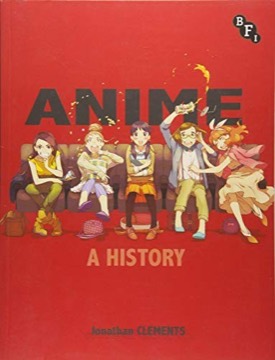
The account of labour organising at Toei is among the book's most useful sections, and it connects to the working conditions that Clements documents from a different angle.
Film by film
Each major work receives a chapter combining production history with interpretation, from The Castle of Cagliostro through The Wind Rises.
The readings vary in quality. Those on Nausicaä, Princess Mononoke and Spirited Away are the strongest, and the treatment of the lesser-known television work is thinner.
Women and girls
Napier attends closely to Miyazaki's young female protagonists and to the question of whether his admiration for them is straightforwardly progressive.
She is willing to be critical, noting the recurrence of girls who solve adult problems and the comparative absence of adult women with their own concerns.
Environmentalism
The ecological material is handled carefully, distinguishing Miyazaki's position from simple conservationism and noting his scepticism about human innocence.
Napier is good on the fact that his forests are dangerous and his protagonists' victories partial, which popular accounts of his work frequently miss. She also connects it to Shinto-influenced ideas about place without overstating the religious content, which is a trap a great deal of writing on Miyazaki falls into.
The Wind Rises
The chapter on his final feature, about an aircraft designer whose work became a weapon, is the book's culmination and connects directly to the father's factory.
Napier treats the film's ambivalence as unresolved and declines to defend it, which is the appropriate position for material this genuinely uncomfortable.
Sources
The book draws on Miyazaki's published essays, interviews, and Japanese secondary material, and Napier's Japanese reading is a substantial advantage.
She did not interview him. The book is a study rather than an authorised biography, and its distance from its subject is worth noting. She has, however, written about him for decades and attended screenings and exhibitions, and the familiarity with the material is evident on every page.
Style
It is academic in method and accessible in prose, and the personal enthusiasm is visible without becoming uncritical.
Readers who dislike scholarly framing will still follow it easily, and the film chapters can be read independently. The book is also organised so that a reader can go straight to a chapter on a film they have just watched, which is how many people will use it.
Limitations
Napier is more comfortable with interpretation than with production economics, and readers who want the studio's business history will find it thin here.
The book is also very much about Miyazaki rather than about Ghibli, and Takahata in particular receives less attention than his importance warrants.
Against hagiography
The book resists the tendency to treat Miyazaki as a benign figure, noting his difficulty as a colleague, his treatment of his son, and his repeated retirements.
The willingness to be unflattering is what makes the admiration credible. The account of his relationship with Isao Takahata is particularly unsparing, and it describes a friendship that was also a long competition neither man resolved.
Who it is for
Readers who want a serious single-author study and who know the films well enough for interpretation to be useful.
It is the best English-language book on Miyazaki and is a reasonable entry into criticism generally for readers who arrived through Ghibli rather than through manga.
What to take away
- 01Life used as explanationThe father's aircraft factory and the mother's long illness are traced directly to recurring preoccupations in the films.
- 02Union activism taken seriouslyMiyazaki's labour organising at Toei is treated as formative politics rather than as biographical colour.
- 03Willing to be criticalNapier notes the recurrence of girls solving adult problems and the relative absence of adult women with their own concerns.
- 04Forests that are dangerousThe ecological position is distinguished from simple conservationism, which popular accounts of his work usually miss.
- 05An unresolved final filmThe chapter on The Wind Rises connects the aircraft designer to the father's factory and declines to defend the ambivalence.
- 06Admiration made credibleResisting hagiography — his difficulty as a colleague, his treatment of his son — is what gives the praise weight.