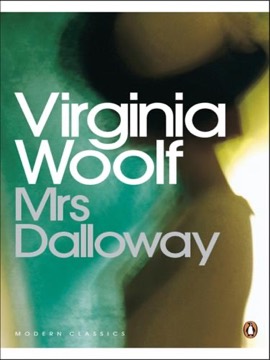
Mrs Dalloway
Virginia Woolf's 1925 novel, set across one June day in London as Clarissa Dalloway prepares for a party. One of the defining works of modernist fiction, and an argument about where a life actually happens.
- First published
- 1925
- Publisher
- Chivers North America
- Pages
- 224
- Shelf
- Fiction
- Level
- Deep
- ISBN-13
- 9798433608320
Record checked against
Catalogue note
- Reads as
- ReflectiveChanges how you see rather than what you do.
- Level
- Advanced / AdvancedAssumes you have read around the subject already.
- Approach
- Theoretical
- Written for
- Readers of literature, Specialists and serious readers
Saved in this browser only — no account, nothing sent anywhere. My library
Read this if
- You read for the writing as much as for the argument.
- You want to know how we got here.
- You want a book that changes how you see things rather than what you do tomorrow.
- You have read around this already and want a book that assumes it.
The premise
Clarissa Dalloway, in her early fifties, goes out to buy flowers. Over the course of the day she prepares for an evening party, receives a visit from a man she did not marry, and thinks about the choices that produced the life she has.
In parallel, Septimus Warren Smith, a veteran of the trenches, moves through the same city in severe psychological distress. The two never meet. The novel puts them in the same day on purpose.
One day, one city, and two people who never speak to each other.
Devmark’s reading — not a quotation from the book
How it is built
Woolf uses free indirect style to slide between consciousnesses without announcement, often mid-paragraph, using a shared external event — Big Ben striking, a car backfiring, a skywriting plane — as the pivot.
The effect is that London is rendered as a single field of attention that individual minds move through. It is the technique the novel is famous for, and it is the argument as much as the method.
The transitions between minds are the point: consciousness here is public space, not private property.
Devmark’s reading — not a quotation from the book
Themes
The novel is about time and its two registers — clock time, marked by Big Ben, and remembered time, which does not obey it. Clarissa's past is more present to her than the morning is.
Septimus carries the war. Woolf's portrayal of shell shock and of the doctors who treat it is furious and specific, and it is the sharpest social criticism in the book.
Why it matters
It is one of the works that established what a novel could do with interiority, alongside Joyce, and it remains more readable than its reputation suggests.
Woolf's diary records the plan explicitly: to show sanity and insanity side by side. Reading the two strands as one design rather than as a main plot with a subplot is the key to the book.
One day
The whole novel takes place between morning and a party that evening in June, and the compression is the method: a day is short enough to render minute by minute and long enough to contain a life, because the present keeps opening into the past without any announcement that time has moved.
The other story
Running in parallel is the day of a shell-shocked veteran who never meets Clarissa and whose hours end very differently from hers. Woolf described the two of them as sides of a single subject, sanity and insanity viewed together. The structure depends entirely on the reader making that connection unaided, because the novel refuses at every opportunity to state it, and the two narratives touch only through a shared city.
They never meet. The novel is built so that you make the connection its characters cannot.
Devmark’s reading — not a quotation from the book
How consciousness is handed over
The narration passes between minds mid-scene, frequently via something in the shared world — a car, a skywriting aeroplane, a clock. The technique is what lets Woolf cover a city without a plot, and it is more readable than its reputation if you stop trying to track who is speaking and follow what is being noticed.
Big Ben
The hours strike throughout the book, and the intrusion of exact public time into private interior time is the whole argument in miniature. The clock is indifferent to what anyone is thinking, the sound spreads out and dissolves over the city, and every consciousness the novel visits carries on at its own rate regardless — an hour of remembered childhood and a minute of waiting for a door occupy the same space on the page.
The doctors
Woolf's angriest writing in the novel is reserved for the two physicians who handle the veteran, one complacent and one coldly certain, prescribing rest, proportion and the removal of all stimulation. She had been subjected to the same regime herself under similar authority, and the portrait is an unmistakably personal attack on a profession that had confined her, delivered inside a book about a summer morning.
The party
The evening everyone is converging on is treated seriously rather than satirically. Clarissa's gift for assembling people is presented as a genuine creative act — an offering — and the novel declines to condemn a life organised around it, which is a more generous conclusion than its opening suggests.
What to take away
- 01One dayThe whole novel is a single June day, which is the structural premise.
- 02Minds as public spaceFree indirect style slides between consciousnesses using shared events as pivots.
- 03Two kinds of timeClock time and remembered time run against each other throughout.
- 04SeptimusThe war arrives in the novel through one veteran and the doctors who fail him.
- 05Sanity beside insanityWoolf's stated design was to show both in one structure, not as plot and subplot.