Otaku: Japan's Database Animals
Hiroki Azuma's 2001 study, translated into English in 2009, arguing that otaku consumption marks a shift from narrative to database in how culture is used.
- First published
- 2001
- Publisher
- 講談社
- Pages
- 193
- Shelf
- Anime
- Level
- Deep
- ISBN-13
- 9784061495753
Record checked against
Catalogue note
- Reads as
- ReflectiveChanges how you see rather than what you do.
- Level
- Advanced / AdvancedAssumes you have read around the subject already.
- Approach
- Theoretical
- Written for
- Readers of comics, and anyone curious how the form works, Specialists and serious readers
- Ideas
Saved in this browser only — no account, nothing sent anywhere. My library
Read this if
- You want to examine an assumption you have never examined.
- You want a book that changes how you see things rather than what you do tomorrow.
- You have read around this already and want a book that assumes it.
What it is
A short theoretical book arguing that otaku culture since the 1990s represents a change in the structure of consumption: audiences no longer seek grand narratives and instead assemble satisfaction from recombinable elements.
Azuma calls the resulting condition database consumption, and treats it as a symptom of a wider postmodern shift.
An argument that fans stopped wanting stories and started wanting components.
Devmark’s reading — not a quotation from the book
The database model
Beneath any particular work lies a database of character traits, settings and affective elements, and audiences engage with the database as much as with any narrative built from it.
A character is therefore consumed as a combination of attributes rather than as a participant in a plot, which explains derivative work, character goods and the persistence of figures detached from their stories.
Grand narratives
Azuma frames the shift in Lyotard's terms: the decline of large legitimating stories leaves consumers assembling meaning from available fragments.
The theoretical borrowing is direct and is applied to a specific cultural formation rather than gestured at, which is what makes the book more than a restatement.
Historical periodisation
He divides otaku culture into generations, associating each with different works and different relationships to narrative, from the 1980s through to the late 1990s.
The periodisation is schematic and useful, though it is drawn from a particular slice of Japanese fan culture and does not generalise automatically.
Moe
Azuma's account of moe — the affective response to particular character attributes — is the book's most cited material and supplies a vocabulary for something that had not been theorised.
He treats it as a structural feature of database consumption rather than as a pathology, which was a departure from the prevailing Japanese commentary.
Against moralising
The book declines to treat otaku as a social problem, which was the dominant framing in Japanese public discussion following a notorious criminal case in the late 1980s.
Azuma's neutrality was itself a position, and the book's reception in Japan is inseparable from that context.
Brevity
It is short, which is unusual for a work of this influence, and the argument is stated efficiently without extended case studies.
The concision is a strength for readers who want the idea and a limitation for those who want it demonstrated at length. It is also written in a direct register rather than an academic one, which is unusual for a work making claims at this level of abstraction.
The translation
The English edition includes a preface addressing the international reception and some updating of examples.
Readers should note that the original is from 2001 and that its examples predate the internet's current shape, though the argument has aged better than the illustrations. The translators also supply notes on Japanese terms that have no clean English equivalent, and those notes are useful well beyond this particular book.
Its influence
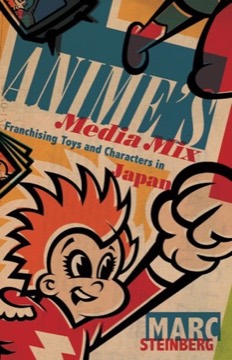
The database concept has been widely adopted in anime and games scholarship, including by Lamarre and Steinberg, and has travelled well beyond Japanese studies.
It is among the most cited theoretical contributions in the field and supplies vocabulary that subsequent work uses without attribution. Azuma himself moved on to broader philosophical work afterwards, and the book is now read more outside Japan than it is within it.
Criticisms
The most substantial objections are that the periodisation is too neat, that the sample of works is narrow, and that the postmodern framing imports assumptions it does not test.
The book is best treated as a productive hypothesis rather than as a demonstrated account. Several critics have also noted that the works he draws on are overwhelmingly by and for men, which limits the generality of conclusions stated as though they applied to a whole culture.
Relevance now
Written before social media, algorithmic recommendation and the current franchise economy, its description of recombinant consumption reads as considerably more general than it could have known.
The description of audiences assembling satisfaction from recombinable fragments describes streaming recommendation and social media feeds considerably better than it described anything available when it was written.
Readers outside anime studies frequently find that it applies to their own domains without much adjustment.
Who it is for
Readers interested in theory, in fan culture, or in why character-led franchises behave as they do.
It is short and dense and can be read in an evening. Readers who want empirical grounding should pair it with Steinberg, who supplies the history the argument assumes.
What to take away
- 01Database beneath narrativeAudiences engage with a store of recombinable traits and settings as much as with any story built from them.
- 02Characters consumed as attributesA figure detached from its plot explains derivative work, character goods and franchise persistence.
- 03Moe theorised, not pathologisedAzuma treats affective response to character attributes as structural rather than as a disorder, which was a departure in Japan.
- 04Lyotard applied specificallyThe decline of legitimating narratives is used on a concrete cultural formation rather than invoked generally.
- 05A hypothesis, not a demonstrationThe neat periodisation and narrow sample mean it is best treated as productive rather than as established.
- 06More general than it knewWritten before social media and algorithmic recommendation, its account of recombinant consumption now reads very broadly.