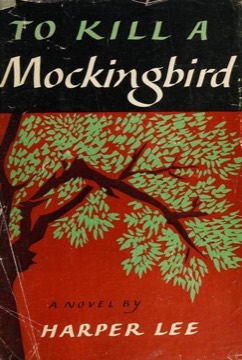
To Kill a Mockingbird
Harper Lee's novel of a Depression-era Alabama childhood, in which a lawyer defends a Black man against a false accusation and his daughter narrates what she is able to understand of it.
- First published
- 1960
- Publisher
- J. B. Lippincott & Co.
- Pages
- 320
- Shelf
- Fiction
- Level
- Entry
- ISBN-13
- 9789573258216
Record checked against
Catalogue note
- Reads as
- ReflectiveChanges how you see rather than what you do.
- Level
- Accessible / FoundationalNo prior reading assumed.
- Approach
- Theoretical
- Written for
- Readers of literature, Newcomers to the subject
Saved in this browser only — no account, nothing sent anywhere. My library
Read this if
- You read for the writing as much as for the argument.
- You want to think harder about what is actually right.
- You want a book that changes how you see things rather than what you do tomorrow.
- You are starting from scratch here and want a way in that assumes no prior reading.
The narration
Scout tells the story as an adult recalling her childhood, which gives the book two voices at once: a child's perception of events and an adult's retrospective understanding of them.
The device is what lets the novel present serious material through a narrator too young to grasp it. The reader understands more than Scout does at the time, which is where most of the book's effect comes from.
Two voices at once: a child's perception and an adult's understanding, with the reader positioned between them.
Devmark’s reading — not a quotation from the book
The two halves
The first part is a childhood summer: the games, the school year, the neighbourhood, and the children's fascination with the Radley house. The second is the trial and its consequences.
The structure has been criticised as disjointed and it is deliberate. The first half builds a world worth protecting and establishes the children's moral formation, so that the second half's failure registers against something.
Atticus
The father and defence lawyer, long treated as an unambiguous moral model in American culture.
The modern reading is more complicated, and fairly so. He is a court- appointed lawyer doing his professional duty well; he counsels patience and individual decency rather than opposing the system; and his approach leaves the structure producing the outcome entirely intact.
The trial
The case against Tom Robinson collapses under examination — the physical evidence contradicts the accusation and the jury convicts anyway.
The novel's most important point is made here and is frequently missed: the defence wins the argument and loses the verdict, which establishes that the problem is not ignorance that better reasoning could correct.
Boo Radley
The reclusive neighbour who exists first as a childhood monster, then as a source of small gifts, and finally as the person who intervenes.
The two threads join at the end, and the lesson Scout draws — about not judging someone until you have occupied their position — is the book's stated moral. Whether the novel earns it, given how little Boo is allowed to be a person, is a reasonable question.
The perspective problem
The central criticism, and it is substantial. Tom Robinson and Calpurnia have little interiority; the Black community is largely observed rather than inhabited; and the story of a racist prosecution is organised around a white child's moral education.
This does not make the book worthless and it does change what it can be used for. It is a novel about how a decent white family experiences racial injustice, and it is frequently taught as though it were the injustice itself.
It is a book about how a white family experiences racial injustice, often taught as though it were the injustice.
Devmark’s reading — not a quotation from the book
What it does well
The childhood material is exceptional: the specificity of the games, the boredom, the misunderstandings, the fear of a neighbourhood house.
And the courtroom sequence is genuinely well constructed. The cross-examination is precise, the evidentiary point is clear, and the verdict lands because the reader has been allowed to expect otherwise.
Go Set a Watchman
The manuscript published decades later, an earlier draft in which an adult Scout returns home to find Atticus holding segregationist views.
Its publication was controversial, both because of questions about Lee's consent and because it complicated a figure many readers held as fixed. Whether to read it as a sequel, a draft, or a corrective is genuinely disputed, and the most defensible position is that it is an earlier version of the same material rather than a continuation.
Its place in education
It has been among the most assigned novels in American schools for decades, and has also been repeatedly challenged and removed — historically for its racial language, more recently over how it positions Black characters.
Both facts belong in an honest account of the book. It has done a great deal of work introducing young readers to the subject and it is not sufficient on its own.
How to read it now
As a well-made novel about childhood and moral formation, with a clear view of what it does not do.
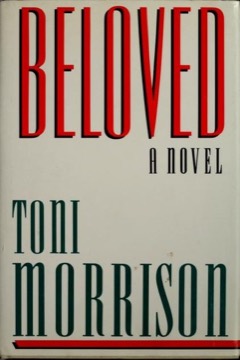
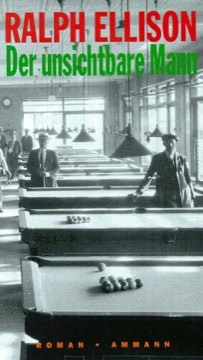
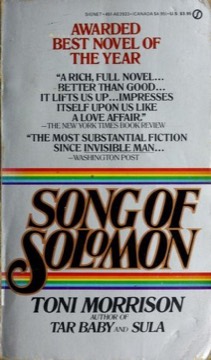
Read alongside work by Black American writers on the same period, it is considerably more useful than read as the definitive treatment, which is how it has often been assigned.
What to take away
- 01The child narrator carries the weightThe reader understands more than Scout does, which is where the book's effect comes from.
- 02The defence wins and losesThe evidence collapses and the verdict comes anyway, which is the point most often missed.
- 03Atticus works within the systemHe does his professional duty well and leaves the structure producing the outcome intact.
- 04The interiority is one-sidedTom and Calpurnia are observed rather than inhabited, which shapes what the book can be used for.
- 05Pair it, do not rely on itRead with Black writers on the same period it works well; as the definitive account it does not.