Wild
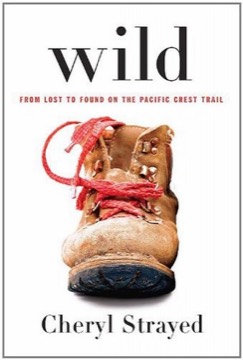
Cheryl Strayed's memoir of walking eleven hundred miles of the Pacific Crest Trail alone at twenty-six, four years after her mother's death, with no relevant experience whatsoever.
- First published
- 2012
- Publisher
- Goldmann Verlag
- Pages
- 363
- Shelf
- History
- Level
- Entry
- ISBN-13
- 9789722351089
Record checked against
Catalogue note
- Reads as
- ReflectiveChanges how you see rather than what you do.
- Level
- Accessible / FoundationalNo prior reading assumed.
- Approach
- Theoretical
- Written for
- Readers of history, Newcomers to the subject
- Ideas
Saved in this browser only — no account, nothing sent anywhere. My library
Read this if
- You want a life told honestly, at full length.
- You want to understand a place, or what we are doing to one.
- You want a book that changes how you see things rather than what you do tomorrow.
- You are starting from scratch here and want a way in that assumes no prior reading.
What it is
Strayed's mother died of lung cancer at forty-five, six weeks after diagnosis. In the years afterwards Strayed's marriage ended, she used heroin, and her family scattered. She decided, more or less arbitrarily, to walk from the Mojave to the Oregon-Washington border.
She was badly prepared. The pack is too heavy, the boots are the wrong size, and the book is funny about this in a way that keeps it from being solemn.
It is not a book about finding yourself in nature. It is about walking until something is used up.
Devmark’s reading — not a quotation from the book
How it is written
The trail runs forward while the loss runs backward, so the reader gets the mother's illness in pieces across the walk. That structure avoids a chronological grief narrative and keeps the two timelines pressing on each other.
Strayed is unsparing about her own behaviour — the infidelity, the drugs — and declines to organise it into a redemption. The walk does not fix anything so much as exhaust it.
What to know
The book prompted a measurable increase in PCT permits and a certain amount of irritation from experienced hikers, some of it deserved: it is a memoir about grief that happens on a trail, not a wilderness book.
Its honesty about being unqualified is the reason it works. Strayed is not an outdoorswoman having an adventure; she is a wrecked person doing something disproportionate on purpose.
The incompetence is the point, not an embarrassment the book has to survive.
Devmark’s reading — not a quotation from the book
The unpreparedness is the point
Strayed set out with a pack she could barely lift, boots a size too small, and almost no backcountry experience. The book does not present this as charming incompetence: the physical consequences are described in detail, and the inadequacy of her preparation is the literal form her grief takes. She is doing something difficult badly because doing it well was never the purpose.
What the body does
Much of the writing is about damage — toenails lost, feet ruined, the weight of the pack, hunger, thirst in a dry stretch, cold. The physical register does specific work: it is the one part of her life during that period that responded predictably to effort, and the book is clear that the relief it offered was the relief of a solvable problem.
Everything else was unfixable. Her feet were merely a problem, and problems can be worked at.
Devmark’s reading — not a quotation from the book
The mother
The loss running underneath is unusually unsentimental. Strayed writes about her mother's death at forty-five, six weeks after diagnosis, and about her own behaviour afterwards — the heroin, the infidelity, the collapse of a marriage — without organising it into a redemption. The self-portrait is the least flattering thing in the book and the reason it is trusted.
Men on the trail
A recurring thread is the calculation a woman alone makes about every encounter: who is safe, what a kindness might cost, how to be pleasant enough to avoid trouble. Strayed neither dramatises this into constant menace nor pretends it is absent, and the steadiness of that register is one of the book's quieter achievements.
What it is not
It is not a nature book and it is not a hiking narrative; the landscape is mostly a surface being crossed. Readers arriving for the wilderness writing tend to be disappointed, and readers arriving for a recovery arc find that the walk does not fix anything in particular. The ending is arrival rather than resolution.
The effect it had
Publication and the subsequent film produced a large and well-documented increase in permits for the trail, along with some resentment from long- distance hikers about inexperienced walkers arriving with the book's expectations. It is an unusual case of a memoir measurably changing the thing it described.
What to take from it
Read it for the structure, which is doing more than it appears to: the trail runs forward while the loss runs backward, so the reader accumulates the reasons for the walk at the same rate she does. The honesty about her own conduct is the other reason it has lasted.
What to take away
- 01Two timelinesThe walk goes forward while the mother's death arrives in pieces.
- 02Unqualified on purposeStrayed's inexperience is the subject, not a flaw in the telling.
- 03No redemption arcThe trail exhausts the grief rather than resolving it.
- 04Honest about herselfThe heroin and the infidelity are reported without being organised into a lesson.
- 05Not a wilderness bookIt is a grief memoir that takes place outdoors, which is why hikers argue with it.