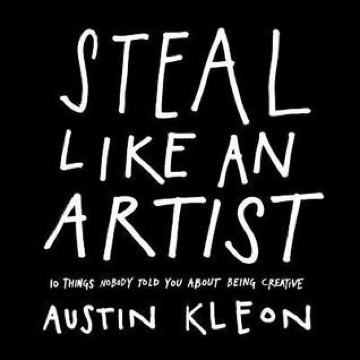
Steal Like an Artist
Austin Kleon's short illustrated manifesto arguing that nothing is original, that influence is the raw material of creative work, and that the useful question is not where ideas come from but what you do with the ones you find.
- First published
- 2012
- Publisher
- Workman Publishing
- Pages
- 160
- Shelf
- Design
- Level
- Entry
- ISBN-13
- 9780761169253
Record checked against
Catalogue note
- Reads as
- PracticalWritten to be applied, not only understood.
- Level
- Accessible / FoundationalNo prior reading assumed.
- Approach
- Practical
- Written for
- Designers and makers, Newcomers to the subject
Saved in this browser only — no account, nothing sent anywhere. My library
Read this if
- You make things, and want to understand the work rather than wait for inspiration.
- You want to get to an agreement without treating the other side as an obstacle.
- You want something to apply, not only something to think about.
- You are starting from scratch here and want a way in that assumes no prior reading.
The premise
Kleon's opening move is to dissolve the anxiety of originality. Every artist works from influence, every work descends from earlier work, and the demand to produce something from nothing is both impossible and a reliable way to produce nothing.
His distinction between good and bad stealing does the real work: honour, study, credit, transform and remix on one side; degrade, skim, plagiarise, rip off and imitate on the other. The difference is whether you have understood what you took well enough to change it.
The difference between good and bad stealing is whether you understood the thing well enough to change it.
Devmark’s reading — not a quotation from the book
Build your own family tree
His practical exercise: identify one thinker or maker you find essential, learn everything about them, then find three people they loved and repeat.
The method works because it replaces passive consumption with a structure — you are tracing a lineage rather than accumulating references — and because it takes you backwards into sources that most of your contemporaries have not read. The advantage of reading what your influences read is that you arrive somewhere other than where they arrived.
Make the thing you want to see
His answer to the question of what to work on: the gap between what exists and what you wish existed is the brief.
He frames this as writing the book you want to read, and extends it to any medium. Its usefulness is that it converts taste — which most people develop long before skill — into a concrete instruction, and taste is the one asset a beginner reliably has.
Use your hands
His argument for analogue work alongside digital: the computer is excellent for editing and poor for generating, because its precision invites premature judgement.
His own practice of keeping two desks, one with no screen, is the concrete version. Anyone who has watched an idea die inside a design tool before it was understood will recognise the mechanism, which is that a rendered artefact looks finished long before the thinking is.
Side projects and hobbies
His observation that the work people dismiss as a distraction is frequently where the good material originates, because it is the only work being done without a target.
His related point — that boredom and ordinary routine are productive conditions rather than obstacles — runs against the common advice to seek stimulation, and matches what most working artists actually report about where their ideas arrive.
The secret: do good work and share it
His deliberately unglamorous answer to the question of getting noticed. He does not promise that quality is sufficient, but he argues that visibility without work is a trap and work without visibility is a slower road than it needs to be.
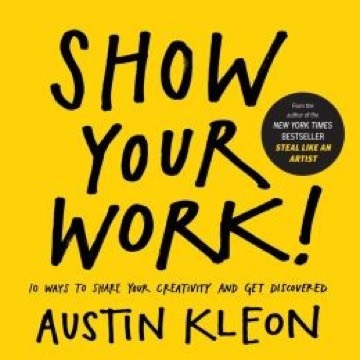
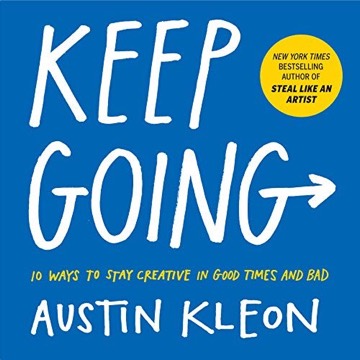
This chapter is the seed of his next book, and it is thinner here than the subject requires — a limitation he evidently agreed with, since he wrote the sequel.
Geography is no longer destiny, with a caveat
His acknowledgement that the internet dissolves location, paired with his insistence that physical place still shapes work and that leaving home remains valuable.
The tension is not resolved and he does not pretend it is, which is more honest than the versions of this advice that simply declare location irrelevant.
Be boring, keep your day job
His most practical and least romantic chapter: stay healthy, stay married, keep regular hours, keep the job that funds the work and removes the pressure to make the work pay immediately.
His argument that a day job provides not only money but connection to the world and a structure to write against is a direct contradiction of the quit-everything narrative, and it is the advice most likely to be correct for most readers.
The day job funds the work and removes the pressure for the work to pay immediately.
Devmark’s reading — not a quotation from the book
The form
It is very short, heavily illustrated, and readable in under an hour. This is a deliberate choice and it is also the basis of the main criticism: that the ideas are familiar, the treatment is shallow, and the book is more motivational object than argument.
The fairer reading is that it is a well-made pep talk for a specific moment — the point at which someone is stuck on originality — and that it does not claim to be more.
What to take from it
The family tree method, because it is a concrete practice rather than an attitude and it compounds over years.
And the reframing of influence from something to hide into something to catalogue, which removes the most common obstacle to starting: the belief that you must first have an idea nobody has had.
What to take away
- 01Nothing is original, so catalogue your influencesInfluence is raw material, and hiding it produces worse work than studying it does.
- 02Trace a lineage backwardsLearn one influence completely, then find three people they loved, and repeat.
- 03Make the thing you want to seeIt converts taste, which beginners already have, into a concrete brief.
- 04The computer invites premature judgementKeep an analogue surface for generating, because a rendered artefact looks finished before the thinking is.
- 05Keep the day jobIt funds the work, removes the pressure to monetise it early, and connects you to the world you write about.